

Why KPIs fail: 5 common pitfalls and how to fix them
KPIs fail for predictable reasons: they're vague, ownerless, unrealistic, too broad, or impossible to measure reliably. This article walks through five common pitfalls and what to do instead, then makes the case for setting intentional failure KPIs alongside your success metrics to build a clearer, more honest picture of progress.
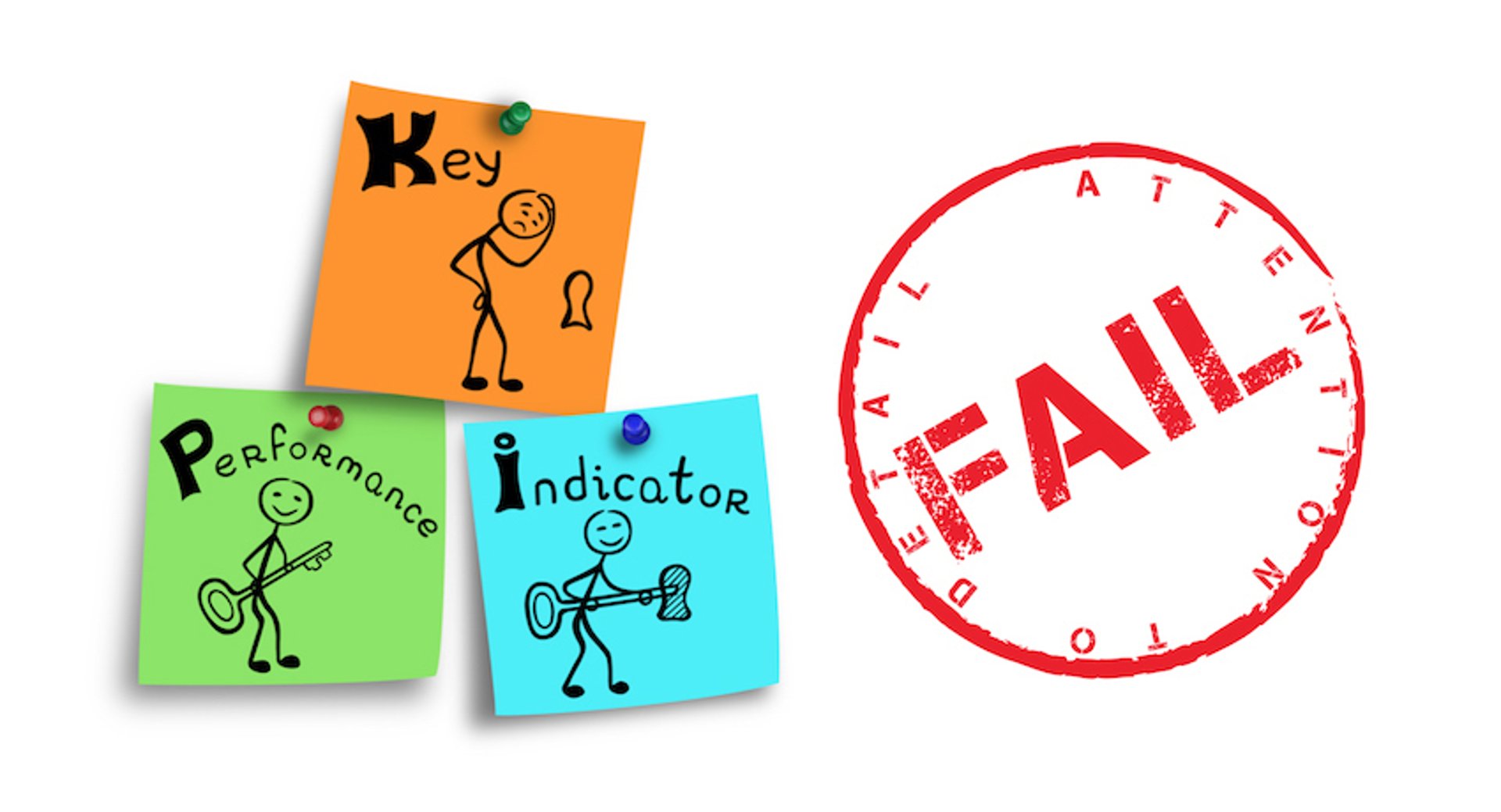
Have you ever sat through a KPI planning session that ended with everyone feeling aligned, only to find three months later that nothing changed?
It happens constantly. Your KPIs get defined, targets get set, and then the numbers sit in a spreadsheet nobody checks. The meeting felt productive. The follow-through didn't match.
KPIs fail for predictable reasons. Here are five of them, and what to do instead.
- Poorly defined: vague KPIs give you no signal worth acting on
- No accountability: without an owner, nothing moves
- Unrealistic targets: goals disconnected from your starting point demoralize more than motivate
- Lack of specificity: "improve" is not a target
- Too hard to measure: if you can't track it reliably, it's not a KPI
Poorly defined KPIs are doomed
A well-defined KPI tells you exactly what you're measuring, why it matters, and what a good result looks like. If it doesn't do all three, it won't survive contact with reality.
Cookie-cutter KPIs are a reasonable starting point, but they need to reflect your business specifically. A KPI should be a window into your current performance relative to your actual objectives. If you want to grow the business 2X this year, every KPI you track should connect to that goal.
The most common pitfall at the definition stage is defining your organization's KPIs without input from outside your immediate team. A strong KPI is recognizable and meaningful across departments, not just to the person who created it. Check out this guide on defining KPIs and work through the SMART exercise there.
KPIs fail without accountability
You've defined a KPI that will genuinely move the business. Now: who owns it?
Every KPI needs an owner, someone accountable for tracking progress and hitting the target. Without that, the KPI becomes background noise. It gets checked occasionally, explained away when it slips, and quietly forgotten.
When you define a KPI, name the owner in the same conversation. If that person's performance is tied to the outcome, even better. Accountability and incentive together are a reliable recipe for follow-through.
KPIs must have achievable targets
Ambition is good. Targets that bear no relationship to your current position are not.
If your revenue is $5 million and your KPI is to reach $50 million this year, you haven't set a goal. You've set yourself up for a demoralizing miss.
A practical approach: take your main KPI and break it into monthly milestones that build toward an annual target. This gives your team a near-term number to work toward, makes it easy to spot when you're off track, and creates space for course corrections before the year is gone.
The goal isn't just to have a number. It's to have a number your team can actually believe in.
KPIs without specific targets will fail
There's a meaningful difference between "I want to run faster" and "I want to run 5 km in 30 minutes." The first is a direction. The second is a target you can either hit or miss.
Business outcomes work the same way. Vague improvement goals keep you pushing indefinitely without any clear signal that you've arrived. A specific target tells you when you've succeeded, so you can move on to the next challenge.
Give your KPIs a number, a timeframe, and a clear definition of done.
The KPI is too hard to measure
This is the most common reason KPIs fail. A KPI without reliable data behind it is just a wish.
Consider "wins influenced by social media." It's a compelling concept. But measuring it accurately is genuinely difficult. Attribution across social touchpoints is messy, and the tools most teams have in place weren't built for it.
A KPI you can't measure consistently will never give you the confidence to act on it. You'll spend more time debating the number than using it. Start with KPIs you can track cleanly. Add complexity once the foundation is solid.
This is also where the right infrastructure matters. When your numbers live in one place, refresh automatically, and don't require someone to manually pull a report, you spend less time wondering if the data is right and more time deciding what to do about it.
Incorporating a failure mindset with KPIs for success
Create custom dashboards for you and your team.
Get started with KlipsFail fast: right?
Failure has had a remarkable rebranding.
It used to mean something went wrong. Now it's positioned as a prerequisite for getting things right. CEOs and thought leaders talk about failure as a feature, not a bug. The question worth asking: if failure is so important, why don't we measure it?
Measure failure?
Yes. Failure is a sign of ambition. You can't miss a shot you didn't take, and most meaningful goals require a lot of misses before you land one.
There are plenty of quotes about failure online that make this point. But the more useful framing isn't motivational; it's practical.
Creative nonfiction writer Kim Liao sets a goal of 100 rejection letters per year. As she wrote in an essay:
"Perhaps aiming for rejection, a far more attainable goal, would take some of the sting out of this ego-bruising exercise, which so often feels like an exercise in futility."
The logic holds for business. Success feels good, but it doesn't always teach you much. Failure, when you're paying attention, tells you exactly what to fix.
What are some good KPIs for failure?
The right failure KPI depends on your goal. A few examples:
- Expanding your network: track how many outreach messages you send, not just how many get a reply
- In sales: set a target for cold calls made, not just deals closed
- Building a writing career: aim for 100 rejections a year, as Liao does
In general, failure KPIs work best when they measure effort and output in one of these areas.
A stepping stone on the road to success
Some failure is simply the price of entry. The sooner you start, the sooner you move through the early misses toward the results that matter.
The advice: start now. Don't wait until the conditions are perfect. Those first failures are evidence that you're moving.
An opportunity to learn
It's a cliché that we learn more from failure than success, but it holds up. Failure forces you to stop, reassess, and adjust before you try again.
The advice: don't just fail and move on. Run a quick post-mortem. Write down what happened and what you'd do differently. That reflection is where the value lives.
A strengthener
Recovering from failure builds the resilience to keep going when things get hard. That resilience is what separates teams that quit from teams that figure it out.
The advice: Research from Harvard University suggests resilience develops through the interaction of internal disposition and external experience. Treating failure as a natural part of progress, rather than a sign something went wrong, is a healthier and more accurate starting point.
Last thoughts on the KPIs of failure
Aiming for failure is counterintuitive. But when you measure it intentionally, you stop hiding from it and start using it.
Set failure KPIs alongside your success KPIs. You'll have a clearer picture of effort, progress, and where to focus next, even when the results aren't what you hoped.
Published 2026-08-25




Most recent
- AUG 11Beyond simple sign-ups: how True Trials and Activation predict growth
- JUL 7Why business leaders miss important trends in their dashboards
- JUN 19The best chart for the job: Visualizing data for non-technical users
- JUN 95 tips to understand (and organize) your restaurant data
- MAY 26Think in Horizons, Not Seconds
- MAY 2010 Cloud BI Dashboard Tools for Small Businesses in 2026