

How to define your KPIs
Defining KPIs well means spending less time wondering how things are going and more time deciding what to do next. This guide covers what makes a strong KPI, how to set and track them using the SMART framework, common mistakes to avoid, and practical techniques for keeping your KPIs relevant as your business grows.
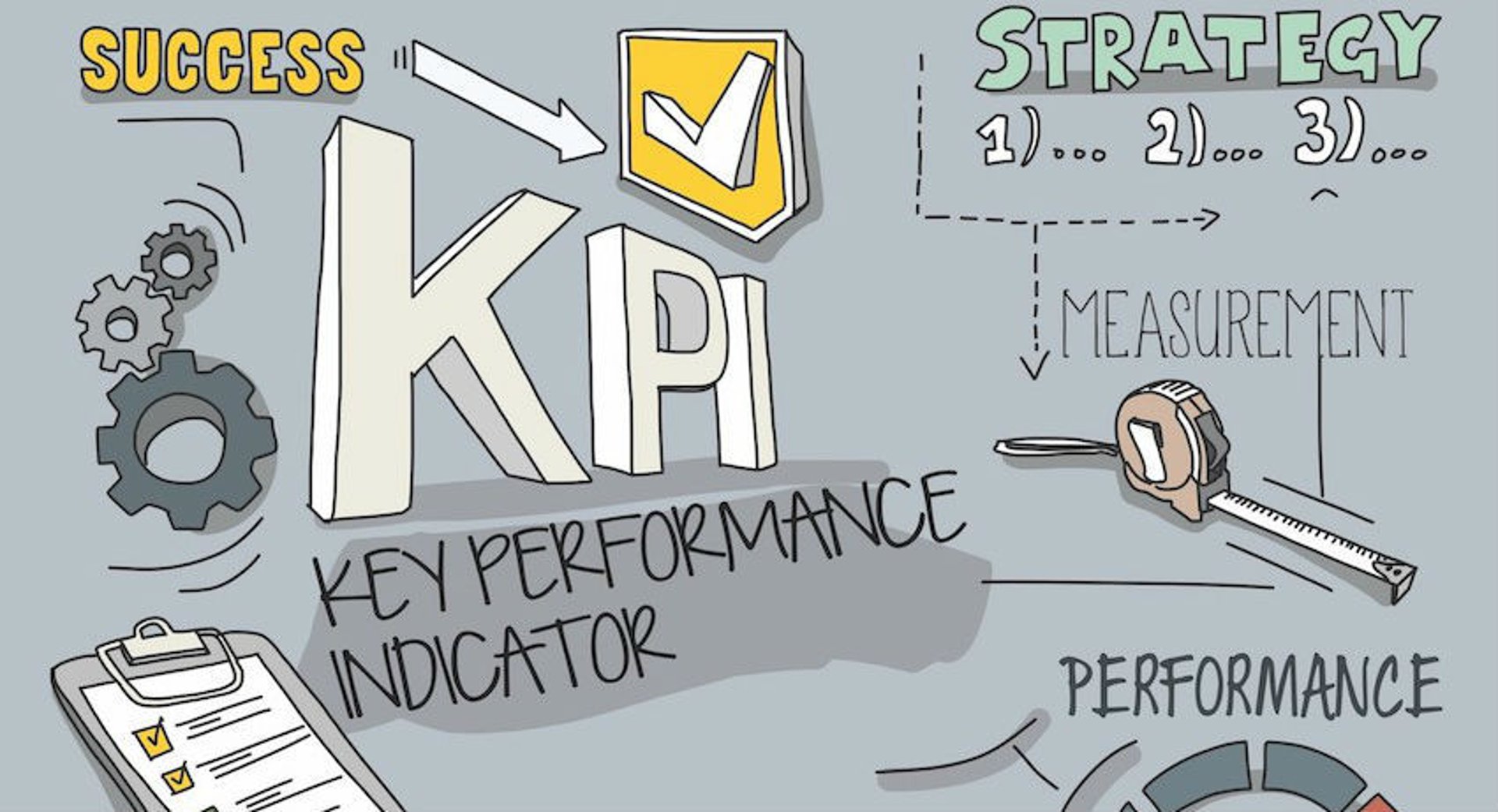
Success in business often feels like aiming at a moving target. One minute you're focused on customer satisfaction; the next, you're watching employee productivity. The underlying goal, though, is always the same: make sure your business is moving forward.
That's why defining KPIs matters. Key performance indicators give you a reliable, shared view of whether your strategies are working. They replace guesswork with numbers you can trust and act on.
Whether you're leading a lean team or running a growing company, knowing how to define KPIs well means you spend less time wondering how things are going and more time deciding what to do next.
What are KPIs?
Key performance indicators (KPIs) are quantifiable measures tied directly to your strategic goals. A KPI tells you whether you're making progress toward an outcome that matters to your business.
Not every number qualifies. A KPI is specific to an intended result. When you define KPIs well, you give everyone on your team a shared, reliable way to know whether the work is paying off.
Why KPIs matter for business strategy
KPIs do more than track numbers. They connect daily work to long-term goals, surface problems early, and give leaders the confidence to make decisions without waiting for someone to pull a report.
Aligning actions with strategy
KPIs create a direct line between what your team does each day and where the business is trying to go. When everyone can see the same targets and the same progress, effort stops being scattered and starts compounding.
Clear KPIs also make it easier to have honest conversations. If a number is off, you know it immediately, and you know what it means.
Measuring progress and performance
The real value of a KPI is that it tells you, without ambiguity, whether you're on track. You don't have to wait for a quarterly review to find out something went sideways.
If a KPI misses its target, you can adjust quickly. That speed matters more than it used to, especially when conditions change fast and decisions can't wait.
Informing decisions
Good KPIs reduce the cost of a wrong call. When you know your numbers are accurate and current, you can decide where to focus resources, what to change, and what to leave alone, without relying on instinct alone.
That's a meaningful shift for leaders who used to piece together answers from spreadsheets or wait for someone to compile a report.
Driving improvement
Reviewing KPIs regularly gives your team a reason to look for better approaches. When a number isn't moving, it prompts the question: why not? That question leads to process improvements, smarter resource allocation, and more disciplined execution.
Keeping teams focused
KPIs give everyone a common language for what success looks like. That shared understanding makes it easier to run productive team meetings, set priorities, and hold each other accountable without ambiguity about what matters most.
KPIs vs. metrics vs. OKRs
These three terms get used interchangeably, but they serve different purposes.
KPIs are tied directly to your strategic goals. They measure whether the business is achieving its most important outcomes. All KPIs are metrics, but not all metrics are KPIs. Understanding the distinction is covered well in Business Metrics vs. KPIs: What's the Difference?
Metrics are any quantifiable data point relevant to your business, such as website sessions, headcount, or average handle time. They're useful for monitoring operations, but they don't always connect to strategic priorities.
OKRs (Objectives and Key Results) are a goal-setting framework, typically set quarterly. They push beyond current performance levels toward ambitious targets. KPIs tend to be more ongoing, monitoring the steady-state health of the business rather than driving a specific change initiative.
The simplest way to tell them apart: KPIs tell you how the business is doing; OKRs tell you what the business is trying to change.
What should be a KPI for your company?
Defining the right KPIs starts with your own goals, not a list borrowed from a competitor. The best KPIs are SMART: specific, measurable, achievable, relevant, and time-bound.
Specific
A KPI must define exactly what you're measuring. "Increase sales" is not a KPI. "Increase online sales by 15% in Q3" is. Specificity removes ambiguity and makes it clear what the team is working toward.
Measurable
You need to be able to attach a number to it. A measurable KPI has defined criteria: a percentage, a count, a ratio. For example, achieving a customer satisfaction score above 90% is measurable. "Improve customer happiness" is not.
Achievable
A KPI should stretch your team without breaking them. Targets that are clearly out of reach demotivate rather than inspire. Set KPIs that are ambitious but grounded in your current resources, capacity, and market conditions.
Relevant
Each KPI should connect directly to a strategic priority. If expanding into new markets is the goal, a relevant KPI might be "enter three new international markets by year-end." If a metric doesn't tie to an outcome that matters, it doesn't belong on your KPI list.
Time-bound
Every KPI needs a deadline. "Increase monthly leads by 20% by the end of Q2" creates a clear window for assessment. Without a timeframe, there's no urgency and no clear point at which to evaluate whether the strategy worked.
Tools for defining KPIs
The right tools make it easier to identify which metrics deserve KPI status and to track them consistently once you've decided.
Data analytics platforms
Analytics platforms let you examine historical trends, current performance, and patterns across your business. They help you move beyond gut feel and ground your KPI selection in what the data actually shows.
Benchmarking
Comparing your performance against industry standards helps you set KPIs that are both realistic and competitive. Knowing where you stand relative to peers tells you where you have room to improve and where you're already strong.
Dashboards and reporting
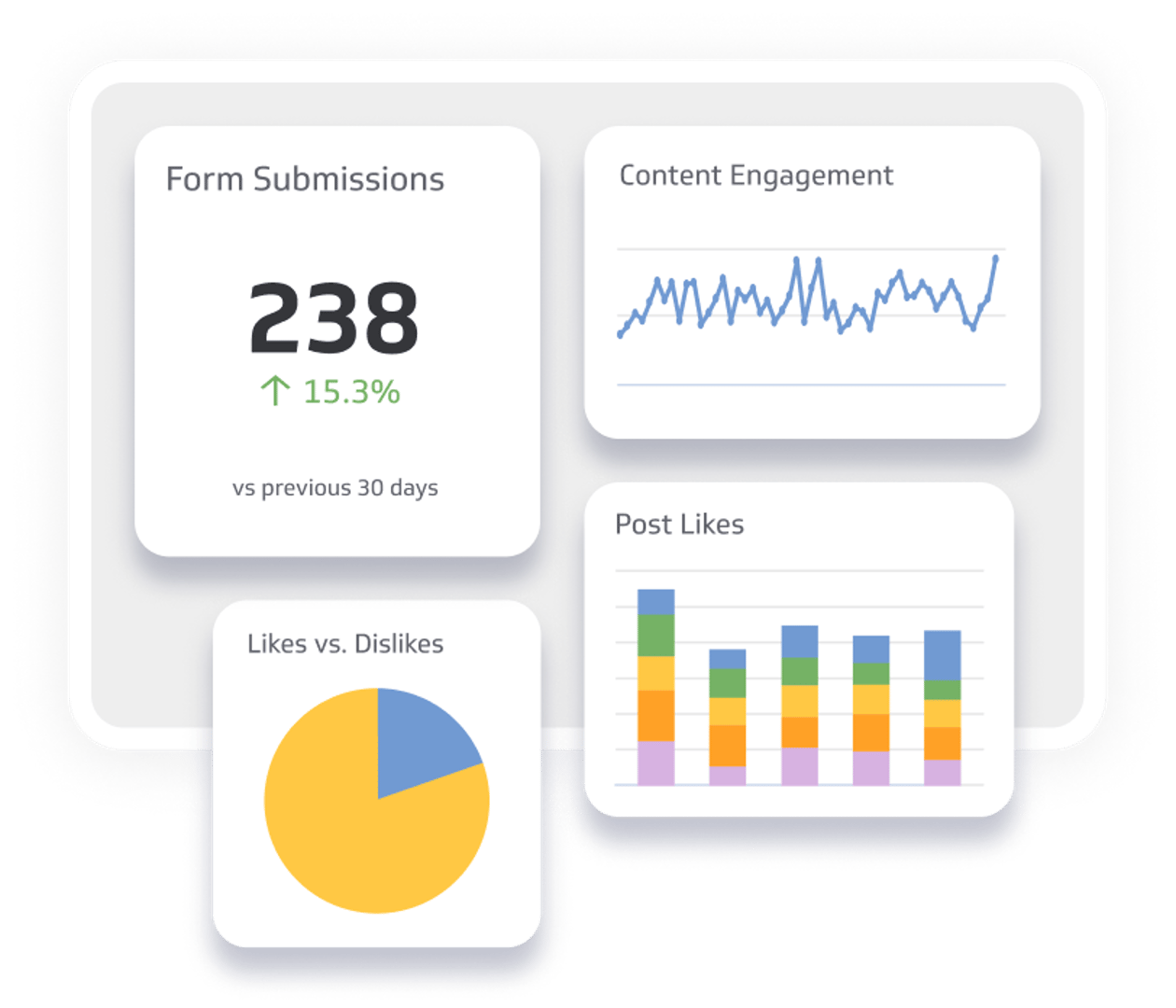
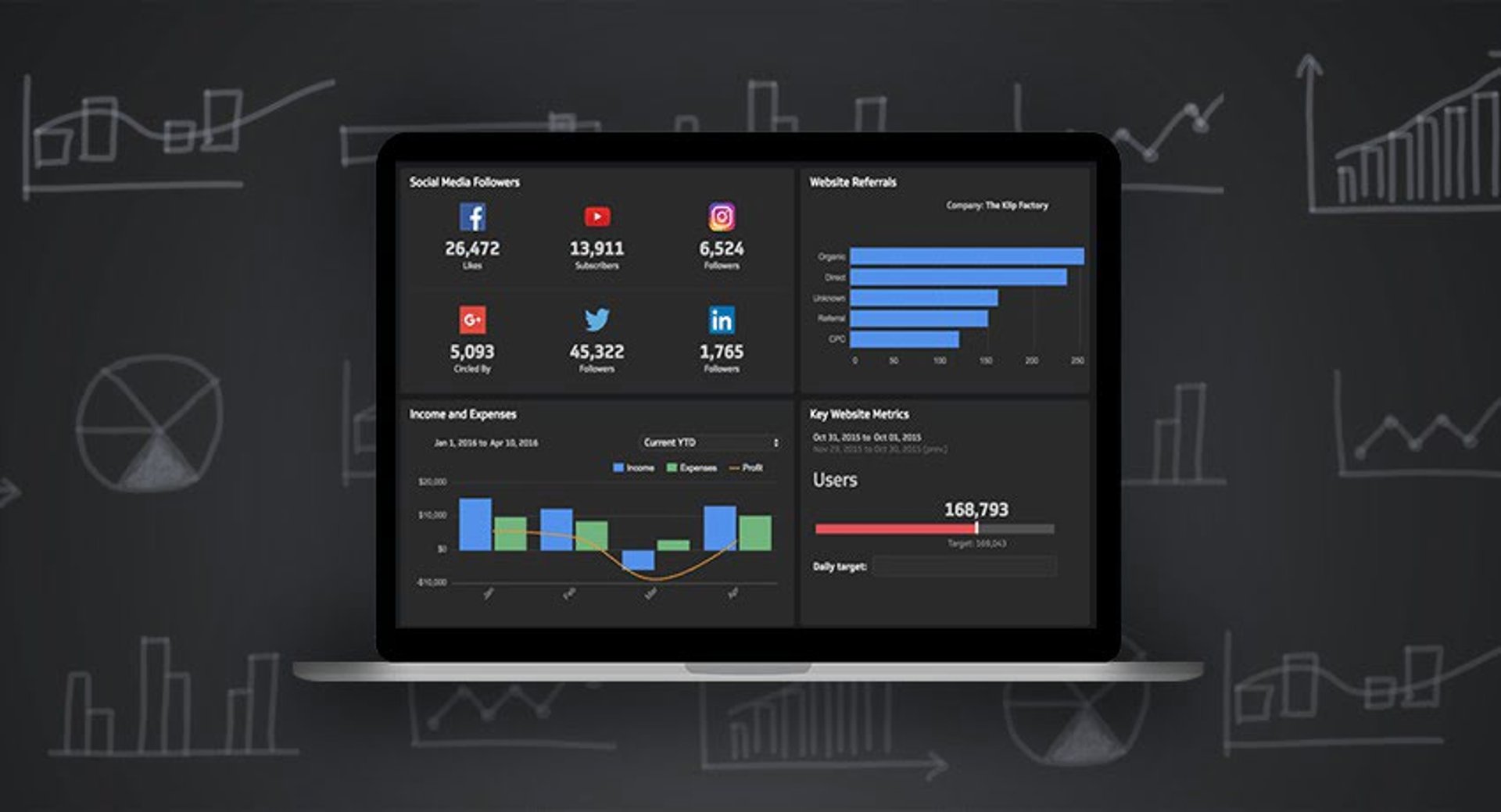
Dashboards and reporting give you a clear, current view of your data without having to wait for someone to compile a report. They surface patterns and trends that are easy to miss in static spreadsheets.
For example, if you run an e-commerce business, dashboards in Klips can track critical e-commerce KPIs, such as website traffic, conversion rates, average order value, and customer retention rate, in near real time. That visibility helps you catch shifts in buying behaviour before they become problems.
The most useful dashboards don't just display numbers. They stay on top of what's changing so you don't have to go looking for it.
Survey tools
Tools like Typeform or SurveyMonkey gather direct feedback from employees and customers. That input can reveal which parts of your operation need closer monitoring, and which pain points are worth building a KPI around.
Techniques for defining KPIs
Beyond the tools, a few practical approaches help you choose KPIs that are actually useful.
Check your current stage of growth
A startup focused on acquiring its first customers needs different KPIs than an established business defending market share. Understand where your business is in its lifecycle before you decide what to measure.
Early-stage companies often prioritize growth metrics like customer acquisition rate. More mature companies tend to focus on retention, margin, and efficiency.
Find specific problems or issues
The best KPIs are built around real problems. Start by identifying where your business is losing ground or where improvement would create the most leverage. Whether it's customer churn, margin compression, or slow sales cycles, your KPIs should point directly at those focal points.
Categorize KPIs as leading or lagging
Leading KPIs are predictive. An increase in qualified pipeline, for example, suggests future revenue growth. Lagging KPIs measure outcomes that have already happened, like last quarter's revenue.
A healthy KPI set includes both. Leading indicators tell you where you're headed; lagging indicators confirm whether past strategies worked.
Identify and avoid vanity metrics
Vanity metrics look good in a report but don't connect to business outcomes. Page views and follower counts are common examples. They're not inherently useless, but they become a problem when they crowd out metrics that actually drive decisions.
Focus on KPIs that connect to revenue, retention, or the specific strategic goals you've set.
Setting up key performance indicators
Once you know what to measure, setting up your KPIs well determines whether they stay useful.
Create custom dashboards for you and your team.
Get started with KlipsUnderstand your strategic objectives
Every KPI should trace back to a strategic goal. If you can't draw a clear line between a KPI and an outcome the business cares about, it probably doesn't belong on the list.
Define clear, specific KPIs
Each KPI should be defined clearly enough that anyone in the organization understands what it measures and why it matters. If you're tracking conversion rate, specify whether that means overall website conversions or a specific product page. Precision prevents misalignment.
Define once, use everywhere. Document each KPI once and reuse the exact name, formula, unit, and time window across dashboards, reports, and reviews.
Consistent definitions prevent version drift and keep teams aligned around the same numbers.
Keep KPIs measurable
Every KPI needs a number attached to it. Financial figures, percentages, ratios, counts: any of these work, as long as the measurement is consistent and objective. Measurable KPIs make it possible to track change over time and evaluate performance without debate.
Align KPIs with industry standards
Your KPIs should reflect both your internal goals and the standards of your industry. Knowing what strong performance looks like in your sector helps you calibrate targets that are meaningful and competitive.
Make KPIs achievable
Ambitious but realistic. That's the standard. KPIs that are clearly out of reach don't motivate; they demoralize. Set targets that push the team while remaining within the range of what's actually possible given your current capacity.
Review and update KPIs regularly
A KPI that made sense six months ago may not reflect your current priorities. Build a consistent review cadence, whether weekly, monthly, or quarterly, and treat it as a real decision point, not just a reporting ritual.
Regular reviews also build a data-driven culture. When the team sees that KPI results lead to real decisions and adjustments, the numbers start to mean something.
Involve your team
The people closest to the work often have the clearest view of what's worth measuring. Involving department heads and team members in KPI selection produces better indicators and stronger buy-in.
Use technology for tracking
The right tools automate data collection, keep numbers current, and surface KPIs in a format the whole team can see. With Klips, anyone on your team can build and share visualizations without writing code, so the numbers are always accessible to the people who need them.
Tracking and evaluating KPIs
Defining KPIs is only the beginning. Keeping them current and meaningful is an ongoing responsibility.
Establish a regular review schedule
Consistent reviews keep you informed without overwhelming your calendar. Choose a cadence that fits your business rhythm and stick to it. The goal is to catch problems early, not to audit the past.
Stay on top of KPI trends
A single data point tells you where you are. A trend tells you where you're going. Analyzing KPIs over time reveals seasonal patterns, emerging risks, and the compounding effects of decisions you made months ago.
Lead team discussions around KPIs
KPI reviews work best as conversations, not presentations. Bring the team in to discuss what the numbers mean, what's driving them, and what to do next. Different perspectives surface insights that a single owner would miss.
Adjust KPIs as needed
Business priorities shift. KPIs should shift with them. If a metric no longer connects to a strategic goal, replace it. Holding onto outdated KPIs creates noise and erodes trust in the whole system.
Integrate KPIs into business processes
When KPI tracking becomes part of how your team operates, rather than a separate reporting exercise, it produces more consistent results. Data-driven decisions happen faster when the numbers are already part of the conversation.
Common KPI mistakes
Even experienced leaders make these errors. Knowing what to watch for helps you avoid them.
Reliance on intuition
Experience is valuable, but gut feel alone is not a reliable basis for KPI decisions. The overconfidence effect is well-documented: subjective confidence in a judgment often exceeds its actual accuracy. Use data to check your instincts, not replace them.
Adopting common best practices without customization
Generic KPI lists are a starting point, not a finish line. Your business has specific goals, constraints, and competitive dynamics. KPIs borrowed wholesale from another company or industry often measure the wrong things for your situation. Browsing KPI examples by department can help you identify relevant indicators to adapt for your own context.
Bias toward recent information
The most recent data is the easiest to recall, but it's not always the most meaningful. Recency bias can lead you to overreact to short-term fluctuations and underweight longer-term trends. Always evaluate KPIs in historical context.
Confusing lagging and leading indicators
Lagging indicators are easier to measure because the outcome has already happened. Leading indicators are harder to quantify but more valuable for anticipating what's coming. A strong KPI set includes both, and the team should understand which type each KPI is.
Overlooking the evolution of KPIs
KPIs that don't evolve become misleading. As your business grows and your strategy shifts, the indicators that matter most will change. Schedule time to reassess whether your current KPIs still reflect your current priorities.
Lack of clear KPI definitions
Ambiguous definitions create conflicting numbers. When two people calculate the same KPI differently, the result is confusion and eroded trust. Standardize the name, owner, formula, unit, and time window for every KPI you track.
Ignoring data quality
A KPI is only as reliable as the data behind it. Inconsistent data entry, duplicate records, and unaudited sources all introduce errors that compound over time. Set standards for how data is captured and audit regularly to catch anomalies early.
Neglecting regular KPI reviews
KPIs that aren't reviewed regularly become wallpaper. They're visible but ignored. Build reviews into your operating rhythm and treat them as decision points, not checkboxes.
FAQ
Are KPIs really effective?
Yes, when they're well-defined and connected to real strategic goals. The effectiveness of a KPI depends on selecting the right indicator, setting a meaningful target, and reviewing it often enough to act on what it shows.
Which KPI is most important?
The most important KPI is the one most directly tied to your current strategic priority. It varies by business, industry, and stage of growth. There's no universal answer, which is exactly why defining your own KPIs carefully matters so much.
Create custom dashboards for you and your team.
Get started with KlipsWho sets the KPI?
KPIs work best when they're set collaboratively. Senior leadership defines the strategic direction; department heads and team members contribute the operational context. That combination produces KPIs that are both strategically sound and practically grounded.
Published 2026-08-21




Most recent
- AUG 11Beyond simple sign-ups: how True Trials and Activation predict growth
- JUL 7Why business leaders miss important trends in their dashboards
- JUN 19The best chart for the job: Visualizing data for non-technical users
- JUN 95 tips to understand (and organize) your restaurant data
- MAY 26Think in Horizons, Not Seconds
- MAY 2010 Cloud BI Dashboard Tools for Small Businesses in 2026