

How KPIs help growing businesses succeed
Running a growing business means making decisions with incomplete information and no dedicated analyst on call. This guide covers how growing and scaling companies can use KPIs across finance, marketing, and sales to make better decisions, faster, and stay on top of their numbers without figuring it out themselves.
Running a growing business means making decisions with incomplete information, under pressure, and usually without a dedicated analyst on call. KPIs change that. They give you a clear, consistent read on your business so you can act with confidence instead of guessing.
This guide covers how growing and scaling companies can use KPIs to make better decisions, faster.
KPIs are not just for big business
Every large company started where you are now. The difference isn't size; it's visibility. When you know your numbers, you can make the same quality of decisions as a much larger team.
The most damaging misconception about KPIs is that they belong to established enterprises. That idea leads many growing businesses to put them off. It's worth understanding how to define your organization's KPIs before you need them, not after.
KPIs should guide decisions across your business, from efficiency metrics for a service to growth metrics that support a new hire. The right KPIs give you a competitive edge, not because you have more data, but because you know what to act on.
Tracking data is now affordable and accessible. Implementation is a choice about what to measure, not a function of company size.
6 areas where KPIs help growing businesses
You can't control time. You can take a snapshot of your business's health at any moment, without waiting for someone to pull a number or pasting figures into a spreadsheet and hoping they're current.
The goal is to know how effectively you're achieving key objectives without sacrificing productivity. If you already use platforms to track finances, marketing, sales, and operations, connecting your data gets much easier.
Here are a few common KPIs that help growing businesses succeed:
Current Accounts Receivable and Accounts Payable
Social Media Followers
Marketing Return on Investment
Product Performance
Sales Opportunities
Here's how each one breaks down by department.
Finance KPIs
Current Accounts Receivable and Accounts Payable
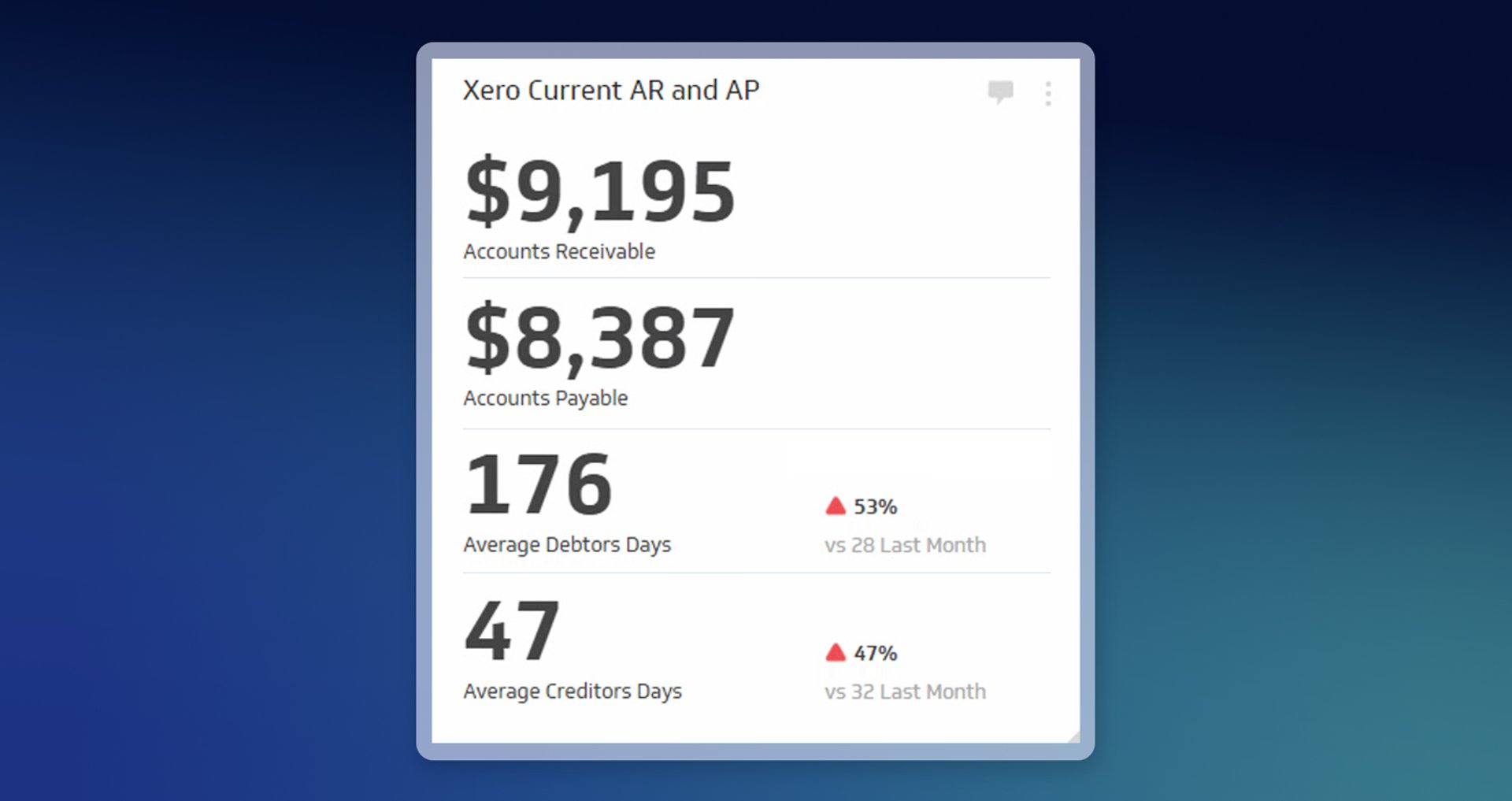
Current Accounts Receivable and Accounts Payable shows the money owed to your business alongside what your business owes creditors, in one view.
This metric gives you a reliable read on your financial position at any moment, not just when your accountant calls back. It also shows how that position compares to previous months. Keeping debtor and creditor day averages low is one of the clearest signals your business is operating within its means, and this KPI keeps that signal visible.
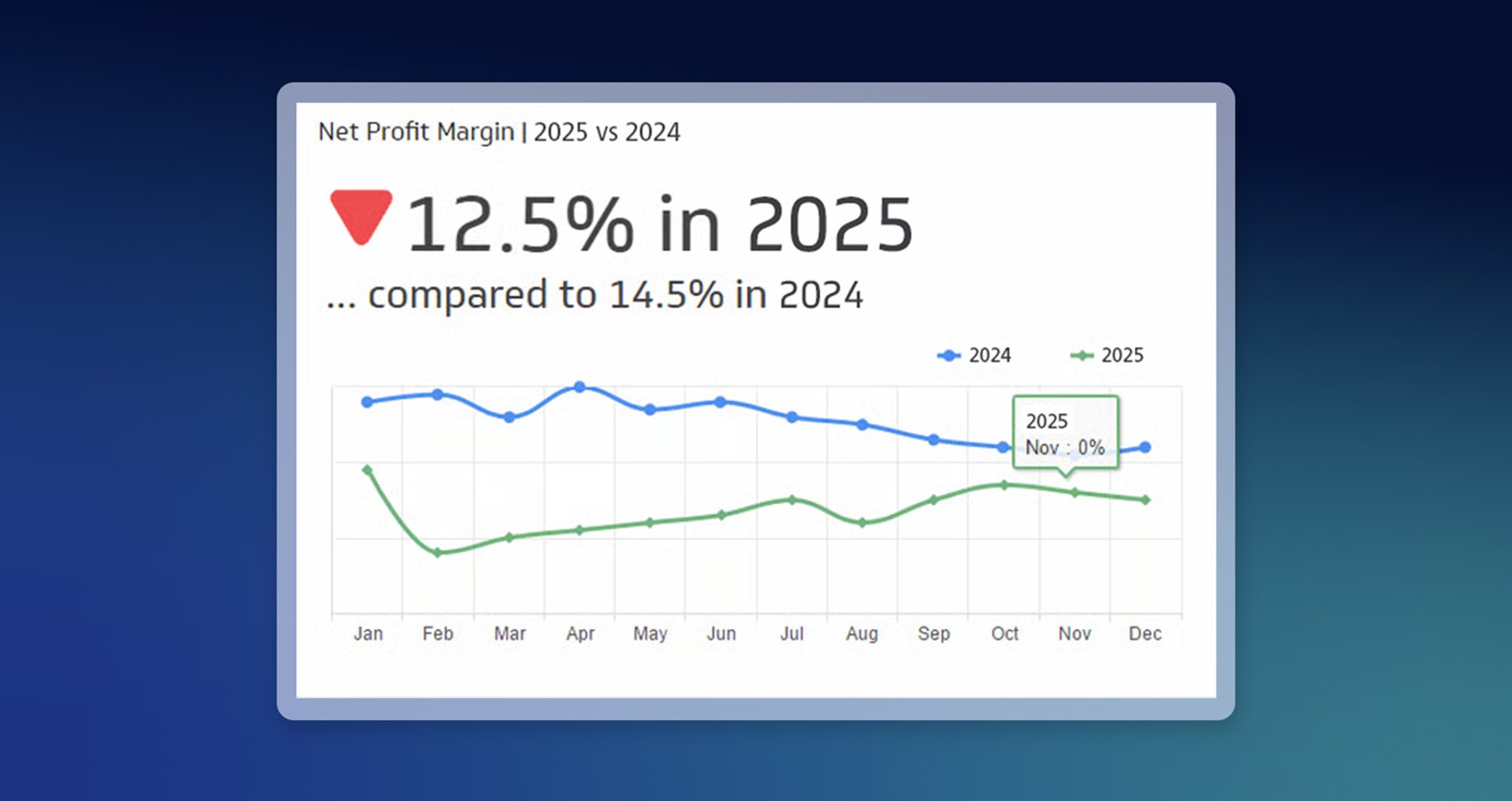
Net profit margin analysis measures how effectively your business generates profit on each dollar of revenue. It's a measure of overall profitability and supports both long- and short-term financial decisions.
A downward trend here is an early signal: your price point may need adjusting, your product may need repositioning relative to competitors, or broader industry conditions may be shifting. When you track this KPI consistently, you catch that signal early enough to act. Add indicator and comparison lines to your dashboard to show where profit sits against past performance at a glance.
Marketing KPIs
Social Media Followers
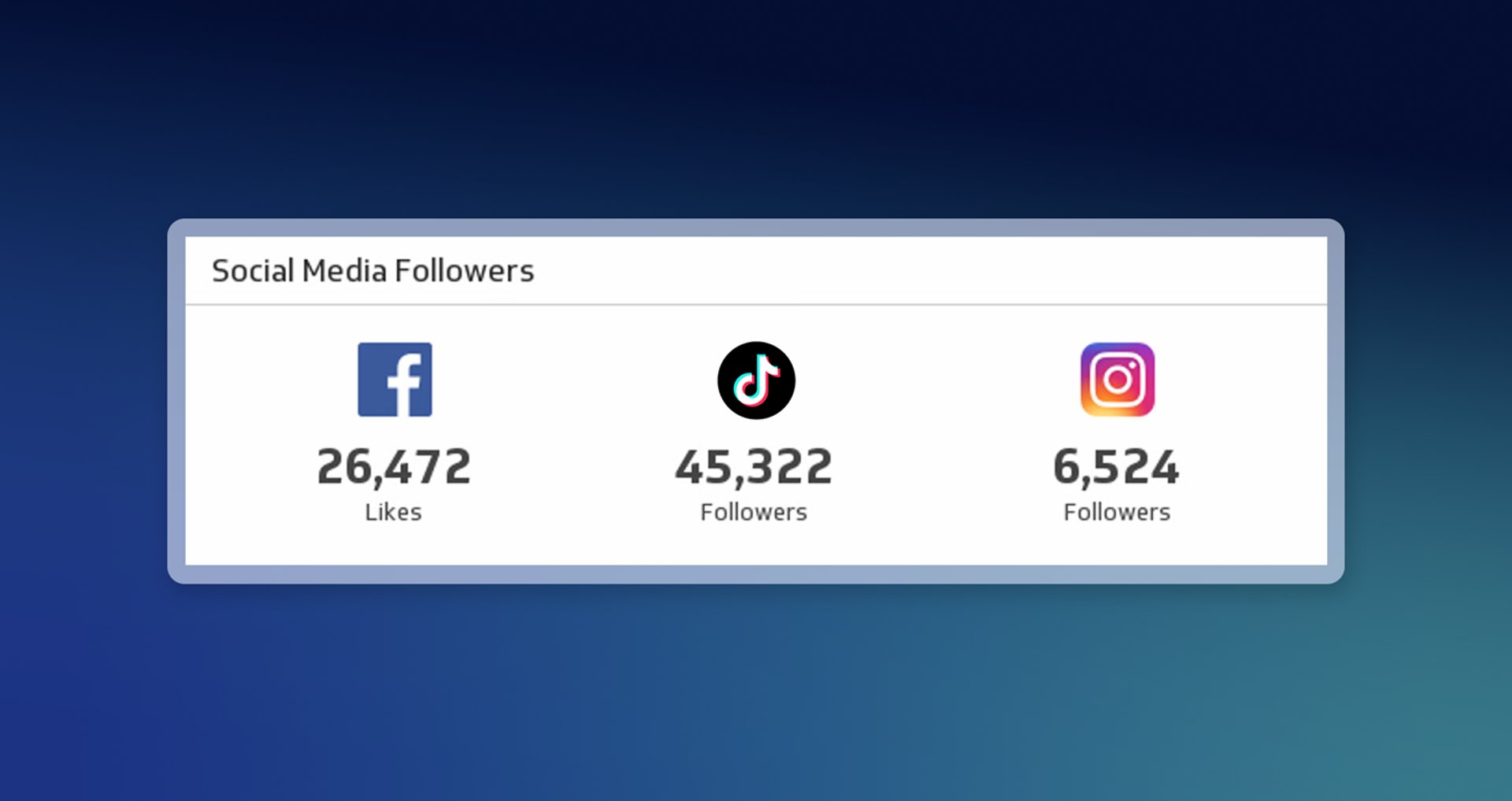
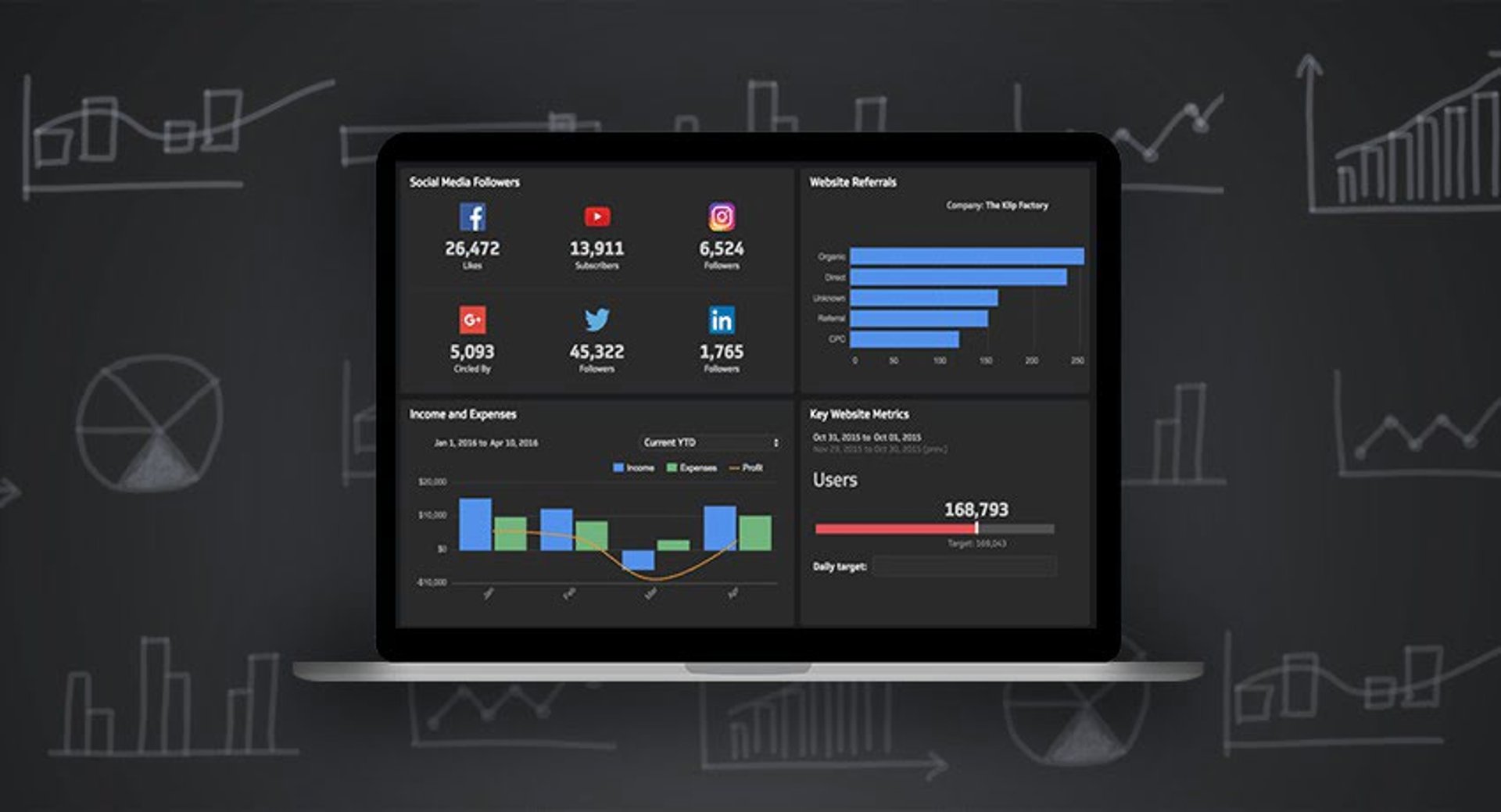
This social media KPI treats all the platforms you use as a single factor of growth, so you're not toggling between apps to piece together a picture.
Social media marketing matters for growing businesses. At a relatively low cost, you can build brand awareness and reach current and future customers. This KPI shows which channels are working, which aren't, and which need more attention, without requiring a full marketing review to figure it out.
Marketing Return on Investment
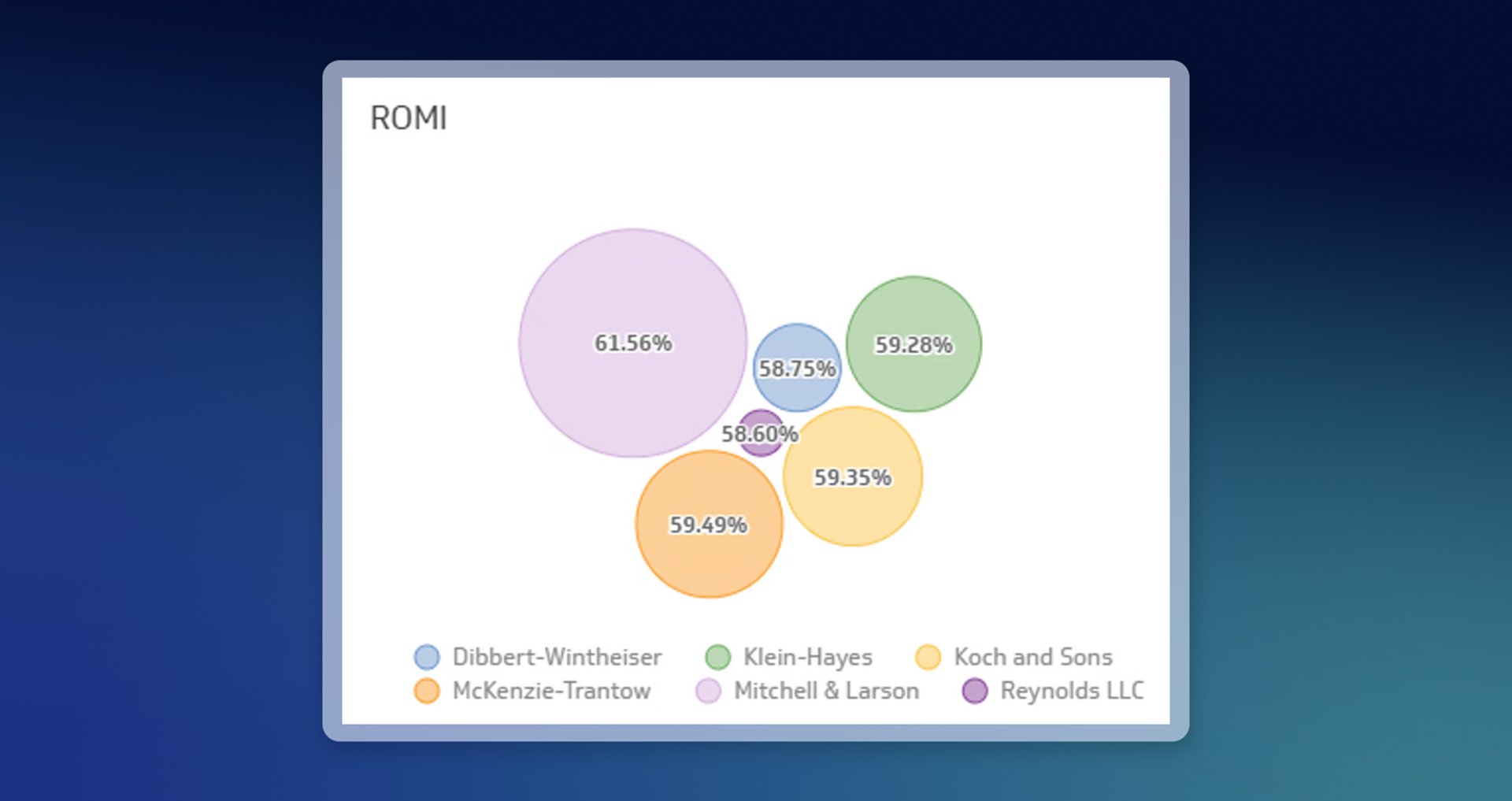
Marketing campaign performance tracking helps you measure the financial impact of a campaign. With a lean team, you may not run many campaigns at once, which makes close monitoring even more valuable. Every dollar you spend on marketing should be traceable to a result.
Understanding what works also helps you build a strong first impression with new customers. Effective campaigns do double duty: they drive growth and establish credibility.
Sales KPIs
Product Performance
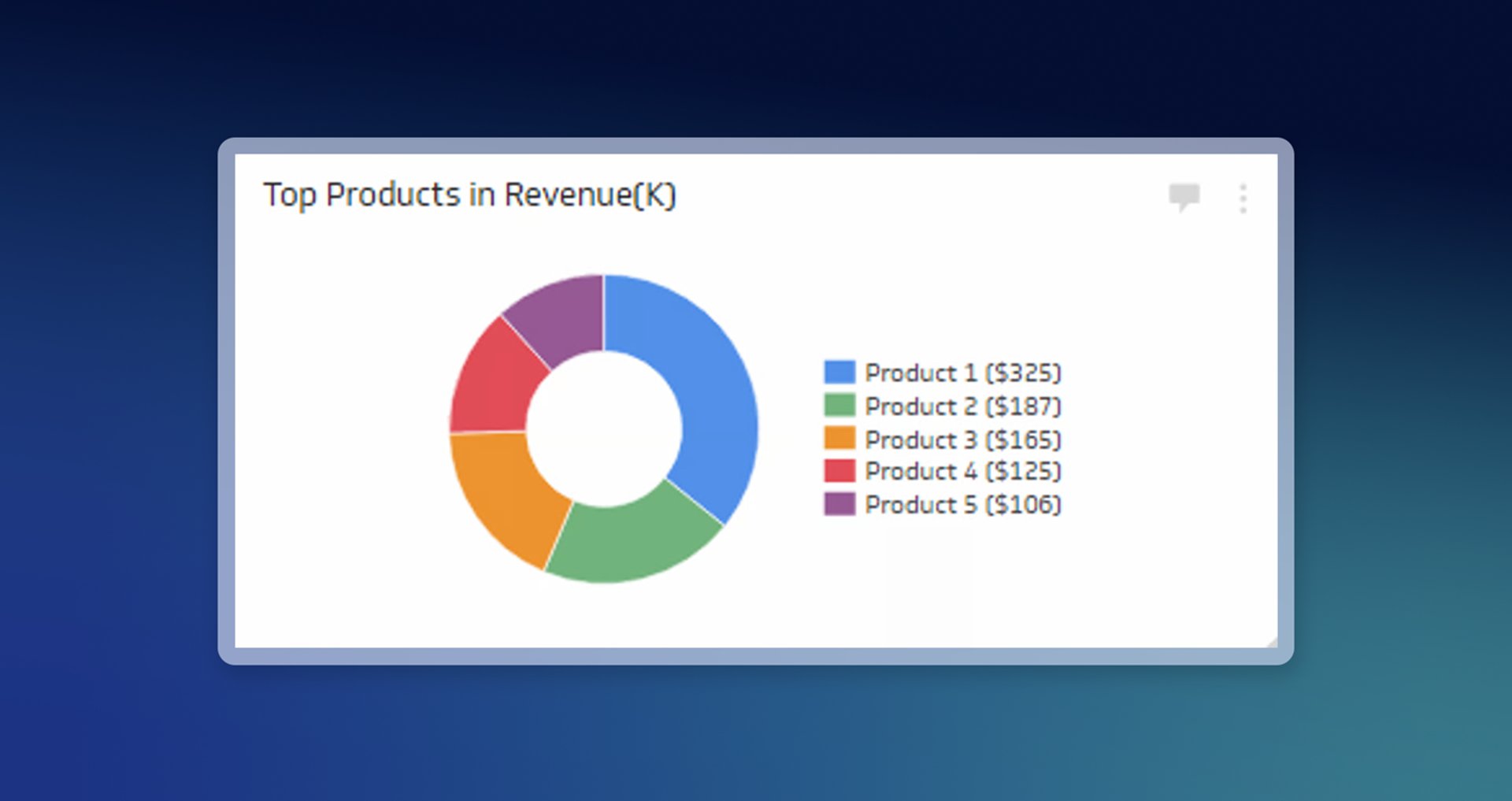
Product Performance ranks product sales by revenue to show which products are selling well. Many growing businesses rely on spreadsheets and intuition to understand product performance. Early on, that feels manageable.
This KPI tells you more than which products move. It reflects how customers respond to your offers, your pricing, and your positioning. That's information you can act on, not just report on. It also surfaces what your sales metrics are actually telling you about where to focus next.
Sales Opportunities
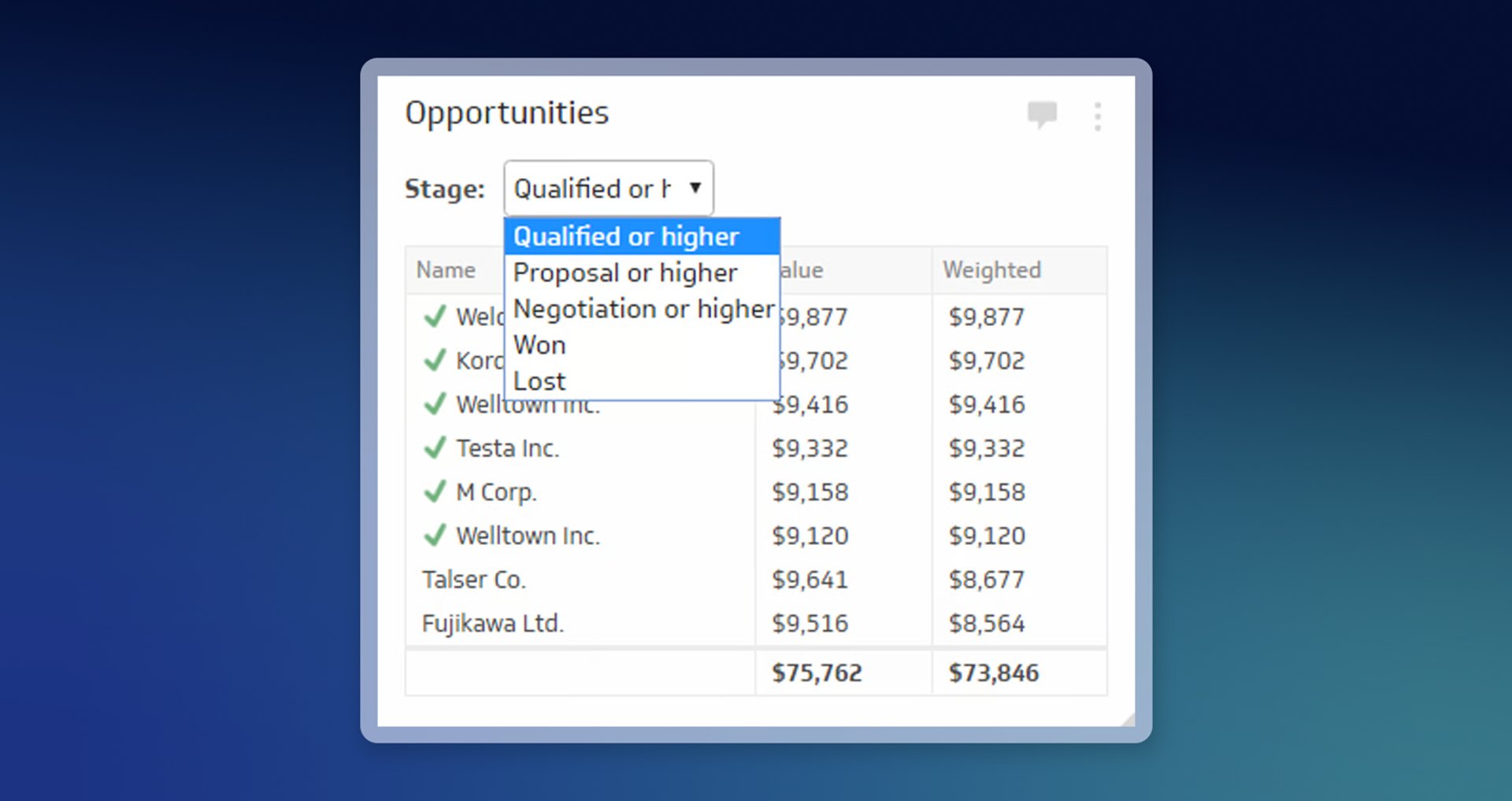
Managing active and upcoming sales is demanding for a small team. Knowing what's in the pipeline means opportunities don't slip through. Consider tracking this KPI using a Salesforce dashboard integration.
The Sales Opportunities KPI organizes prospects by opportunity value and probability of closing. Each prospect carries an estimated purchase value so your team can prioritize without a meeting to figure out where to focus.
Create custom dashboards for you and your team.
Get started with KlipsKnow your numbers without figuring it out yourself
Every business has unique processes and challenges. The KPIs above apply across industries, but the right set for your business depends on what you're trying to achieve.
For more industry-specific options, see our full list of KPI Examples. With Klipfolio Klips, you can bring these KPIs into a real-time business dashboard, share consistent numbers with your team, and stop wondering whether the figure you're looking at is current.
Published 2026-08-21


Most recent
- AUG 11Beyond simple sign-ups: how True Trials and Activation predict growth
- JUL 7Why business leaders miss important trends in their dashboards
- JUN 19The best chart for the job: Visualizing data for non-technical users
- JUN 95 tips to understand (and organize) your restaurant data
- MAY 26Think in Horizons, Not Seconds
- MAY 2010 Cloud BI Dashboard Tools for Small Businesses in 2026