

The value of monitoring how prospects convert into paying customers
Understanding your lead-to-win conversion rate is one of the most practical things a business owner can do to grow with confidence. This post breaks down what the ratio is, how to calculate it, and what the number is actually telling you about your product, sales, and marketing.
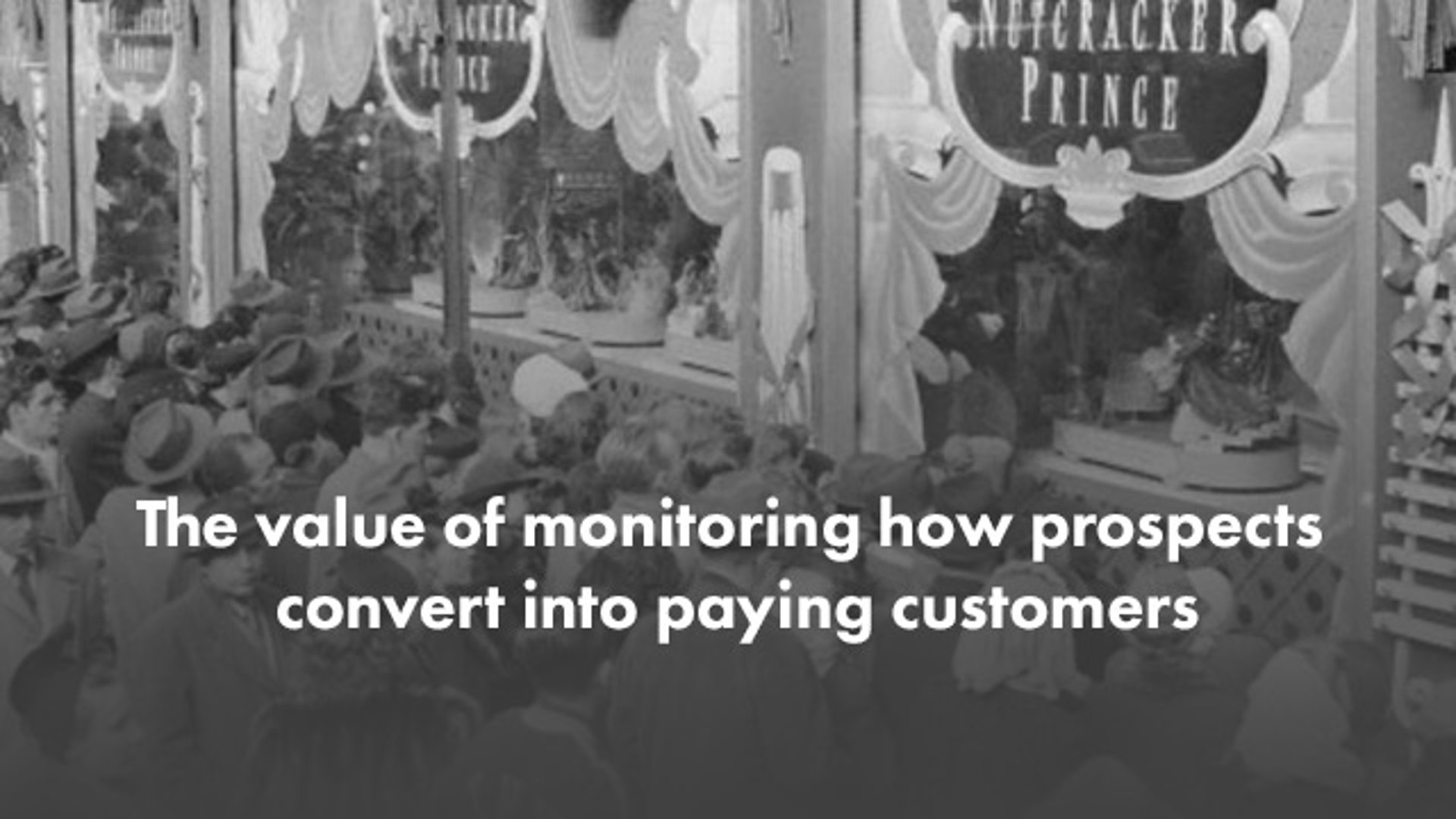
Understanding the lead-to-win conversion rate is one of the most practical things a business owner can do to grow with confidence. This post breaks down what it is, how to calculate it, and what the number is actually telling you.
What is the lead-to-win ratio?
The lead-to-win ratio is the proportion of people who express interest in your product to those who actually buy it. It tells you how well your business converts attention into revenue.
You only need two numbers: the count of prospective clients, and the count of new customers. The work is in defining those numbers clearly.
How prospects move through the funnel
Most businesses move prospects through several stages before a sale closes. At Klipfolio, the process starts when a visitor signs up for anything on our website. We call that person a captured lead.
Once we learn more about them and they show certain buying behaviours, we move them to our qualified leads list. From there, our sales team creates opportunities for serious buyers, and those buyers either convert into new wins or they don't.
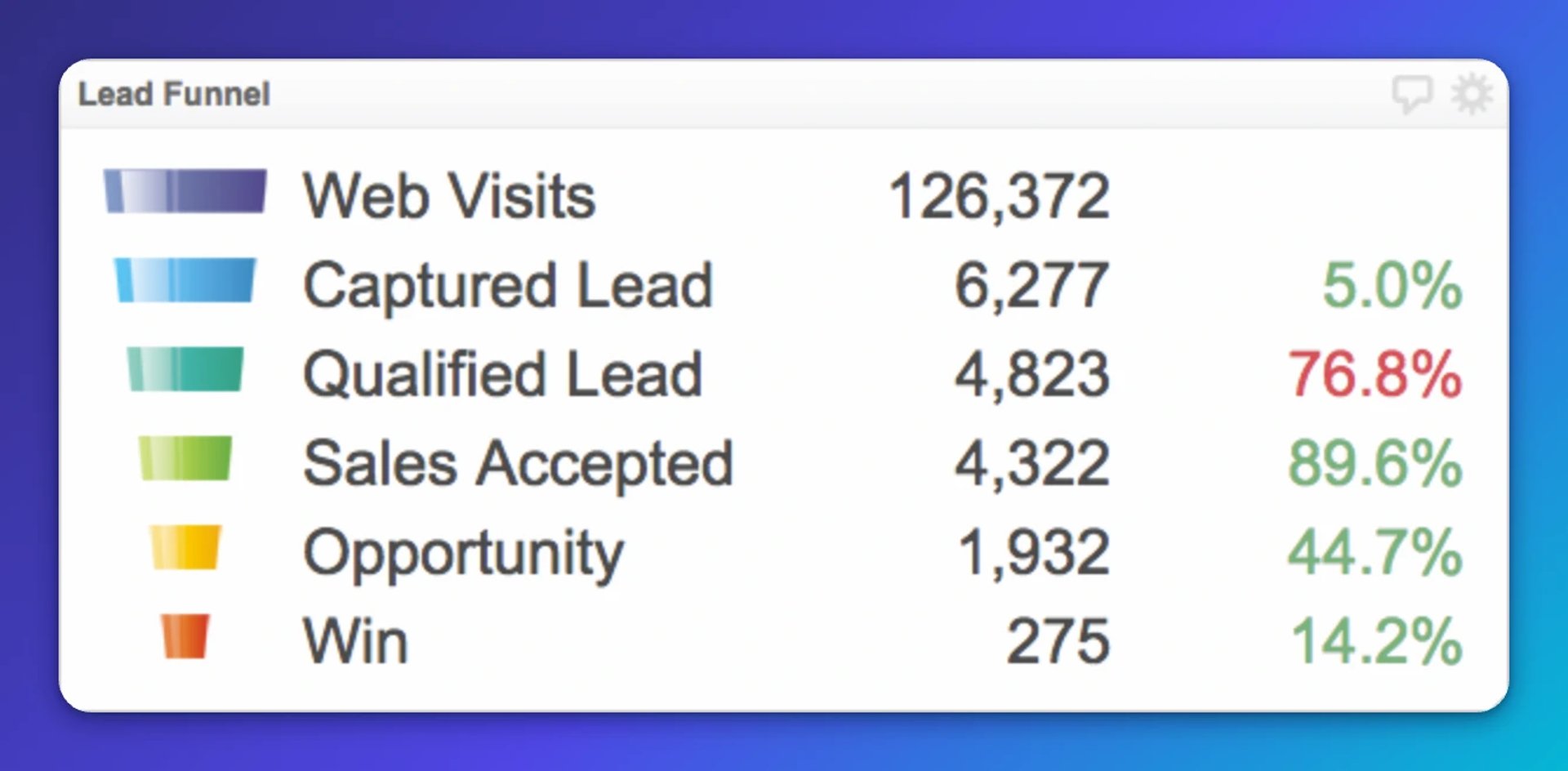
The key point: each stage matters. Measuring only the beginning and the end leaves you guessing about where things are going wrong. Every stage in the funnel is a decision point worth understanding.
Think of a bricks-and-mortar clothing store. The window display draws people in. The salesperson's opening question determines whether they browse or try something on. The fitting room experience influences whether they buy. Each stage can be improved, and each improvement compounds.
Defining your leads and customers
Before you calculate anything, you need clear definitions.
Qualified leads are not just anyone who visits your site. For us, a prospect becomes a qualified lead only after signing up for a trial. That act signals genuine intent, not casual curiosity. Going back to the clothing store analogy: they're trying on the clothes.
We use lighter-touch signals earlier in the funnel too. Downloading a white paper or subscribing to a newsletter tells us someone is doing more than window-shopping. But a trial signup is the threshold that counts.
New customers are people who sign up for a paid subscription for the first time. Upgrades from existing customers are tracked separately.
How to calculate the lead-to-win conversion rate
The formula is straightforward:
Lead-to-win rate = New customers / Qualified leads (over a defined period)
The time period depends on your sales cycle. A short cycle calls for month-over-month tracking. A longer cycle, such as an enterprise sale, might mean comparing leads from last quarter to wins this quarter.
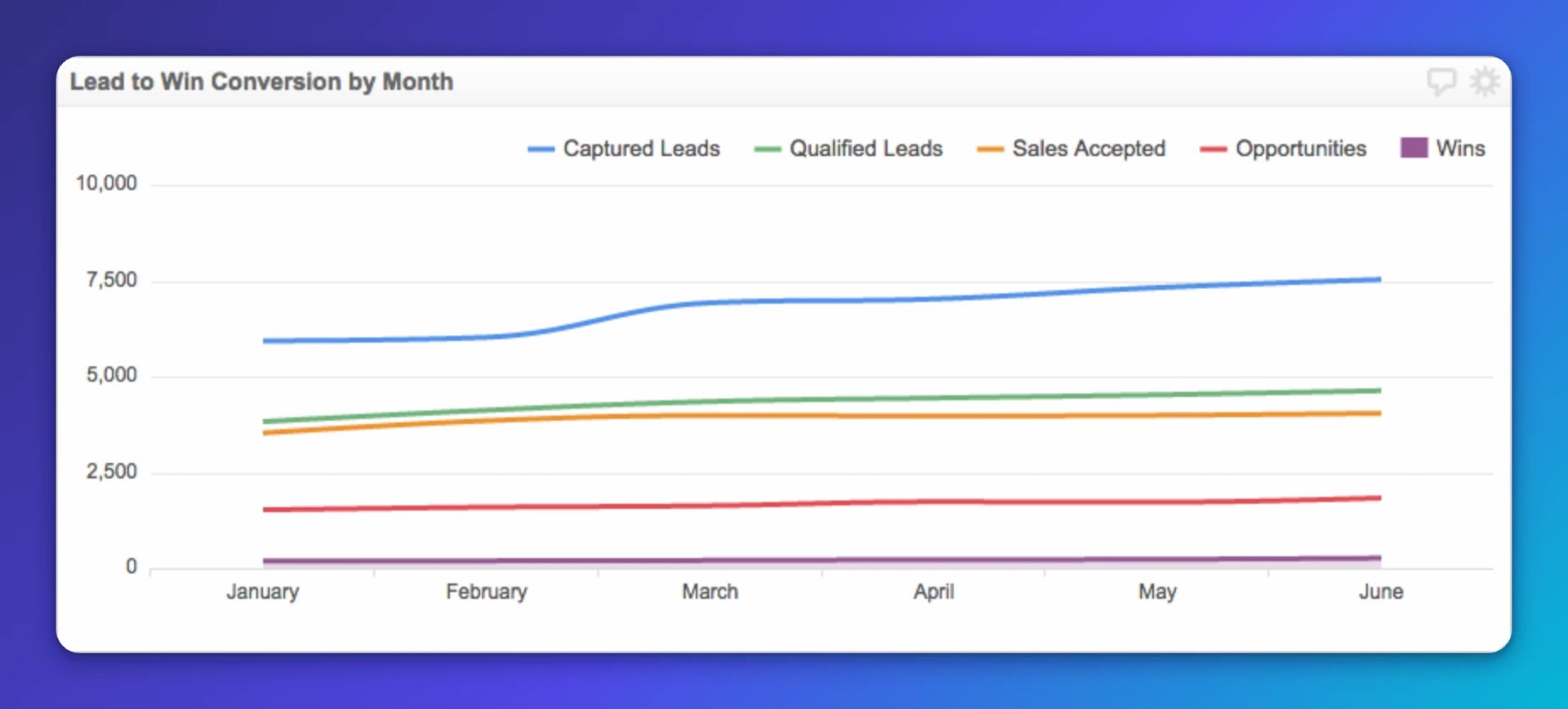
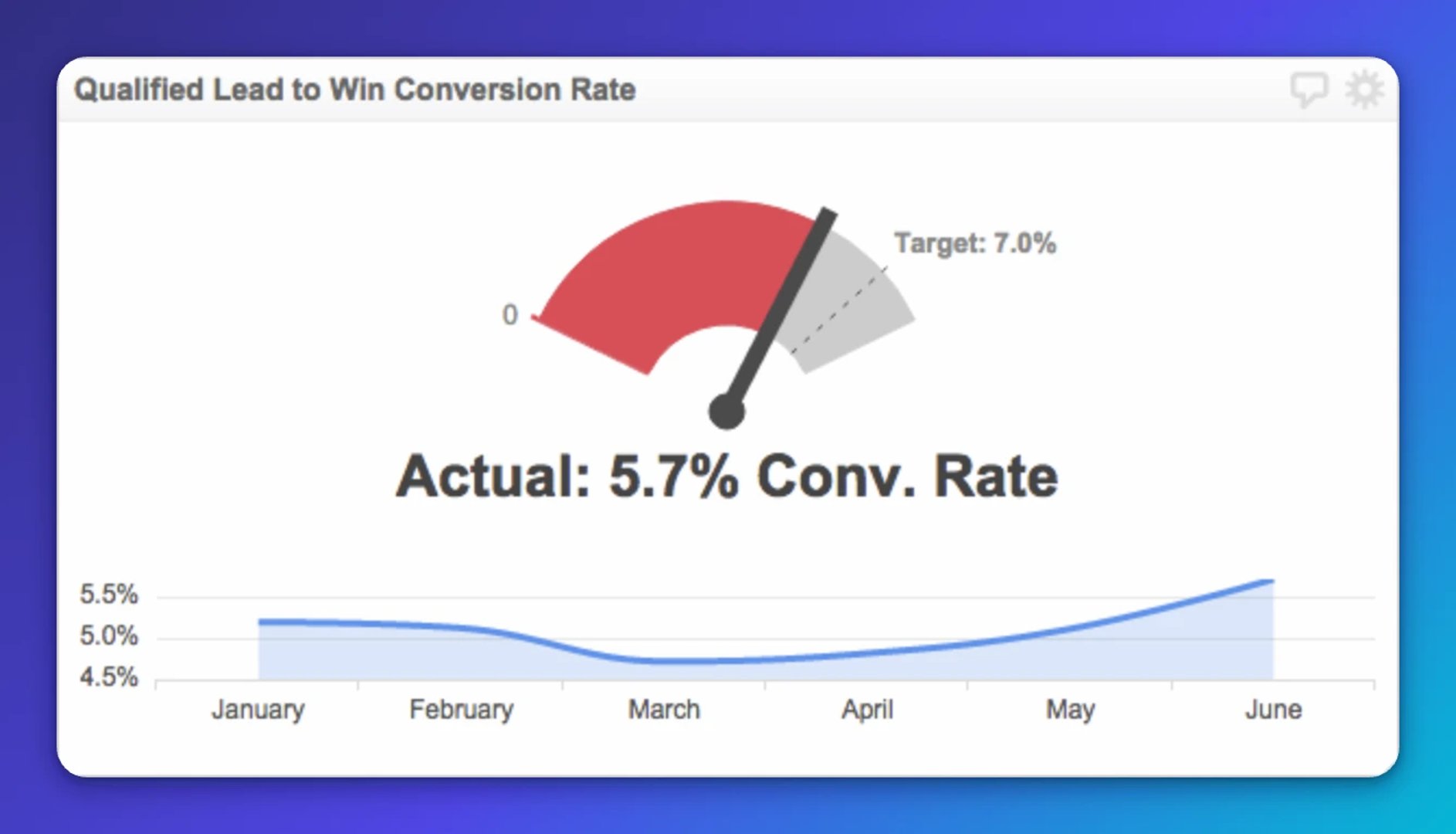
At Klipfolio, the conversion rate we watch most closely is qualified leads to new wins: of the people who started a trial, how many became paying customers each month? We aim for seven to twelve per cent. That range reflects what works for our business; your target will depend on your market, price point, and product.
What your conversion rate is telling you
The number itself is less important than the trend and the story behind it. A few things to watch:
Rate too low: Your price may be too high, the product may be hard to use, or the wrong people are entering the trial. If someone who won't benefit from the product is the one signing up, the conversion will fail no matter how good the product is. Sales and marketing need to be aligned on who the right person is.
Rate too high: Your price may be too low. Strong demand at a low price is not necessarily a good sign.
Rate fluctuating: Look at what changed. A pricing test, a product update, a new onboarding flow, or a shift in your lead source can all move the number.
The most useful thing you can do alongside tracking the rate is talking to people. Interview prospects who did not buy. Interview those who did. The patterns that emerge will tell you more than the metric alone.
Here is a concrete example of how small changes matter. We once had text on our trial signup form that read "No credit card required - free trial." We tested removing it. Counterintuitively, removing those words increased the conversion rate on that form. You cannot know what works until you test it.
Create custom dashboards for you and your team.
Get started with KlipsWhy this key performance indicator belongs on your radar
Pasting numbers into a spreadsheet once a quarter and hoping the trend looks right is not a strategy. Neither is asking someone to pull a report every time you need to make a pricing or positioning decision. The lead-to-win rate is one of the most important KPIs that any business can have because it sits at the intersection of product, sales, and marketing. When it moves, something meaningful has changed.
Monitoring it consistently, with reliable numbers that everyone on your team sees the same way, means you spend less time debating the data and more time acting on it. That is where the real value is.
Published 2026-08-22



Most recent
- AUG 11Beyond simple sign-ups: how True Trials and Activation predict growth
- JUL 7Why business leaders miss important trends in their dashboards
- JUN 19The best chart for the job: Visualizing data for non-technical users
- JUN 95 tips to understand (and organize) your restaurant data
- MAY 26Think in Horizons, Not Seconds
- MAY 2010 Cloud BI Dashboard Tools for Small Businesses in 2026