

On calm technology and business dashboards
Calm technology is any technology that empowers your periphery without disrupting your attention. Good business dashboards do exactly that: they sit quietly in the background, accurate and current, ready when you need them and out of your way when you don't. That's one of the quietest, most underrated advantages a business leader can have.

There's a concept in technology design called "calm technology," and it's a useful lens for thinking about what good business dashboards actually do.
Amber Case, a fellow at The Berkman Klein Center for Internet & Society at Harvard University, studies the impact of technology on how we live, with particular attention to focus and productivity. Her work on calm technology shaped how I think about dashboards.
Calm technology isn't about meditation apps or sleep trackers, although it could be. According to Case, it's any technology that empowers our periphery without disrupting our attention span.
In other words, it's when technology serves our needs rather than interrupts the pursuit of them.
A "smart refrigerator" that beeps and blinks to alert you of things you didn't need to know about (or could have learned far more easily) is not calm technology. It's the opposite: noise dressed up as helpfulness.
That framing stuck with me. I started taking a more critical view of the technology around me, asking what value it actually serves and how it respects (or doesn't) my ability to focus on what matters most.
As a result, I turned off every notification on my phone. I routinely log out of Slack for hours at a time and use Gmail filters and services like unroll.me so the emails that get my attention are actually deserving of it.
And all of this led me to think about business dashboards.
Create custom dashboards for you and your team.
Get started with KlipsCalm technology and business dashboards
I've watched people walk over to our booth at conferences, stop, and stare at our dashboards. Aesthetics draw them in. Then the practicality lands: "You mean I can see all of my most important social media KPIs in one place?"
But as an actual user of dashboards, what I've grown to love equally is this: I can check them when I need to, and they get out of my way when I don't.
Most business dashboard examples update in real time. That's useful. But real-time doesn't mean they should ping and blink and steal your focus unless that's specifically what you want. The value isn't the constant stream of data. The value is knowing the number is there, accurate and current, when you need it.
As Case put it:
"Technology shouldn't require all of our attention, just some of it, and only when necessary."
That's the distinction worth making. A dashboard that sits quietly in the background, ready when you need it, is doing its job. A dashboard that demands your attention every few minutes is just another distraction wearing a different label.
I know this failure mode well. I've caught myself staring at a real-time analytics view, watching live visitor counts tick up and down, while more meaningful metrics went unexamined. The tool was technically working. I was not.
The alternative to a well-structured dashboard isn't a better spreadsheet or a smarter report. Increasingly, it's pasting numbers into a generic AI tool and asking it to make sense of things, starting from scratch every time, re-explaining your business, your metrics, your context. That's not calm. That's just a different kind of noise.
A good dashboard gives a leader or founder the numbers they need to make a decision, presented clearly, without requiring them to go hunting. The team doesn't have to pull a report. The exec doesn't have to ask. The answer is already there.
That's calm technology. And for most business leaders, it's one of the quietest, most underrated advantages they have.
See also:
Calm Technology: Principles and Patterns for Non-Intrusive Design
Published 2026-08-21
More in Dashboards

The 5 ways to make your business partnership last a lifetime
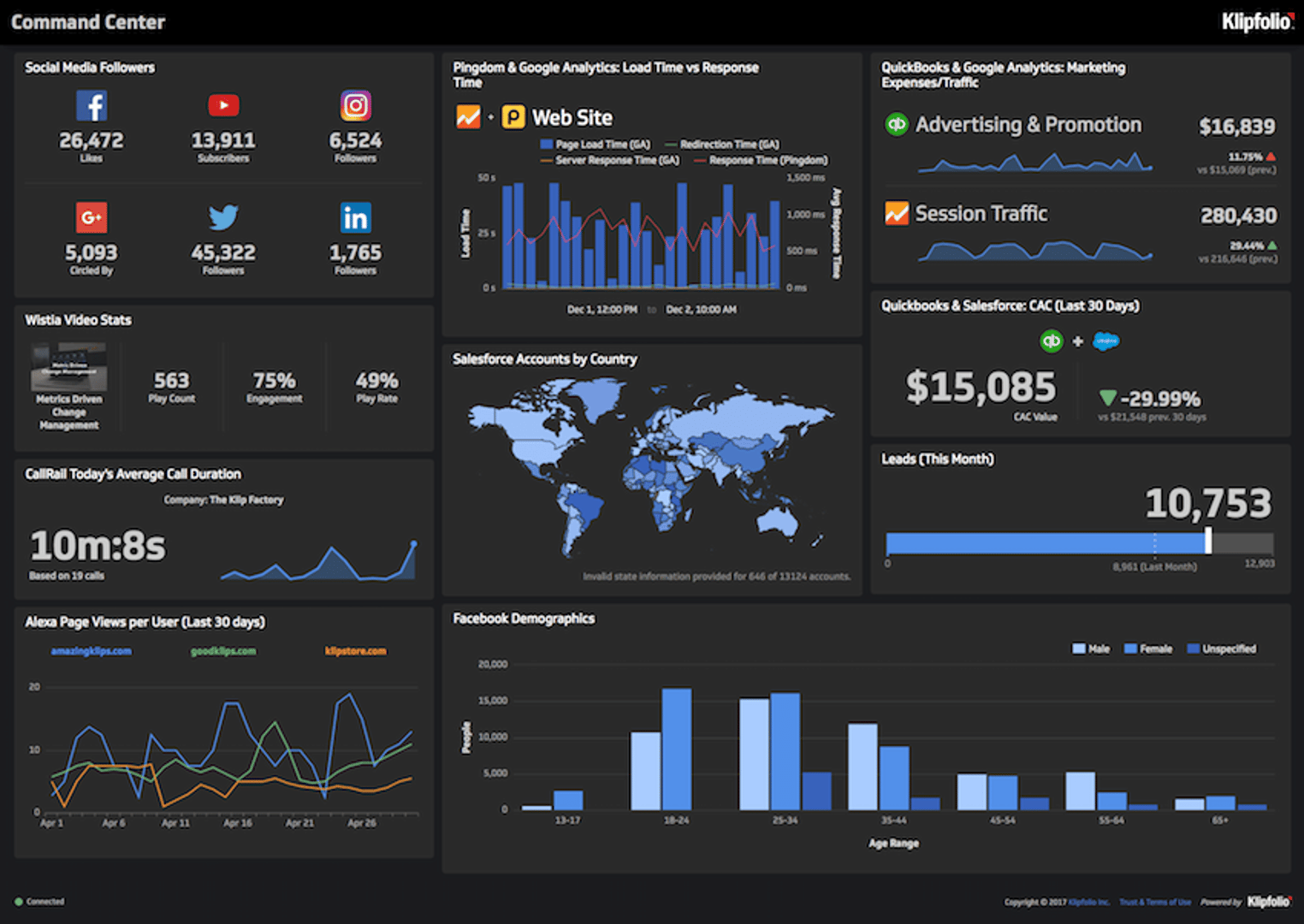
6 dashboards I use daily to run my SaaS company
Klipfolio Partner How-To #1: Duplicating dashboards across client accounts
Why every digital marketer needs to learn how to deploy marketing technology

The starter guide to dashboard design
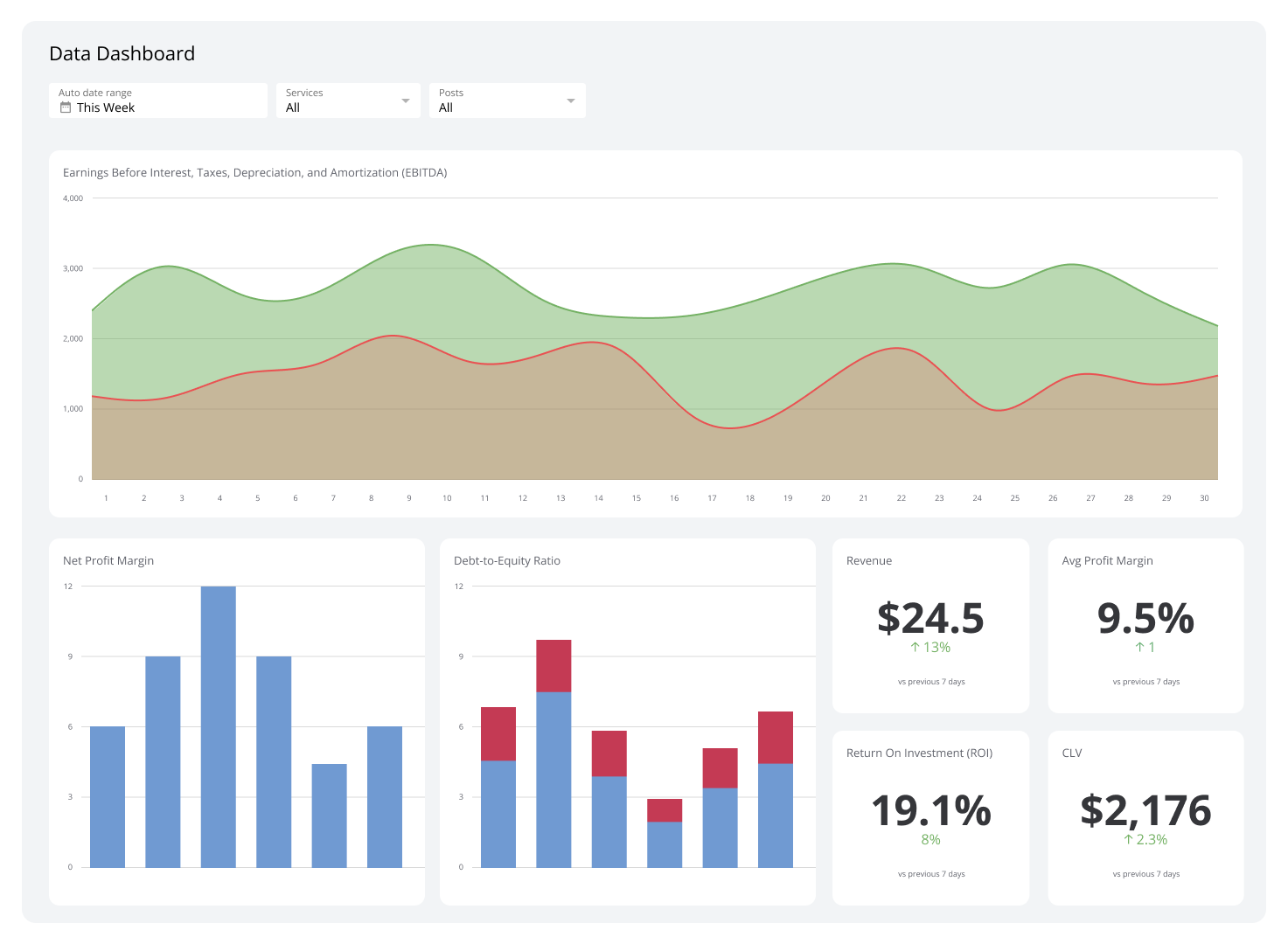
What is a data dashboard?
Most recent
- AUG 11Beyond simple sign-ups: how True Trials and Activation predict growth
- JUL 7Why business leaders miss important trends in their dashboards
- JUN 19The best chart for the job: Visualizing data for non-technical users
- JUN 95 tips to understand (and organize) your restaurant data
- MAY 26Think in Horizons, Not Seconds
- MAY 2010 Cloud BI Dashboard Tools for Small Businesses in 2026