

SaaS growth stage 101: How to maintain control while accelerating
SaaS leaders at the growth stage struggle to balance control with acceleration. This framework splits both into four manageable components: KPIs, culture, tools, and processes, so you can address each one deliberately rather than letting any quietly break down.

Just when SaaS leaders feel confident in their product/market fit, a new fear surfaces: losing control. It's a word founders use as though it has one meaning, but it rarely does.
The concern is real. You've built something that works, a strong product and a capable team. Right when the hardest part feels behind you, the ground starts to shift.
This is the growth stage: when the focus moves from survival to traction and expansion. And at this stage, a clear pattern emerges. Both "control" and "fuel" (the things that accelerate growth) each split into two distinct components. Naming them separately makes them manageable.
The four things you're actually trying to manage
SaaS leaders at the growth stage are juggling four things at once, even if they don't frame it that way:
- KPIs: which numbers to watch, and which to ignore for now
- Culture: what changes as you hire fast, and what you can protect
- Tools: how to choose without drowning in options
- Processes: how to build the habits that make tools and teams actually work
The leaders who scale without losing their footing address all four with intention. The ones who struggle usually conflate them, or focus on one while the others quietly break down.
KPIs: watch the right numbers for this stage
SaaS leaders at the growth stage feel pressure to measure everything. They want to hold onto the startup metrics they've relied on, like daily active users and net revenue retention, while also tracking key SaaS growth metrics like monthly recurring revenue (MRR) growth and churn rate.
That accumulation becomes overwhelming. Many leaders then jump ahead, pulling in efficiency metrics like Gross Margin and LTV:CAC before the business is ready to act on them.
The hard truth: focus on KPIs that will get you where you want to go, not those that describe where you are or will matter once you've arrived.
The right metric is the one that tells you what to do next. When every leader on your team is looking at the same numbers, in the same format, without having to chase a spreadsheet or paste figures into a chat window to get an answer, decisions get faster and more consistent. That's not a reporting problem. That's a clarity problem, and it compounds quickly as you scale.
For deeper guidance on which KPIs matter at each stage, see the key metrics of modern business leaders.
Culture: expect it to change, then shape it deliberately
Reaching product/market fit requires building both a valuable product and a capable team. As hiring accelerates, many leaders fear the culture they've built will erode.
It will change. That's not a failure.
When it's just you and a few co-founders, culture feels stable because it's implicit. Each new hire introduces new elements. Some will strengthen what you've built; others will dilute it. The leaders who handle this well don't try to freeze culture in place. They name it explicitly, hire against it, and revisit it as the company grows.
This is a different problem from KPI discipline, and it needs a different response. Conflating the two is where many leaders waste energy. For a candid look at how one growing company worked through this, read The Untold Story of Buffer's Values: Why We Created Them, and Why It Hurt.
Tools: choose deliberately, then stop choosing
A growing SaaS company prepares to scale its marketing and sales teams, then hits this:
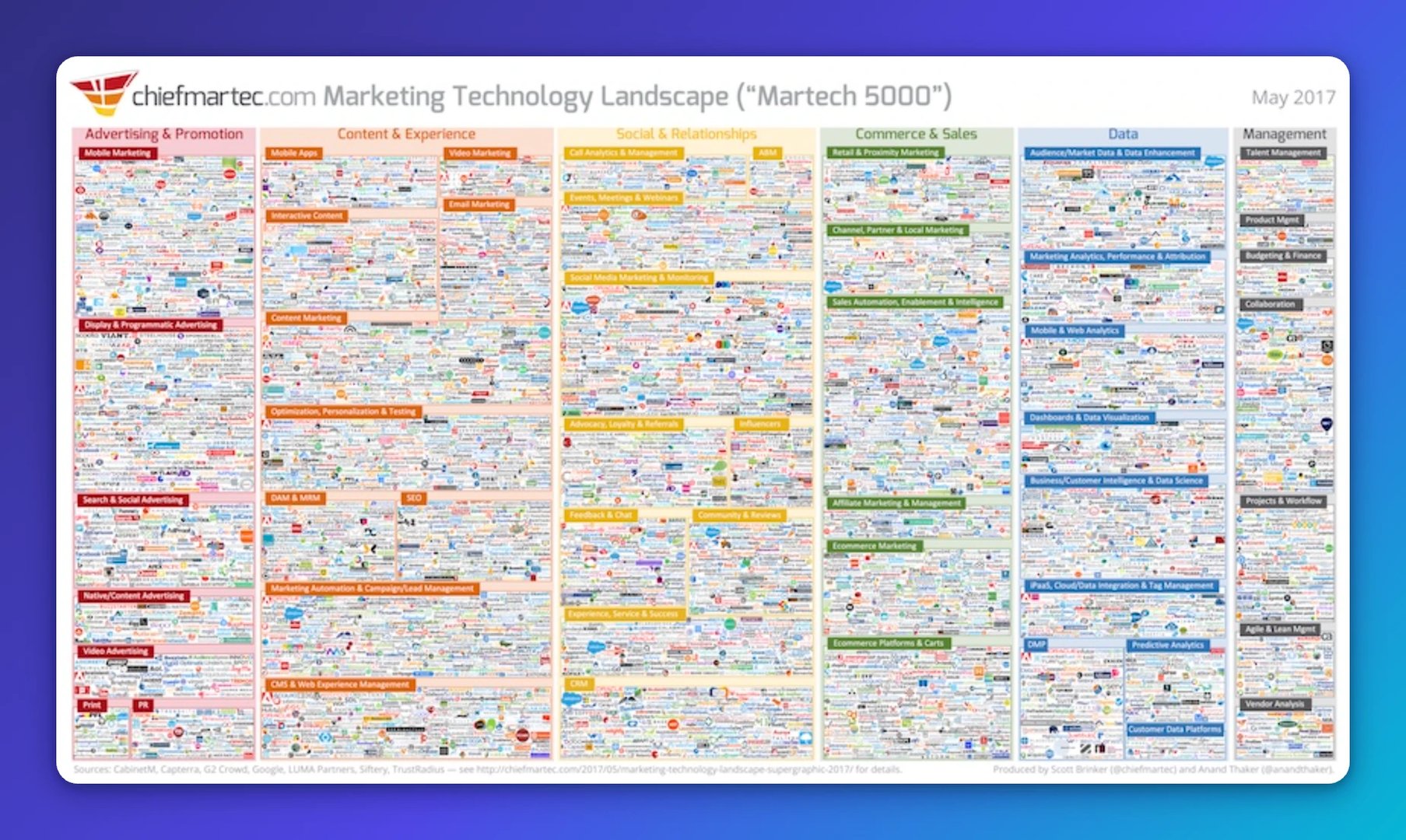
It's not just the volume of options. Vendors chase you with emails, LinkedIn messages, and direct messages claiming you need their product to grow. Then there's the time lost to free trials, demo calls, and learning curves after you decide.
That overwhelm drains the one resource a young growth team can't replace: time.
The discipline here is patience and selectivity. Lock in the tools that fit your actual workflow, not the ones with the best pitch. Once you've made those calls, stop revisiting them. The next problem is building around them.
Processes: the habits that make everything else work
Tools don't create momentum. Processes do. The daily and weekly habits that build into an automatic cadence are what let a team actually use its tools, and stay aligned as it grows.
Two things make this work: delegation (not everyone should be in everything) and clear communication channels (so information flows without friction).
Consider what happens to team communication as headcount grows:

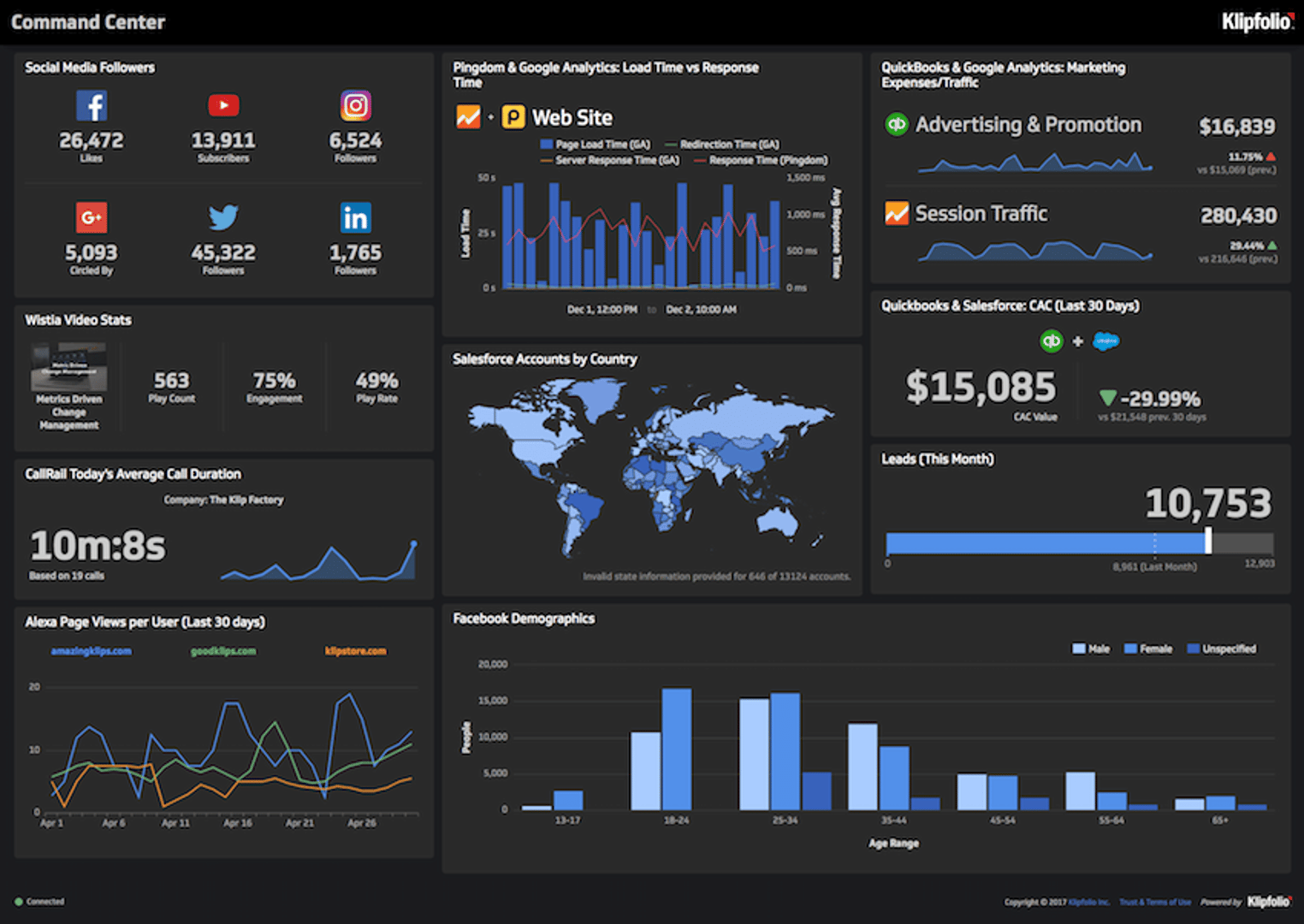
The same principle applies to how your team accesses data. If getting a number requires asking someone, waiting for a report, or figuring it out yourself, that's a process gap, not a data gap. The teams that operate with real confidence are the ones where the right information is already in front of the right people, without anyone having to ask.
Feeling in control while accelerating
Control and fuel aren't mysterious forces. They're manageable when you split them into their component parts.
Focus your KPI strategy on growth metrics, not efficiency metrics you'll need later. Shape your culture proactively instead of hoping it survives hiring. Choose tools with patience, then commit. Build processes that give your team clarity without friction.
The companies that thrive at the growth stage don't do all four perfectly. They do them deliberately.
Create custom dashboards for you and your team.
Get started with KlipsSee also
Published 2026-08-24




Most recent
- AUG 11Beyond simple sign-ups: how True Trials and Activation predict growth
- JUL 7Why business leaders miss important trends in their dashboards
- JUN 19The best chart for the job: Visualizing data for non-technical users
- JUN 95 tips to understand (and organize) your restaurant data
- MAY 26Think in Horizons, Not Seconds
- MAY 2010 Cloud BI Dashboard Tools for Small Businesses in 2026