

Why are KPIs important?
KPIs (key performance indicators) are measurable values that show how effectively a company is achieving its key business objectives. This article explains why KPIs matter, covering four core benefits: strengthening employee morale, supporting business objectives, fostering personal growth, and improving performance management. It also walks through how to identify your most important KPI and the best ways to monitor progress toward it.

Numbers don't lie, but they don't explain themselves either. Key Performance Indicators give you the context to know whether a number is good news, bad news, or a signal to act.
What is a KPI? A KPI (key performance indicator) is a measurable value that shows how effectively a company is achieving a key business objective.
KPIs matter because they replace guesswork with clarity. Instead of piecing together a picture from scattered reports or pasting numbers into a chatbot and hoping for insight, you have a single, reliable view of what's working and what needs attention. You can compare results against benchmarks, such as industry standards, competitor performance, or your own historical results, and know exactly where you stand.
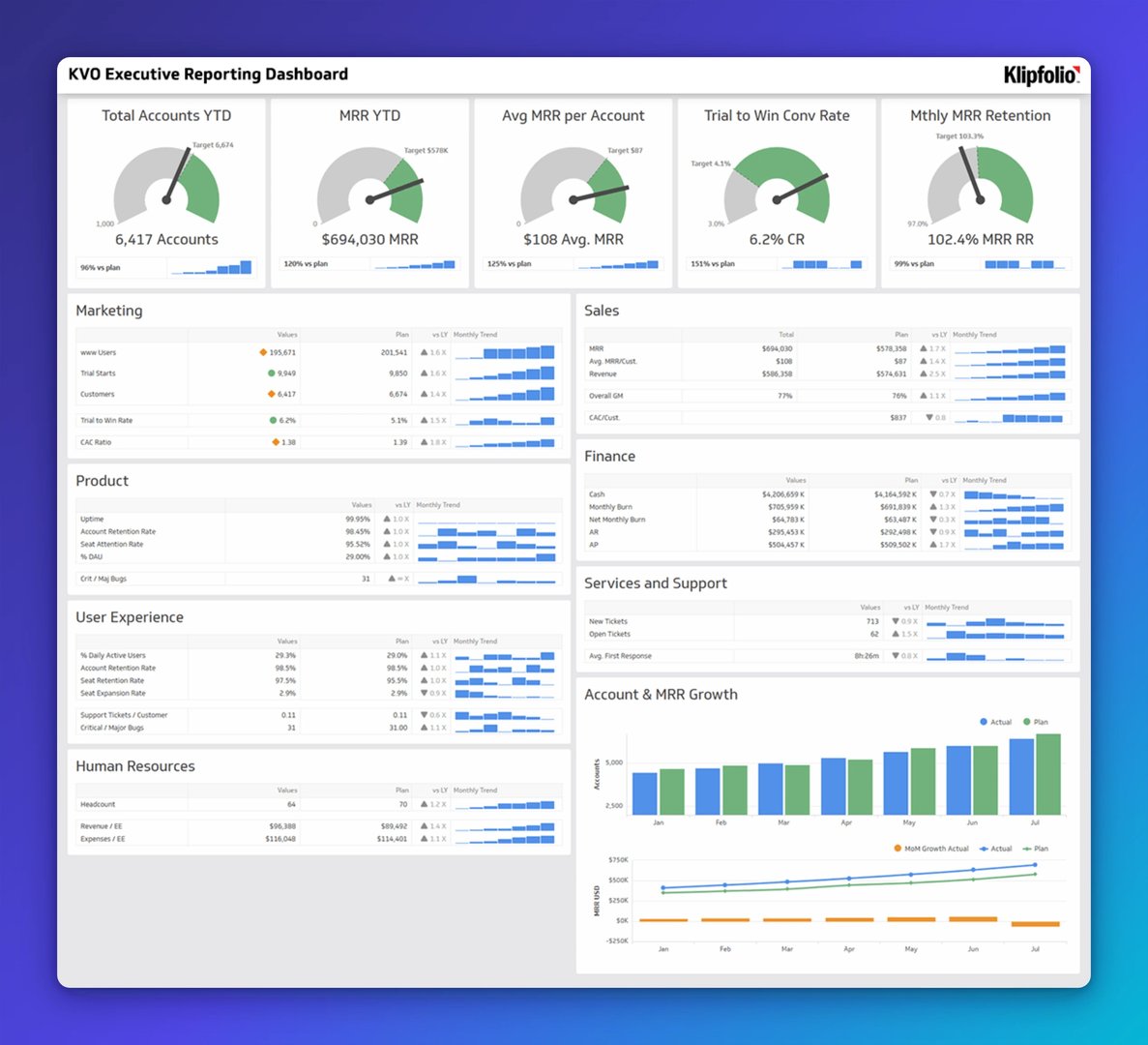
Why are KPIs important?
KPIs matter for businesses for four core reasons:
- KPIs strengthen employee morale by making individual contributions visible and meaningful.
- KPIs support business objectives by keeping priorities front and centre across the team.
- KPIs foster personal growth by turning performance data into a continuous feedback loop.
- KPIs are critical for performance management by replacing subjective assessments with clear, shared numbers.
KPIs strengthen employee morale
This is one of the most under-used benefits of KPIs.
A culture that motivates and supports people will outperform one that does not. Tracking KPIs isn't just about measurement. It's about acknowledging hard work and building accountability.
When everyone has KPIs they own, there's a sense of purpose in daily work and tangible evidence of each person's contribution. As a company grows, people can feel disconnected from overall results. Well-chosen KPIs close that gap, giving each person a direct link between their effort and the organization's progress.
The relationship between KPIs and business objectives
KPIs keep business objectives front and centre, not buried in a quarterly review.
When people know and are responsible for their KPIs, broader goals stay top of mind. Day-to-day decisions happen with intention, aligned to what actually matters. That alignment is what separates a team that's busy from a team that's moving in the right direction.
KPIs foster personal growth
Not every campaign or initiative will hit its target. Tracking performance against KPIs, wins and misses alike, creates a culture of continuous learning.
With KPIs, teams see how they're performing without waiting until the end of a quarter. When results are visible in real time, you can ask "what, why, how, and when" at any moment. Learning from both successes and failures becomes a daily habit, not a retrospective exercise.
Monitoring personal KPIs also helps people adjust in the moment, increasing the likelihood of hitting goals and building the confidence to repeat that performance.
The importance of KPIs for performance management
What gets measured gets managed. That's the most definitive reason KPIs matter.
KPIs simplify performance management by making results visible. Everyone can see what they're doing, what others are doing, and how the team is tracking as a whole. The answer to "How are we doing?" is clear and measurable, not buried in spreadsheets or assembled from memory.
Tracking your sales KPIs or marketing KPIs in an open, transparent way builds accountability across the team. It also saves the hours spent pulling numbers together before every meeting, so leaders spend less time figuring out what happened and more time deciding what to do next.
An example of KPIs in business
Consider this question: In your current role, what's your most important KPI? How did you select it, why does it matter, and how are you monitoring progress toward it?
Did you answer immediately, or did you pause?
If you follow our blog, you might rattle off the top five or ten KPIs in your industry. But narrowing it to one is harder. What single KPI best represents how you drive the business forward?
Keep that answer close. It can guide your daily work and help you clearly communicate your impact to the people who need to know.
How did you select this KPI?
Knowing your KPI is one thing. Understanding why it's the right one is more important.
What challenge was your team facing? What process did you use to narrow down the options? Why is this KPI the most relevant right now?
Every KPI tells a story. Understanding that story helps you, and the people around you, stay focused on the bigger picture.
How are you monitoring progress toward this KPI?
Once you've identified your most important KPI, you need to show how you're tracking it.
Are you monitoring in spreadsheets, using in-app reporting tools, or working with a real-time dashboard? Each approach has a different cost in time and confidence. Spreadsheets require someone to pull and reconcile numbers. In-app tools show one source at a time. A real-time dashboard surfaces the number you need without you having to ask for it.
The right monitoring approach means you're never waiting on a number when a decision can't wait.
Create custom dashboards for you and your team.
Get started with KlipsKeep it focused
When it comes to KPIs, less is more. The fewer you track, the better you'll manage them.
If you had to choose just one KPI, the one that defines your impact, which would it be? How did you choose it? Why does it matter? How are you monitoring it?
Answering those questions will sharpen your focus, build your credibility with the people you report to, and give you the clarity to act when the number changes.
Published 2026-08-23



Most recent
- AUG 11Beyond simple sign-ups: how True Trials and Activation predict growth
- JUL 7Why business leaders miss important trends in their dashboards
- JUN 19The best chart for the job: Visualizing data for non-technical users
- JUN 95 tips to understand (and organize) your restaurant data
- MAY 26Think in Horizons, Not Seconds
- MAY 2010 Cloud BI Dashboard Tools for Small Businesses in 2026