

6 reasons every SaaS startup needs a customer retention dashboard
Every SaaS startup needs to understand churn and customer retention numbers with precision. A customer retention dashboard built in Klipfolio Klips gives your whole team real-time visibility into the metrics that keep the business healthy, from cancellations and contractions to expansion revenue. Here are 6 reasons every SaaS startup needs one.
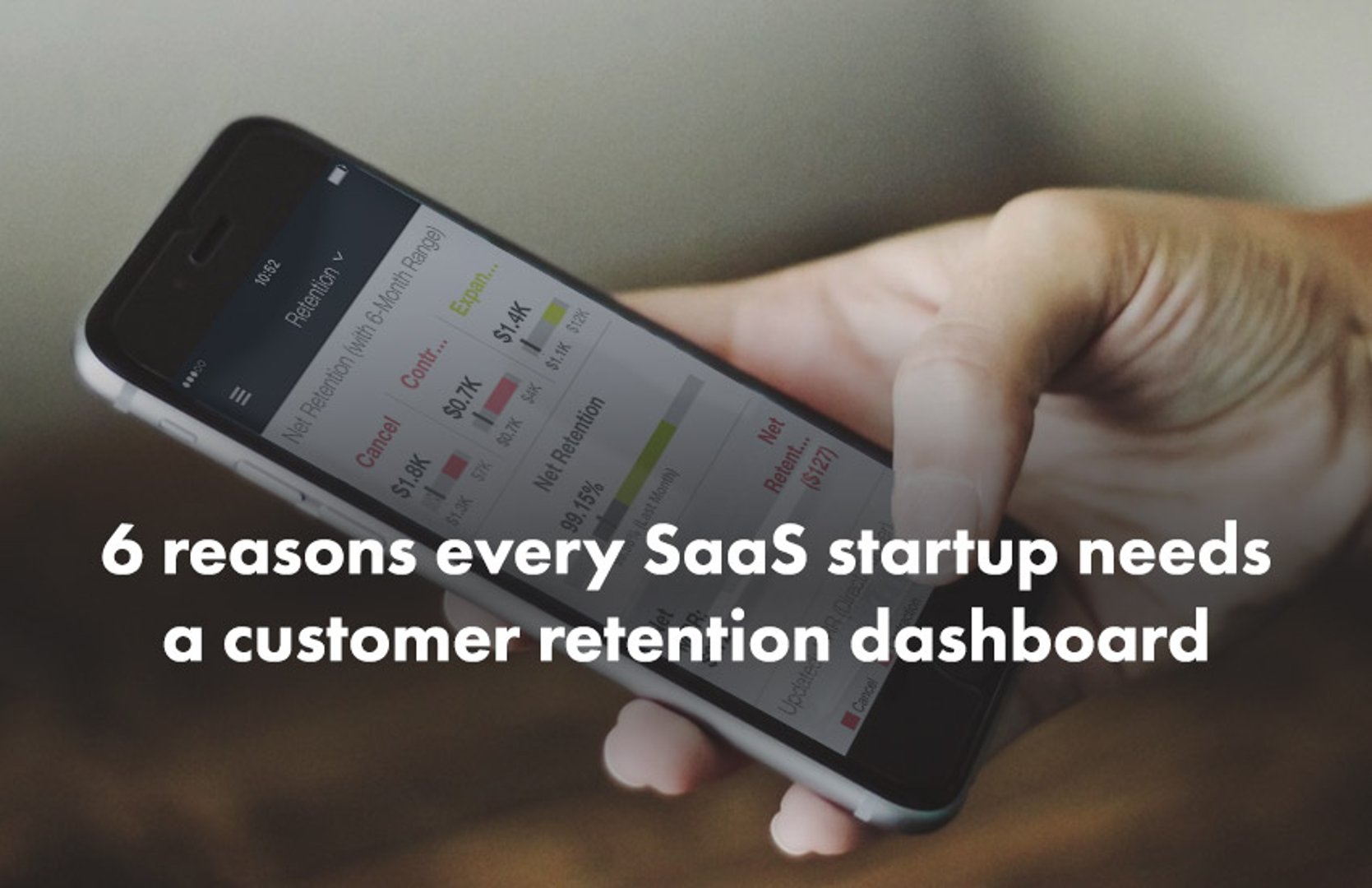
Every SaaS startup knows the importance of understanding churn and customer retention numbers. These SaaS metrics are essential for growing and scaling your business, and they need to be understood with precision. Even early-stage startups focused on acquisition need to keep retention metrics top of mind. One of the best ways to do that is to build a customer retention dashboard in Klipfolio Klips.
Here are 6 reasons every SaaS startup needs one.
1. A customer retention dashboard is faster than manual reports
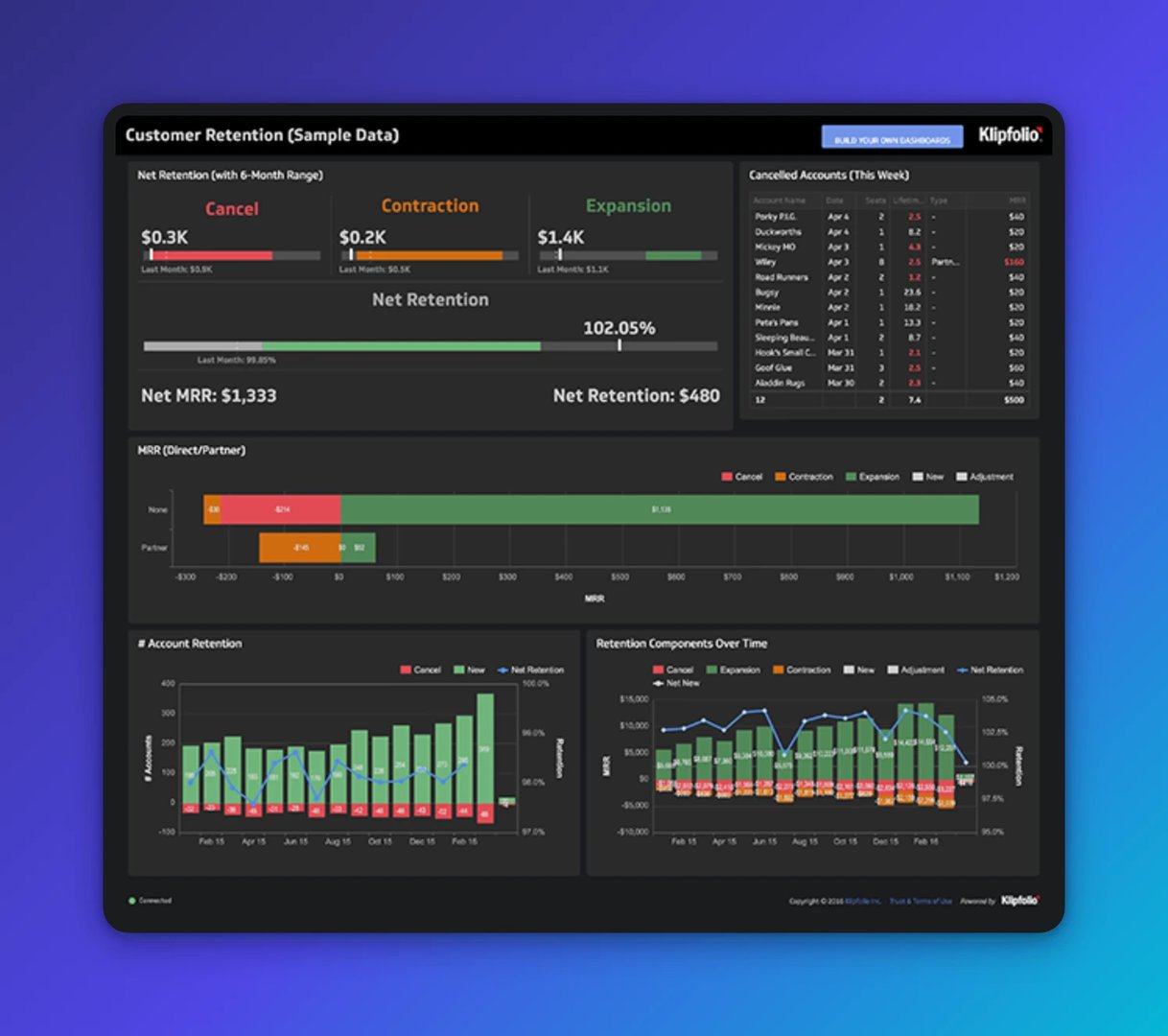
Retention questions never stop. How did we do last month? How are we tracking this month? How do different cohorts compare? Answering those questions manually, by pulling numbers from a CRM, a payment system, and a spreadsheet, takes time your team doesn't have.
A customer retention dashboard answers those questions before anyone has to ask. When you've defined your organization's KPIs and connected your data sources, the numbers are already there. Combine data from a payment system like Zuora and your CRM like Salesforce, and the dashboard handles the heavy lifting automatically.
You spend less time explaining where a number came from and more time deciding what to do about it.
2. Your retention data needs to be current
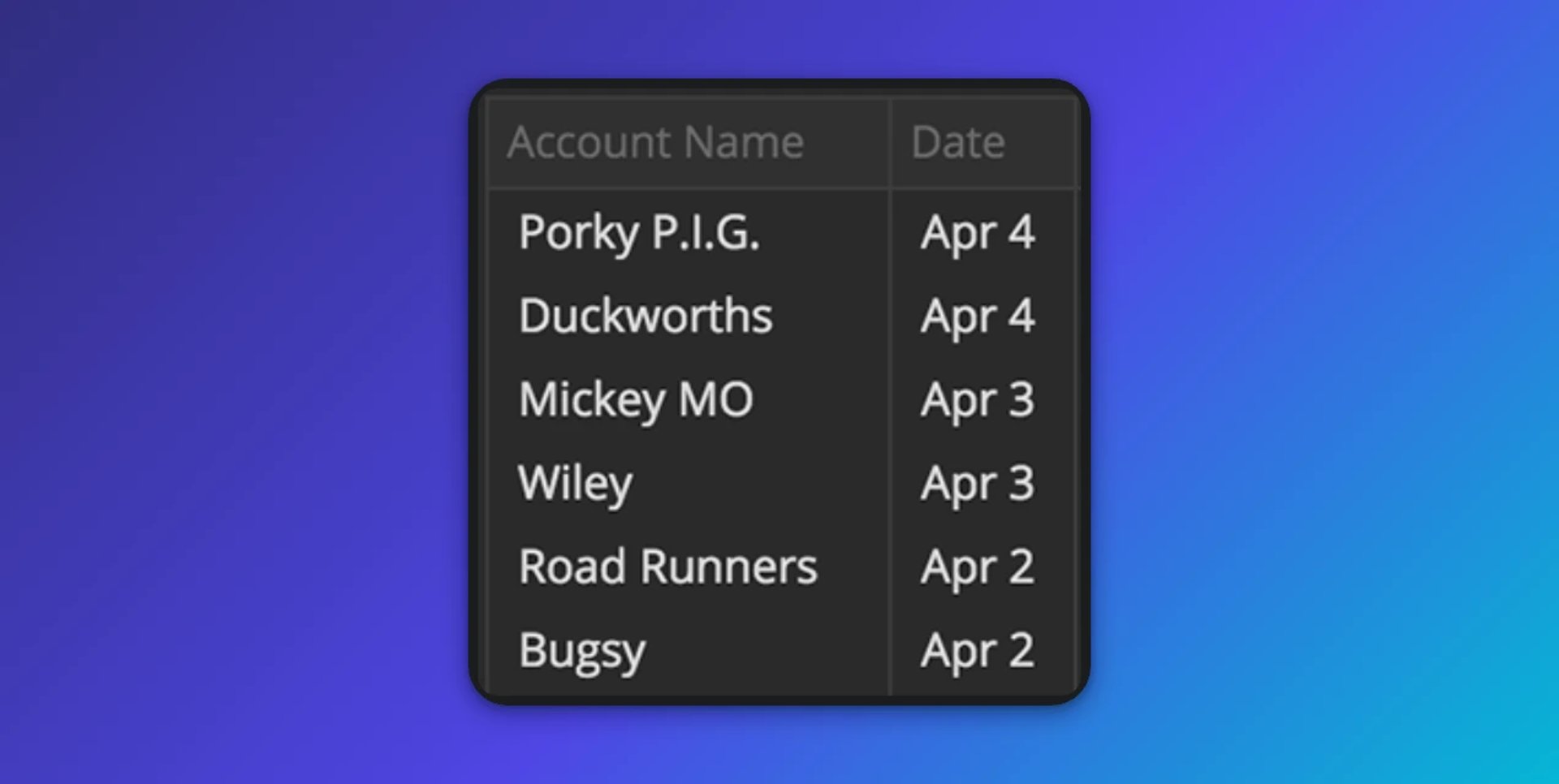
Waiting until the end of the month for a retention report doesn't work for fast-moving startups. By the time the report lands, everything in it has already happened. You can study trends, but you can't change last week's outcome.
A real-time dashboard changes that. When you see early signs that a customer might be at risk, you can act on that information today. Even knowing that a customer churned this morning gives you a window to reach out, learn what went wrong, and sometimes save the account.
You don't have to wait three weeks to discover that a feature change shifted behaviour. You see it as it happens and respond while it still matters.
3. A dashboard keeps retention top of mind
Customer retention isn't only the responsibility of a customer success team. It should be part of your startup's DNA. Share retention numbers across the entire organization, from development and QA to marketing and support.
A retention dashboard built in Klipfolio Klips becomes a shared reference point for conversations across teams. A wallboard TV dashboard keeps everyone thinking about customer success throughout the day. For the executive team and the board, a mobile dashboard reinforces that retention is a real-time, always-on priority, not a number that surfaces once a quarter.
When the whole team can see the same numbers, accountability follows naturally.
4. Use your retention dashboard to take action
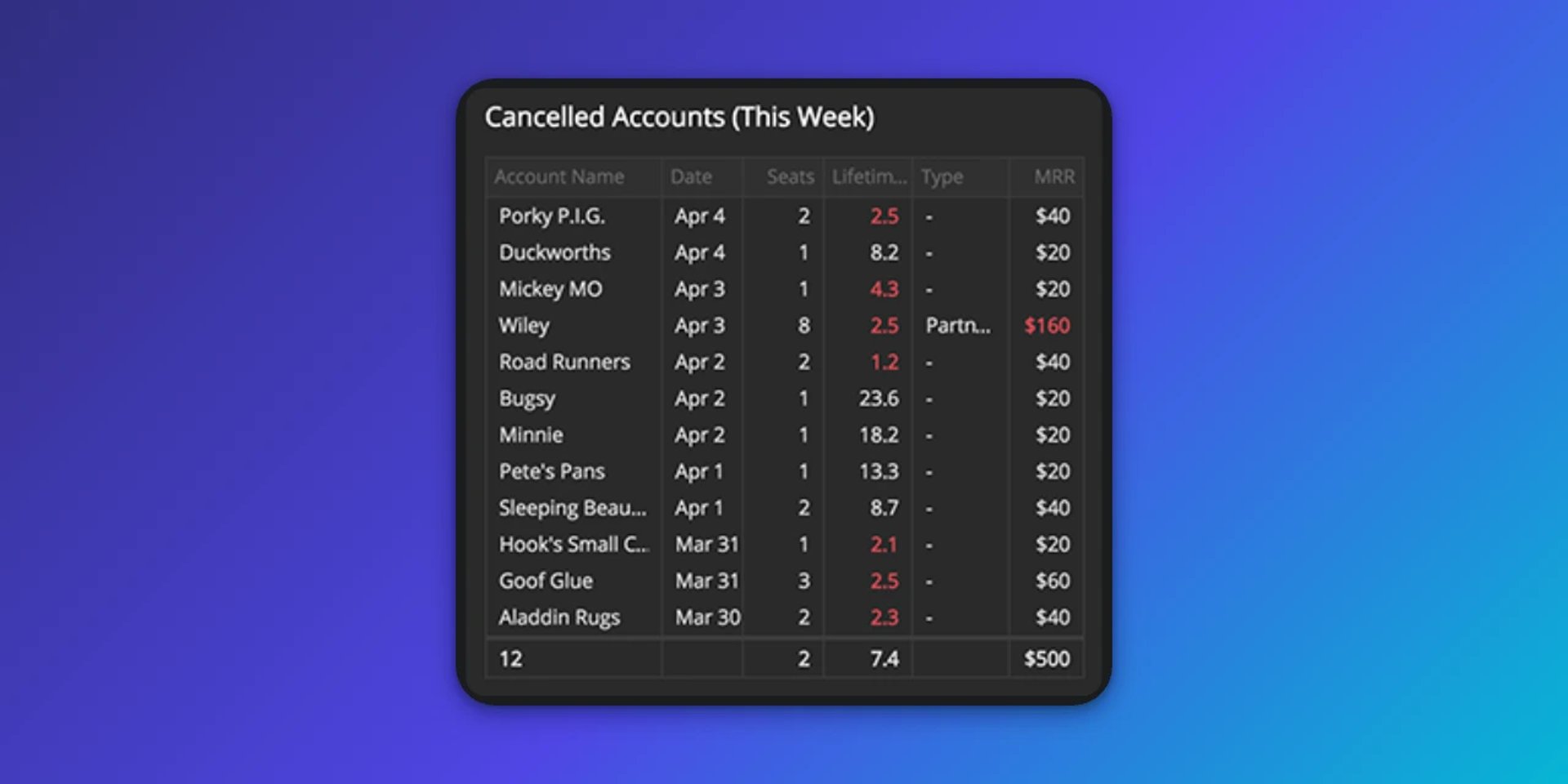
A real-time retention dashboard surfaces cancellations as they happen. That makes it easier to understand why customers are leaving, pass quick feedback to product and development, and reach out while there's still a chance to help.
That last part matters more than most teams expect. In many cases, a timely outreach after a cancellation creates an opportunity to resolve the issue. Sometimes a customer cancels because the primary contact moved on and the new contact doesn't yet see your product's value. A quick conversation can change that outcome, and at minimum, it tells you what went wrong so you can prevent it with other customers.
A dashboard makes that response possible. Pasting numbers into a spreadsheet or asking a generic AI tool to summarize a CSV doesn't tell you when to act. A live dashboard does.
5. Be proactive about customer retention
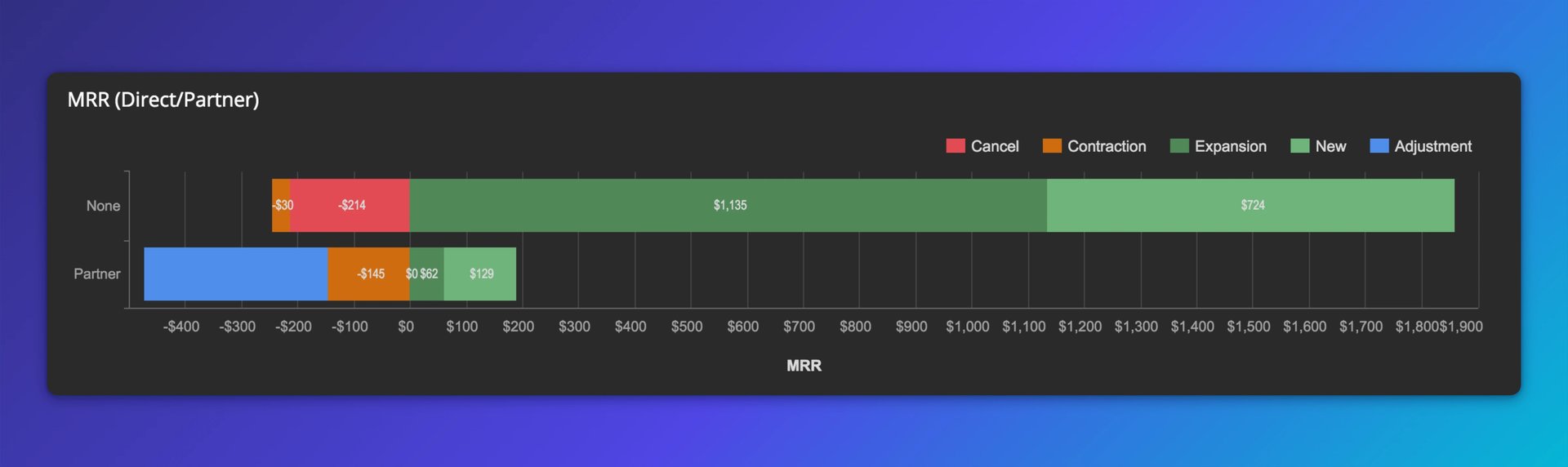
The same dashboard that alerts you minutes after an event also surfaces trends early enough to do something about them. Track cancellations, contractions, and expansions together, and you get a clear picture of where Monthly Recurring Revenue (MRR) is heading before the month closes.
Being proactive means stopping early indicators before they become trends. If contractions are climbing, run an expansion campaign with your marketing team. If cancellations are ticking up, a customer webinar can help users get more value from your product before they decide to leave.
That kind of early action is only possible when the numbers are in front of you consistently, not buried in a report you have to remember to pull.
6. Celebrate your success
Dashboards have the power to unify a team around common goals. A customer retention dashboard isn't only a warning system; it's also how wins become visible. When retention improves, when expansion revenue climbs, when a cohort outperforms expectations, the dashboard makes that real for everyone.
Shared visibility creates shared motivation. Rally the entire team around the customer, and the dashboard becomes a reason to keep pushing, not just a place to track problems.
Create custom dashboards for you and your team.
Get started with KlipsBuild your customer retention dashboard today
Every SaaS startup needs to monitor customer success metrics closely. The essential metrics for your dashboard include customer retention, churn, cancellations, contractions, and expansions. Put those metrics on a real-time dashboard and the entire team stays focused on what keeps the business healthy.
Building a customer retention dashboard is straightforward. Here's what you need:
- Access to your data sources: typically a CRM and a payment system where customer success numbers live
- A few hours to set up: connect your sources, configure your Klips, and automate the refresh
Looking for design ideas? Check out this live retention dashboard to see what's possible.
Published 2026-08-23
More in Dashboards
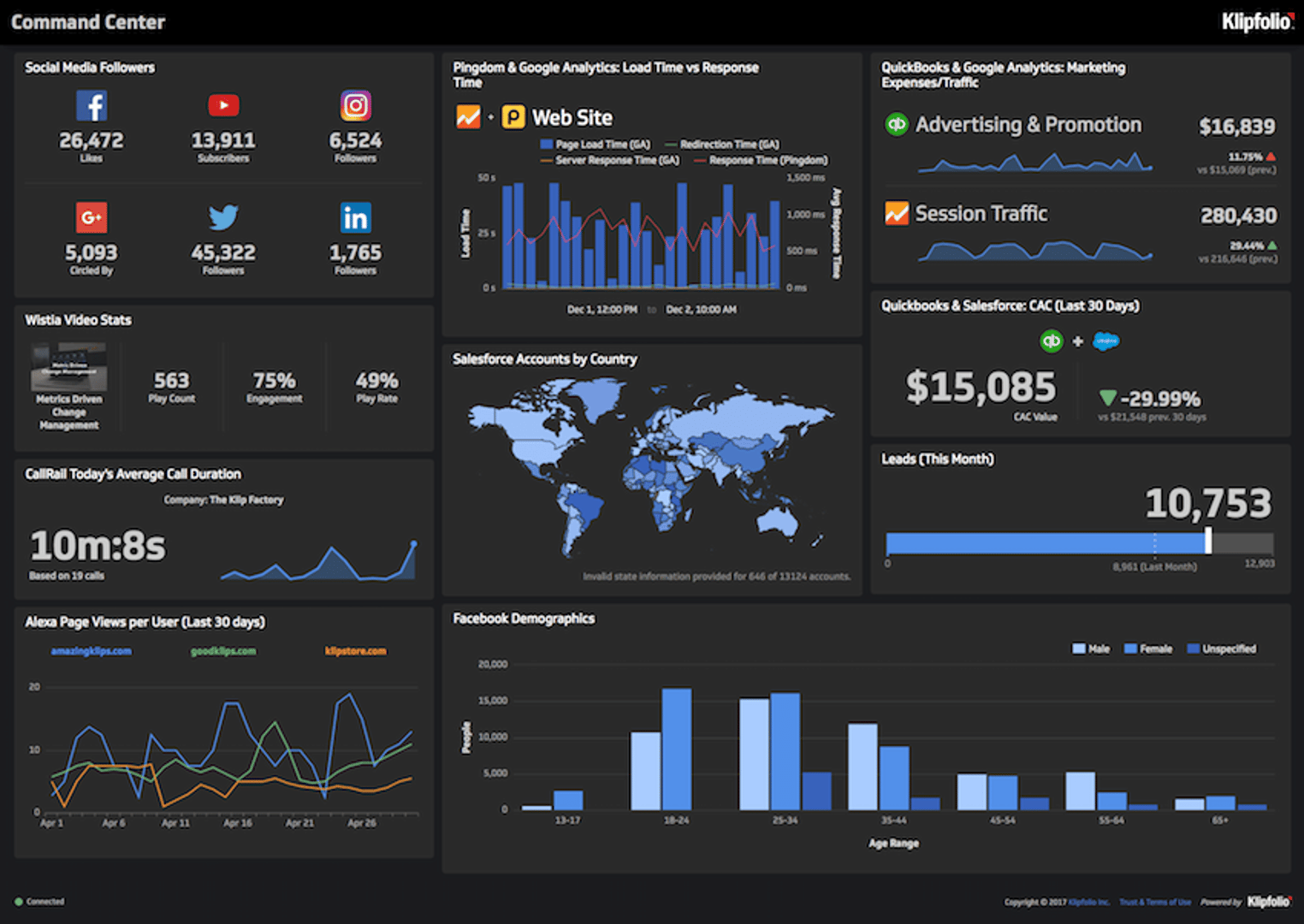
6 dashboards I use daily to run my SaaS company

The Hidden Value of SaaS Sign Up Rate Benchmarks

Klipfolio Partner How-To #1: Duplicating dashboards across client accounts

Top 10 Marketing Dashboard Ideas for Tech Companies

The ultimate guide to SaaS KPIs and metrics

The starter guide to dashboard design
Most recent
- AUG 11Beyond simple sign-ups: how True Trials and Activation predict growth
- JUL 7Why business leaders miss important trends in their dashboards
- JUN 19The best chart for the job: Visualizing data for non-technical users
- JUN 95 tips to understand (and organize) your restaurant data
- MAY 26Think in Horizons, Not Seconds
- MAY 2010 Cloud BI Dashboard Tools for Small Businesses in 2026