

How to identify your KPIs
KPIs do not begin to impact your business until you have identified which ones are most important. This article explains how to choose KPIs that drive real behaviour, avoid common mistakes, and keep your metrics relevant as your business grows. Includes 40+ KPI examples across finance, customer, operations, and workforce categories.
The term KPI (key performance indicator) gets treated like executive vocabulary, something reserved for boardrooms and quarterly reviews. That's a misconception worth correcting.
True, most business KPIs are defined at an organizational level. Revenue, customer success, financial outcomes. The big-picture stuff. For practitioners without a seat at the management table, finding relevant KPIs can feel like an exercise in futility, especially when the line between your daily work and business outcomes isn't obvious.
But choosing KPIs for your team is not a waste of time. Done well, it's one of the clearest ways to know whether the work you're doing is actually moving anything.
Understanding your KPIs is an act of self-assessment
In data measurement, there's a persistent temptation to measure everything measurable. All of a company's data flows into a great repository, and if you're lucky, someone sifts through it to find meaning.
At a fundamental level, this defeats the purpose of key performance indicators.
Data-driven professionals instinctively want to track their KPIs' performance and use that data to gauge improvement. It's simple in theory. In practice, complexity becomes an art form many of us practice without realizing it.
The root cause: we feel like more is more. More KPIs, more data, more value. That instinct is worth questioning.
Challenge your team to identify a single KPI they are accountable for, one that is meaningful and one they can directly improve. KPIs work best when they rally people around performance in a way that produces real outcomes, not just reports.
Rather than agonizing over whether a KPI directly impacts the bottom line (though it should), treat the process of choosing KPIs as an exercise in self-assessment. What does your work actually produce? What would change if you got better at it?
How to choose your KPIs
The first step is removing data noise. Focus not on what you can measure, but on what you must measure.
Ask yourself: if I didn't have this KPI, could I adequately report on my performance?
From a professional standpoint, think of the single KPI you'd point to if you were renegotiating your salary. That's the one worth tracking.
Start with the process, program, or project you manage. You may do a lot of work to support that activity, but what's the outcome of all that work? That outcome is where your KPI lives.
Define tricky KPIs
A recent example illustrates the challenge contributors face when selecting KPIs. A web design team, talented and data-driven, challenged themselves daily to improve, iterate, and refine. They used data well. But when pressed to name their KPI, the conversation got harder.
The question that cut through: why?
Why are you redesigning the homepage? Why are you testing this button? Why work on this section of the website instead of that one?
Suddenly, performance data that wasn't visible before came into focus.
A bit of defensiveness in this process is healthy. Choosing KPIs introduces friction, and that friction is useful. What matters is framing it correctly: this is not about accountability as punishment. It's about growth, clarity, and giving people a number they can actually own.
The web design team researched industry benchmarks, talked internally, and asked how individual KPIs could serve as a lever for the broader team. They landed on website conversions. It described the best of their work, challenged them to think differently about design decisions, and connected directly to lead generation and content strategy.
During that process, other candidates surfaced. Metrics like bounce rate, time on page, and time on site were all serious contenders. The final choice came down to which metric would most directly shape behaviour.
Look for KPIs that determine behaviours
Website conversions won because tracking it would change how the team vetted projects. In a large website, there is never a shortage of work to do. All of it has some value. But without a KPI, "valuable" becomes a feeling rather than a standard. That's the power of a well-chosen KPI: it defines value in a way everyone can act on.
Select new KPIs for new roles
Internal promotions and new hires offer a chance to get a fresh perspective on familiar processes. When Val Hamilton was promoted to Customer Marketing Manager, the question became: what single KPI makes sense for this role?
Customer marketing is full of meaningful KPIs. Monthly active users, feature adoption, MRR, LTV, churn reduction. All good things. But are they the right metrics to drive the right actions?
The answer, as it often is, depended on the team and the business. The goal wasn't to extract more MRR from customers. That would work against the brand. The goal was to make sure customers with a paid subscription were genuinely happy.
That reframe changed everything. The KPI became Customer Referral Rate. Referrals happen when someone sees so much value in a product that they feel compelled to share it. Tracking that metric focused the team on outcomes and gave Val the latitude and creative space she needed to do her best work.
How to identify effective KPIs
Here are the ways you can determine effective KPIs for your company.
Clarify your business objectives
Choosing your KPIs starts with knowing what you're playing for. What does success look like, specifically? Your KPIs are your scoreboard. Make sure they track the points that actually win the game. Every metric should map directly to your larger strategy and give you real-time feedback on progress toward those outcomes.
Evaluate your current performance
To identify the right KPIs, you need to know where you stand today. Assess your baseline. Dive into your existing data, understand your starting point, and use that insight to determine which KPIs will best track progress toward your objectives. You can't chart a course without knowing your current position.
Involve your team
Identifying the most impactful KPIs shouldn't be a solo exercise. Different perspectives surface aspects of performance that a single vantage point misses. When your team contributes to choosing KPIs, they're more likely to invest in the outcomes. A shared definition of success is more durable than one handed down from above.
Prioritize your key data points
Not all metrics deserve to be called KPIs. The discipline is in prioritizing the data points that genuinely inform decisions and move the business forward. Ask: which metrics align most closely with our strategic goals? Which can we actually influence? The word "key" in KPI is there for a reason. Focus on what's crucial, not just what's convenient to measure.
Define once, use everywhere
Trusted metrics share one clear definition, one owner, and one source. Document the exact formula, unit, and time window for each KPI, then reuse that definition across dashboards, reports, and reviews. This prevents version drift and keeps every team working from the same numbers.
Customizing your KPIs
The most effective KPIs are tailored to your business. Four things to keep in mind when customizing them:
Industry-specific considerations
What works in one sector may not apply in another. Customer satisfaction is a critical metric for service businesses; inventory turnover matters more for retail. Tailor your KPIs to the dynamics of your industry so you're measuring what actually connects to your strategic objectives.
Create custom dashboards for you and your team.
Get started with KlipsCompany-specific objectives
Your business has unique needs that generic KPI frameworks won't fully address. Your KPIs should reflect your specific goals, strategies, and operational realities. A growing company might track Customer Acquisition Cost, Customer Lifetime Value, and Monthly Recurring Revenue. A more established business might prioritize market share, brand loyalty, and Return on Investment.
Stakeholder expectations
Different stakeholders care about different outcomes. Investors may focus on financial performance and growth. Customers may prioritize satisfaction and loyalty. Employees often look to engagement and development metrics. Understanding what each group cares about helps you select KPIs that build confidence across the board, not just internally.
Company changes
Business conditions change. Your KPIs should change with them. Revisit and refine your key performance indicators regularly to make sure they stay relevant as your strategy evolves. The goal is to stay ahead of change, not just react to it.
Common mistakes when choosing KPIs
Overcomplicating things
More KPIs rarely means more clarity. A cluttered set of metrics can be as useful as no metrics at all. Keep your KPIs focused, limited, and directly tied to what matters.
Vanity metrics overdrive
Some metrics look impressive but don't drive decisions. Prioritize KPIs that inform action, not ones that simply feel good to report.
Ignoring the "key" in KPIs
Not all metrics are created equal. Focus on the ones that are truly key to your business success. If a metric doesn't influence strategy or behaviour, it probably doesn't belong on your list.
Setting and forgetting
KPIs aren't permanent. They need to evolve as your business grows. Regular reviews keep them relevant. Dashboards in Klips keep key metrics current so your reviews reflect what's actually happening, not last quarter's picture.
The story of choosing our marketing KPIs
Marketing has no shortage of potentially meaningful KPIs. You could point to web visitors, leads, MQLs, keyword acquisition, blog subscribers, trials, customer referral rates, and goal conversion rates, and make a reasonable case for all of them.
That exercise is exhausting, and its outcomes are dubious. Does tracking everything grant you greater clarity? Rarely.
The more useful approach: treat KPIs as performance indicators that drive focus and guide behaviour. Not a comprehensive audit of everything that could be measured, but a clear signal that tells your team what winning looks like this quarter.
When the list is short enough to remember without a spreadsheet, it's doing its job.
40+ KPI examples and definitions
Although the right KPIs depend on your organization's specific needs, many are widely used across industries. Here's a reference set to draw from.
Finance KPI examples
Net Profit Margin: How much of each dollar earned translates into profit, the true measure of business profitability.
Gross Profit Margin: Profitability of your goods or services before overhead costs come into play.
Operating Cash Flow: Cash your business generates from regular operational activities.
Current Ratio: A liquidity ratio that measures your ability to cover short-term obligations with short-term assets.
Quick Ratio: Like the Current Ratio, but strips out inventory for a more stringent measure of liquidity.
Debt-to-Equity Ratio: Compares what's owed to what's owned, offering insight into financial leverage and risk.
Return on Equity: Shows how effectively your company uses its equity to generate profit.
Working Capital: The difference between current assets and liabilities, a snapshot of short-term financial health.
Accounts Receivable Turnover: How efficiently your company collects on outstanding credit.
Budget Variance: The difference between budgeted and actual figures, revealing financial management effectiveness.
Customer KPI examples
Customer Satisfaction Score (CSAT): Direct feedback on how satisfied customers are with your products or services.
Net Promoter Score (NPS): How likely customers are to recommend your business, a reliable signal of loyalty.
Customer Retention Rate: How well your company keeps its customers over time.
Customer Churn Rate: The rate at which customers stop buying from you.
Customer Lifetime Value (CLV): The total value your business can expect from a single customer relationship.
Customer Acquisition Cost (CAC): The cost of convincing a customer to buy, essential for understanding marketing ROI.
Average Purchase Value: The average amount spent per transaction, a direct reflection of buying behaviour.
Customer Engagement Level: The degree and depth of customer interaction with your brand's touchpoints.
Service Level: The percentage of support requests resolved within an agreed-upon time frame.
First Response Time: How long customers wait for the first response to their query.
Operations KPI examples
Inventory Turnover: How many times inventory is sold or used over a period, a key indicator of demand forecasting accuracy.
Production Efficiency: How efficiently production inputs are converted into outputs.
Order Fulfillment Cycle Time: Total time from order placement to delivery.
Capacity Utilization Rate: How well your business is using its total operational capacity.
Supply Chain Cycle Time: Total time to turn raw materials into finished goods, useful for identifying bottlenecks.
On-time Delivery Rate: The percentage of orders delivered on time, a signal of logistics and supply chain efficiency.
Return Rate: The percentage of products returned by customers, which can surface issues in quality, satisfaction, or the ordering process.
Manufacturing Downtime: Unplanned production halts, indicating the reliability of your manufacturing operations.
Overall Equipment Effectiveness (OEE): Combines availability, performance, and quality metrics to assess manufacturing equipment efficiency.
Defect Rate: The percentage of products with defects, an indicator of quality control effectiveness.
Workforce KPI examples
Employee Turnover Rate: How often employees leave your organization, a critical signal of workplace satisfaction and retention.
Employee Satisfaction Index: A composite measure of how satisfied your employees are overall.
Absenteeism Rate: How often employees are absent, an indicator of engagement and operational capacity.
Training Investment Per Employee: What your organization spends on developing each employee, reflecting commitment to workforce growth.
Overtime Hours: The amount of overtime worked, a signal of operational efficiency and employee workload.
Employee Productivity Rate: Output per employee over a defined period.
Employee Engagement Score: Derived from surveys to gauge employee commitment and connection to the organization.
Time to Fill: The average time to fill a vacant position, indicating recruitment efficiency and employer attractiveness.
Employee Net Promoter Score (eNPS): How likely employees are to recommend your workplace, a key indicator of organizational health.
Diversity and Inclusion Index: A composite measure of the effectiveness of your diversity and inclusion efforts.
Create custom dashboards for you and your team.
Get started with KlipsChoosing metrics is an exercise in behaviour analysis
KPIs must drive behaviour to produce results. A KPI without action is abstract, directionless, and ultimately useless.
KPIs fail when they lack champions, accountability, and relevance, and when they're disconnected from business outcomes. In your process of selecting KPIs, tackle those problems directly. The skill is not in measuring more. It's in measuring what matters, consistently, with numbers everyone trusts.
When the right metric is visible to the right people, decisions get easier. You spend less time pulling numbers, less time explaining context, and more time acting on what the data actually says.
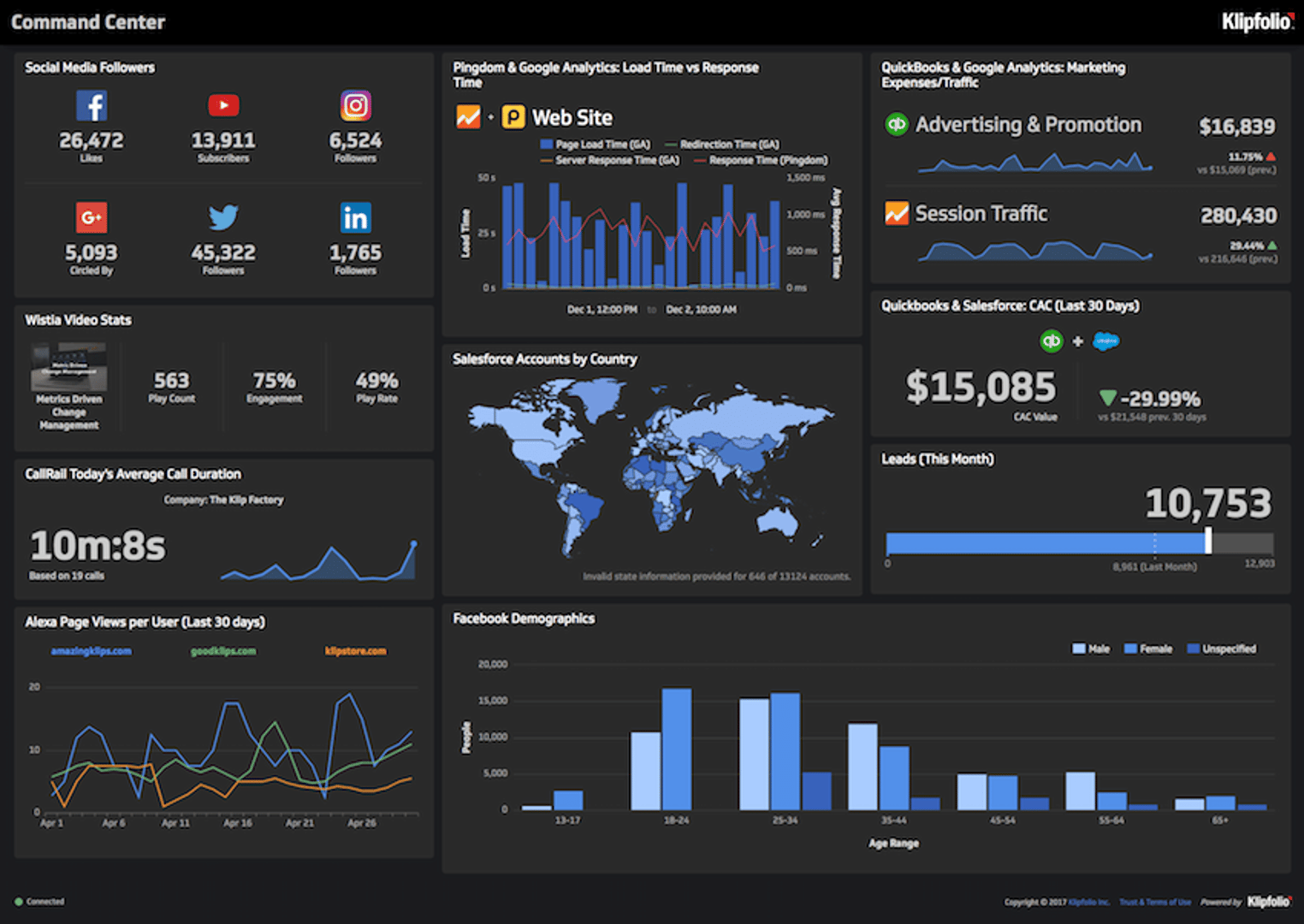
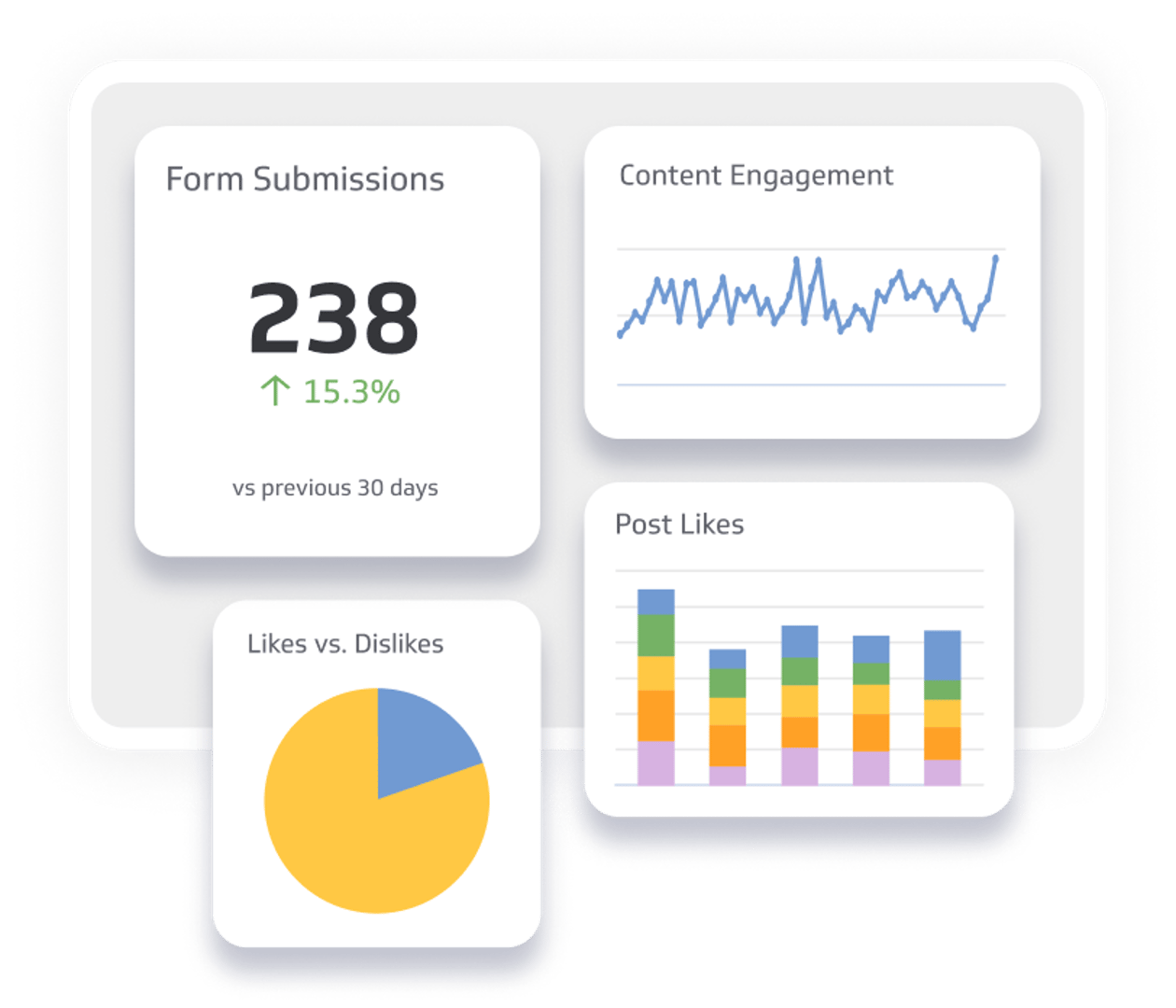
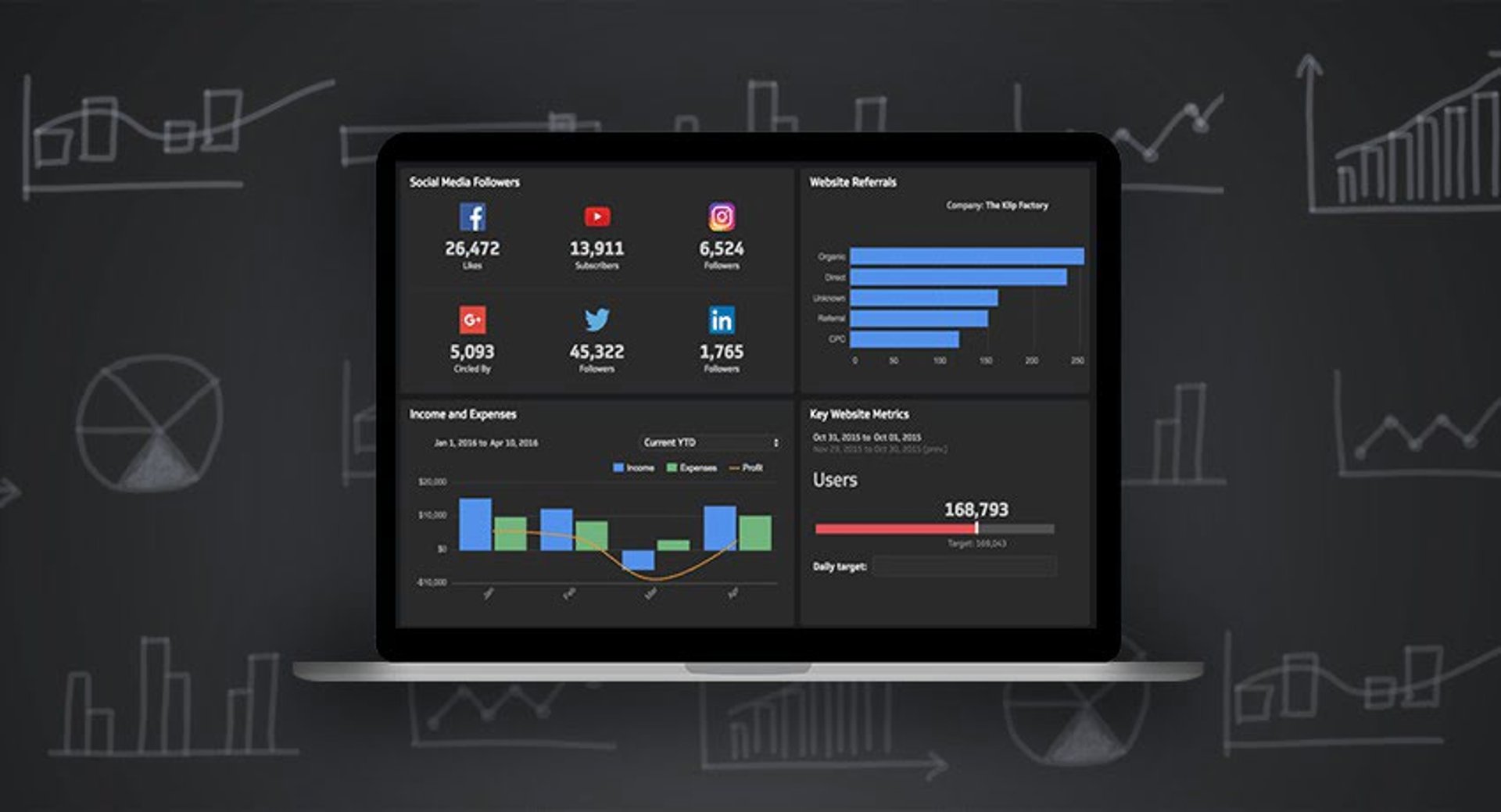
Dashboards in Klips help by pulling data from your tools into one place, keeping it current on a schedule, and putting the same trusted metric on every screen that needs it. The goal isn't a beautiful dashboard. The goal is a team that knows what's happening and what to do next.
Published 2026-08-21



Most recent
- AUG 11Beyond simple sign-ups: how True Trials and Activation predict growth
- JUL 7Why business leaders miss important trends in their dashboards
- JUN 19The best chart for the job: Visualizing data for non-technical users
- JUN 95 tips to understand (and organize) your restaurant data
- MAY 26Think in Horizons, Not Seconds
- MAY 2010 Cloud BI Dashboard Tools for Small Businesses in 2026