

Facebook KPIs: What to track and why it matters
All Facebook marketing and advertising campaigns start with knowing what to measure. This article covers the core Facebook KPIs worth tracking, from reach and engagement to CPC and ROAS, along with benchmarks and practical habits for turning data into decisions.
Starting a Facebook marketing campaign means deciding what to measure before you spend a dollar. The right KPIs tell you whether your effort is working, and where to put more of it.
KPI stands for Key Performance Indicator. It's a measure tied to a specific goal: reach, engagement, conversions, or cost efficiency. Track the right ones and you know what's working. Track the wrong ones and you're flying blind.
When you're ready to define your organization's KPIs, start with what you actually want to achieve. Awareness, leads, and sales each call for a different set of metrics.
Facebook KPIs worth tracking
Here are the core KPIs for Facebook marketing and advertising:
- Followers: Your audience size over time, a baseline for organic reach.
- Engagement: Reactions, comments, and shares combined. Shows whether your content is landing.
- Reach: The number of unique accounts that saw your content.
- Impressions: Total times your content was displayed, including repeat views.
- Ad frequency: Average number of times one person saw your ad. High frequency can signal audience fatigue.
- CPM (cost per 1,000 impressions): What you're paying to get in front of people.
- CPC (cost per click): What each click costs you.
- CTR (click-through rate): The share of people who clicked after seeing your ad.
- Link clicks: Raw count of clicks to your destination.
- Cost per action (CPA): What you pay for each conversion, lead, or purchase.
- ROAS (return on ad spend): Revenue generated per dollar spent on ads.
- Leads: Form fills, sign-ups, or other direct responses captured through Facebook.
- Video views: How many people watched, and for how long.
Names in Meta Ads Manager may vary slightly. Track what maps to your objective.
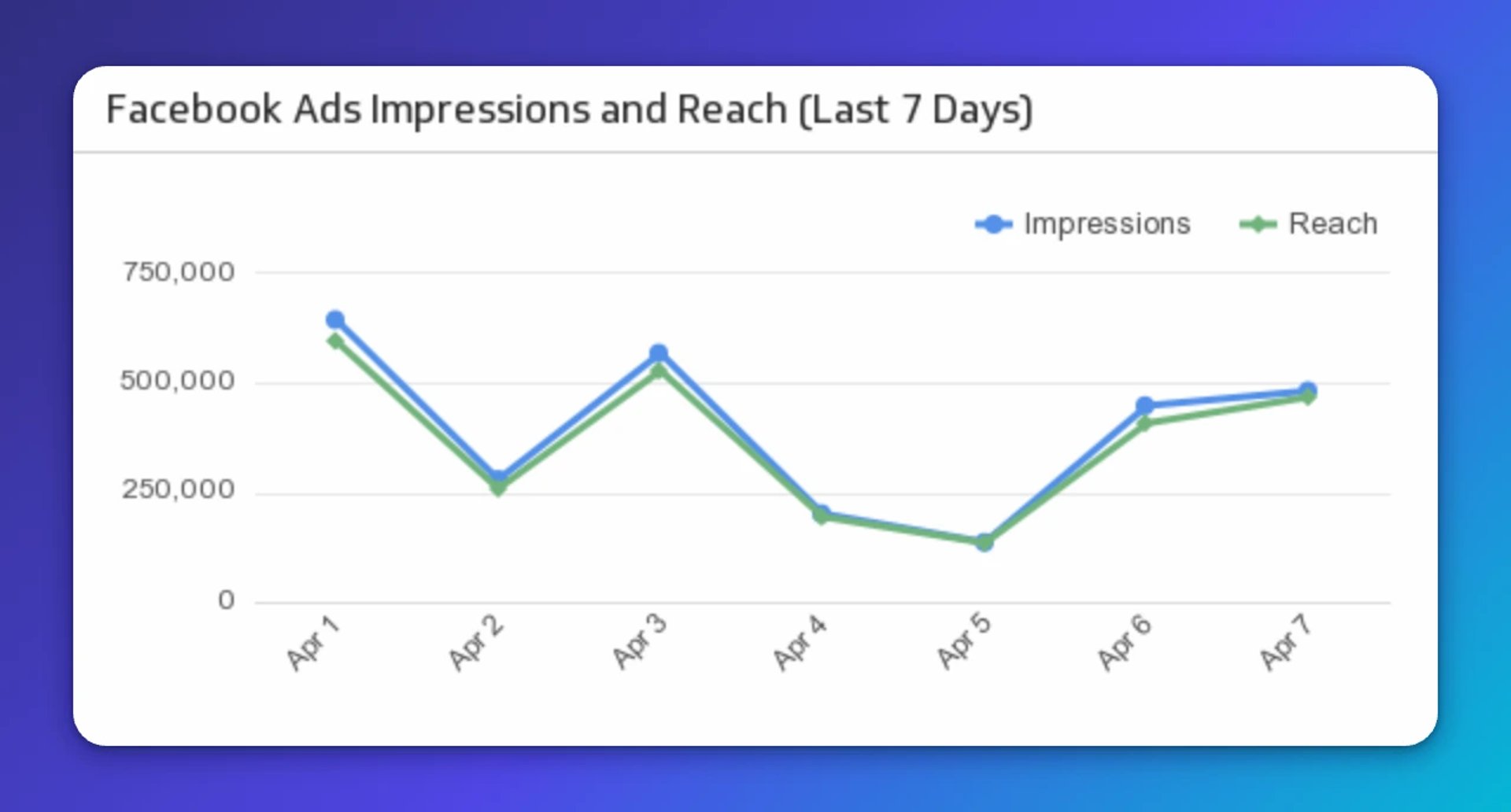
As you build out your KPI list, the challenge Mari Smith, one of the most recognized voices in Facebook marketing, raised with my colleague still holds:
"Marketers throw good money at Facebook ads... And yet they are not clear on their goals and KPIs."
Knowing which numbers to watch is only half the job. Knowing what each number is telling you is the other half.
Common challenges with Facebook KPIs
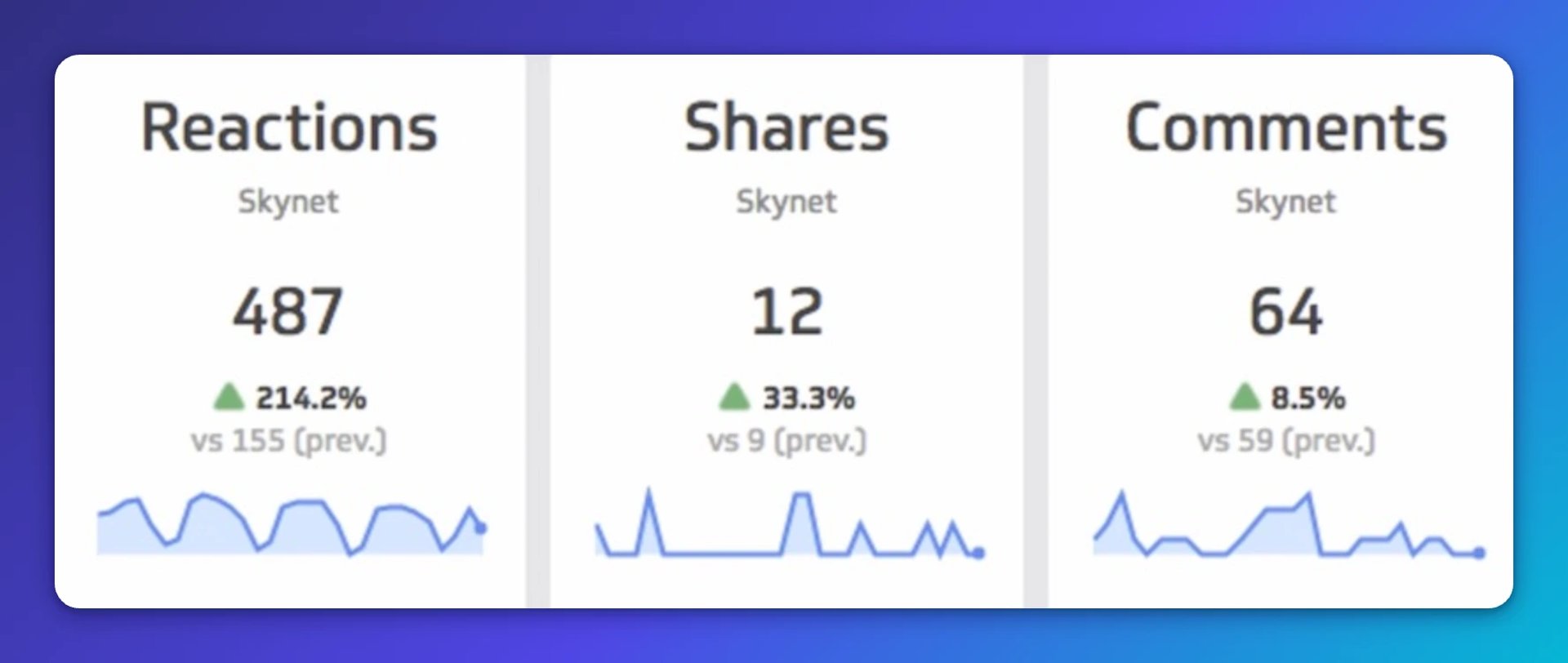
Engagement doesn't happen by accident. You need to make Facebook part of how your business communicates, not just a place to post. Integrate your Facebook presence with your website so visitors can follow you easily and share what they find.
Cross-platform consistency matters too. Garett Sloane makes the case that real-time engagement isn't limited to any one platform. The brands that win show up where their audience is, and respond fast.
Best practices for Facebook KPIs
Facebook runs around the clock. Your audience doesn't pause when your team does, so response time is a KPI in its own right. A two-day gap between a customer message and your reply can undo the goodwill you built through content.
Engagement rate tells you how healthy your audience relationship really is. Michael Leander offers a useful benchmark:
- Above 1%: Strong engagement.
- 0.5% to 0.99%: Average.
- Below 0.5%: Weak. Time to adjust.
Use these as reference points, not hard rules. Context matters: a niche B2B audience will behave differently from a consumer brand with broad reach.
Turning conversations into conversions
People scroll past content that feels like advertising. Start by listening to what your audience actually engages with, then build from there.
Ask questions. Post photos. Be direct about what you offer without making every post a pitch. Authenticity shows up in your engagement rate before it shows up anywhere else.
A few practical habits that compound over time:
- Post when your audience is active. If they're morning scrollers, be there in the morning.
- Use a scheduling tool like Buffer or Hootsuite to stay consistent without adding daily manual effort.
- Watch frequency closely. If the same person sees your ad eight times and hasn't clicked, the creative or the audience needs to change.
Create custom dashboards for you and your team.
Get started with KlipsTracking your Facebook KPIs
Knowing your KPIs is the starting point. Having a reliable, consistent place to see them is what actually keeps you on top of performance.
Pasting numbers into a spreadsheet or asking an AI tool to summarize your results from memory only works until the numbers change, which is constantly. What you want is a live view you can trust, one that doesn't require you to go hunting every time you need to make a decision.
Klipfolio's Facebook Analytics reporting tool pulls your data automatically and keeps it current. If you're tracking social KPIs across campaigns, it gives your whole team one version of the truth.
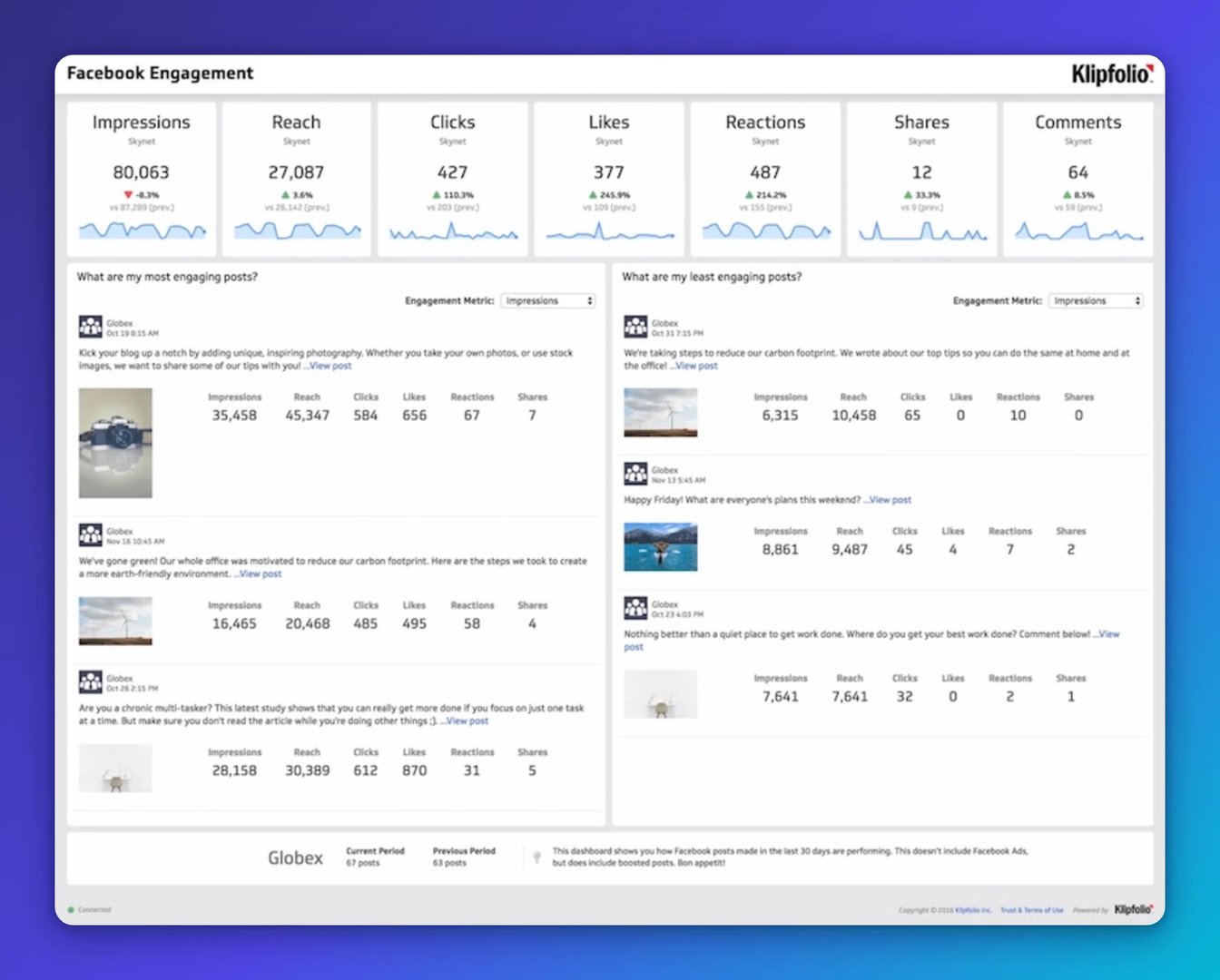
The Facebook Engagement dashboard below is a good place to start. It's pre-built, covers the metrics that matter most, and gives you a clear picture of what's working without any setup from scratch.
Published 2026-08-25


Most recent
- AUG 11Beyond simple sign-ups: how True Trials and Activation predict growth
- JUL 7Why business leaders miss important trends in their dashboards
- JUN 19The best chart for the job: Visualizing data for non-technical users
- JUN 95 tips to understand (and organize) your restaurant data
- MAY 26Think in Horizons, Not Seconds
- MAY 2010 Cloud BI Dashboard Tools for Small Businesses in 2026