

Beyond vanity metrics: Net Promoter Score (NPS) and Customer Referral Rate (CRR)
Net Promoter Score (NPS) measures how willing customers are to recommend your product or service. It's one of the most popular KPIs in marketing and customer success because it's simple, consistent, and directly connected to growth. But NPS only earns its place on your dashboard if it drives a decision. This article explains how to use NPS alongside Customer Referral Rate to turn a score into a signal you act on.
"A recommendation is a sacred thing...most people consider their reputation to be their legacy. If they feel so good about an organization that they are willing to stake their reputation on it, that company has touched their life." - Fred Reichheld, creator of the NPS system
Net Promoter Score (NPS) measures how willing your customers are to recommend your product or service to a colleague or friend. It's one of the most popular KPIs in marketing and customer success because it's simple, consistent, and directly connected to growth.
But NPS only earns its place on your dashboard if it drives a decision. Without that, it's a vanity metric.
What is Net Promoter Score?
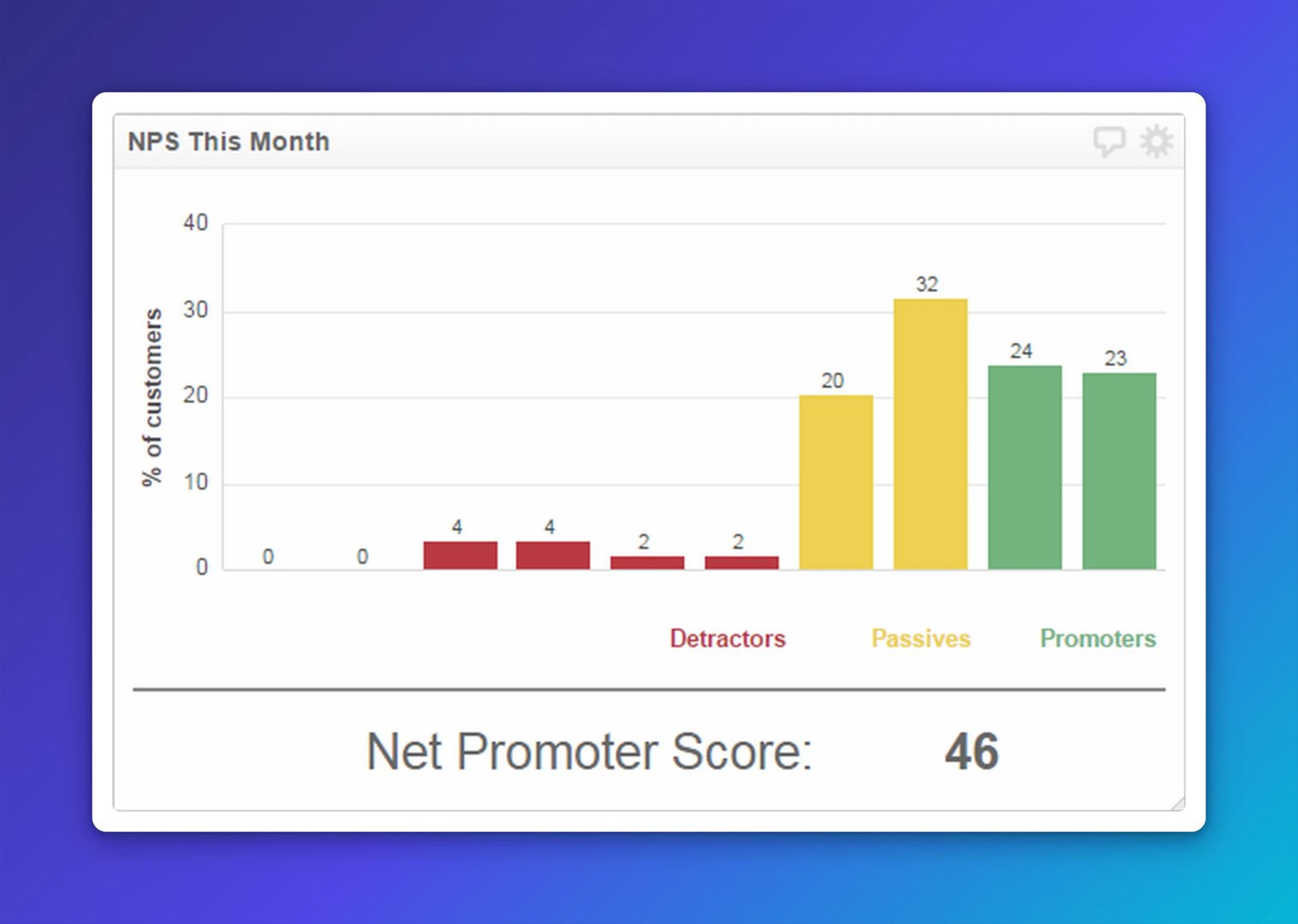
NPS is a single-question survey that asks customers: "On a scale of 0 to 10, how likely are you to recommend us to a friend or colleague?" Responses fall into three groups:
Promoters (9 to 10): Loyal advocates who fuel referrals and word-of-mouth growth
Neutrals (7 to 8): Satisfied but not enthusiastic, unlikely to refer
Detractors (0 to 6): Unhappy customers who may discourage others
NPS = % Promoters - % Detractors
For example, if 44% of respondents are Promoters and 4.8% are Detractors, your NPS is 39.2.
Why NPS matters for growing companies
NPS has become a go-to metric for marketing and customer success teams because it connects customer sentiment to the thing that matters most for growing companies: sustainable, referral-driven growth. Eric Ries called this the "Viral Engine of Growth," and NPS is one of the clearest signals of whether that engine is running.
A rising NPS tells you your customer experience is improving. Keep doing what you're doing. A falling NPS is an early warning sign of customer churn, often before churn or revenue impact shows up in other numbers.
That early visibility is the point. You should not have to wait for a churned account or a missed renewal to know something is wrong.
NPS without a plan is noise
Surveying your customers and filing the results is worse than not surveying at all. You've disrupted their day and learned nothing actionable.
Before you send a single NPS survey, answer two questions:
- Why are we asking? What decision or action will this inform?
- What will we do with the results? Who owns follow-up for Promoters? Who owns follow-up for Detractors?
Most teams use an initial NPS survey as a benchmark, then track subsequent surveys to measure shifts in customer sentiment over time. Having clear visibility into changes in NPS over time enables action when satisfaction drops, and confirms what's working when it climbs.
At the individual level, Promoters and Detractors each deserve a specific response:
Promoters are your best brand ambassadors. Put them on Marketing's radar for referral programs and case studies, and testimonials.
Detractors need a conversation, not a ticket. Customer success should engage them directly to understand the gap and reduce the risk of churn.
Pair NPS with Customer Referral Rate
NPS tells you what customers say they would do. Customer Referral Rate (CRR) tells you what they actually do.
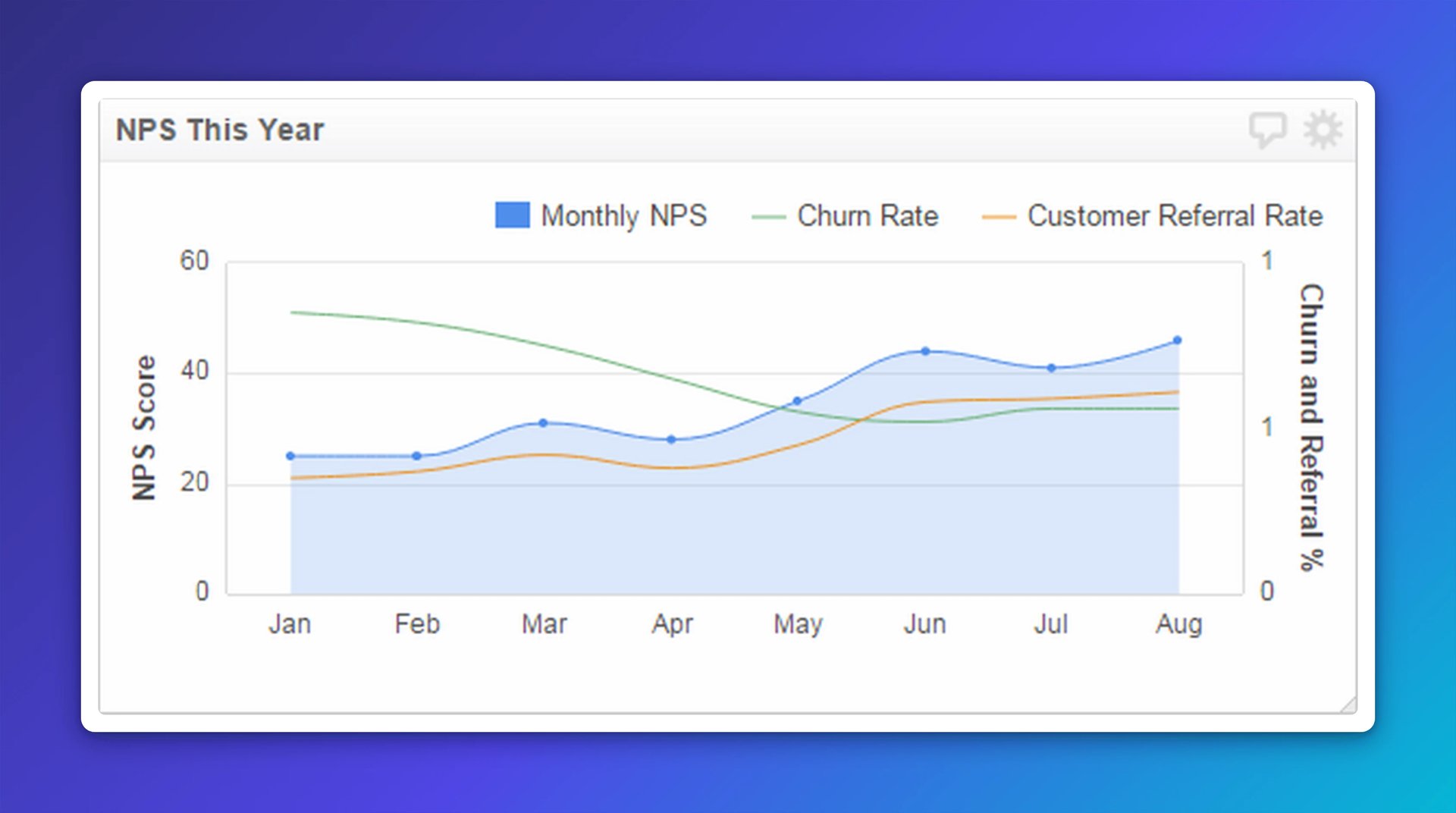
Tracking both together gives you a more honest picture of customer loyalty. If NPS has been falling for two quarters, you should expect Customer Referral Rate to follow. If NPS is climbing, referral and retention rates should move with it.
Measuring the relationship between these metrics over time helps you spot problems earlier and confirm that improvements are real, not just survey noise. It also gives you something concrete to show leadership: not just a score, but a pattern.
Here are two examples of NPS Klips showing how this looks in practice:
Create custom dashboards for you and your team.
Get started with KlipsMake NPS work for your business
NPS is a powerful marketing metric, but only when it's connected to action. The score itself is not the output. The decision it enables is.
Track it consistently. Pair it with Customer Referral Rate and Customer Retention Rate. Assign clear ownership for follow-up. When you do, NPS stops being a number you report and starts being a signal you act on.
Fred Reichheld, creator of the NPS system, Fellow at Bain & Company, and author of The Ultimate Question 2.0*, quoted in an interview with Influitive's Jillian Wood: http://bit.ly/1IvBjzc*
Also see: Beyond Vanity Metrics: Share of Influence Vs. Share of Voice
Published 2026-08-21



Most recent
- AUG 11Beyond simple sign-ups: how True Trials and Activation predict growth
- JUL 7Why business leaders miss important trends in their dashboards
- JUN 19The best chart for the job: Visualizing data for non-technical users
- JUN 95 tips to understand (and organize) your restaurant data
- MAY 26Think in Horizons, Not Seconds
- MAY 2010 Cloud BI Dashboard Tools for Small Businesses in 2026