Sales Target
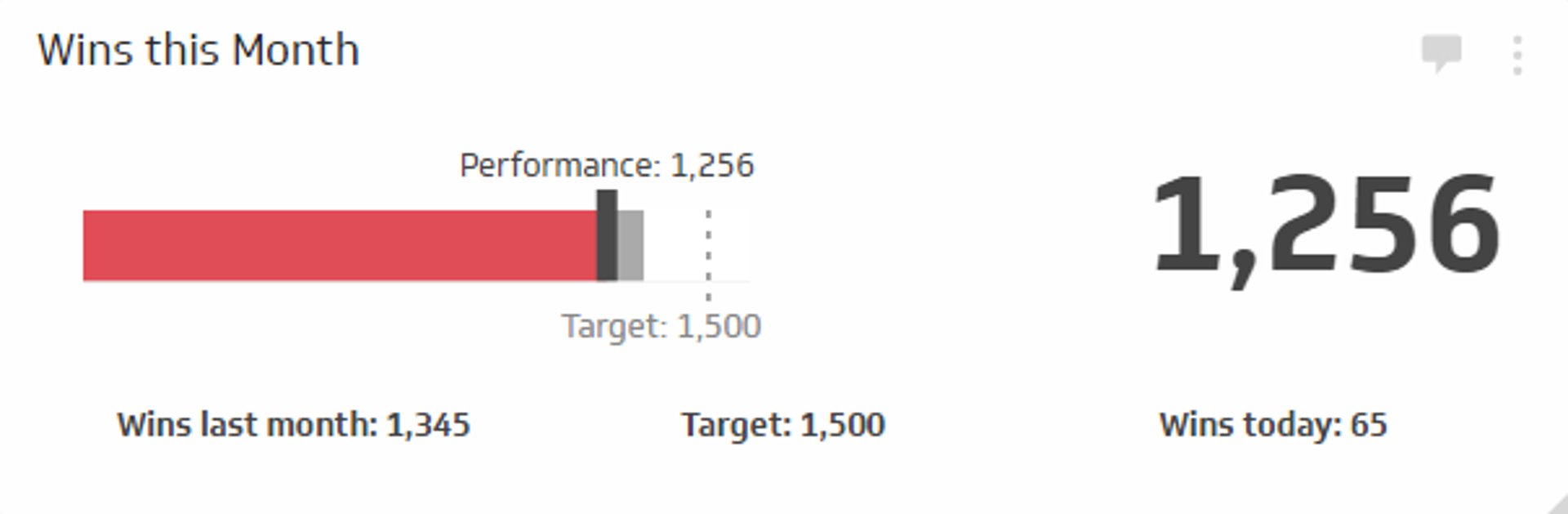
Measure and compare current sales to a target or past performance.
What is a Sales Target?
A sales target is a specific goal set for the amount of revenue, units, or new customers a company or team aims to achieve within a defined time period.
Sales targets give leaders a clear line of sight into whether the business is on track. They create accountability, focus the team on what matters, and make it easier to spot problems early, before a slow month becomes a slow quarter.
Targets can be set by revenue, units sold, or new customer acquisition, and should be adjusted as market conditions change.
Sales Target Attainment formula
(Sales for the current period / Sales target) × 100
Who uses sales targets?
Executives, Sales Directors, Sales Managers, and Sales Reps
Key terms
Wins: The number of new customers acquired over a defined time period.
Revenue: Income received through sales activities.
Signs your team is on track
Surpassing the current sales target.
Outperforming the previous period's results.
How to calculate a sales target
The Harvard Business Review writes: "When 10%–20% of salespeople miss goals, the problem might be the salespeople. But when most salespeople miss, the problem is their goals."
Getting the number right matters as much as having one. A target set too low leaves growth on the table. A target set too high demoralizes the team and distorts your pipeline view.
Effective targets account for business goals, past performance, and the realistic capacity of individual reps. They also shape how you structure incentives: your commission and compensation model should follow your target logic, not conflict with it.
Before you set a number, decide what you are targeting: new business, expansion of existing accounts, or re-engagement with past customers. Each requires a different approach. For more on setting sales goals, this guide from Close.io is worth reading.
The payoff is real. When targets are set well, reps know exactly what they are working toward, and leaders can trust the forecast. That is the difference between a number on a slide and a number that drives decisions. See also: sales efficiency.
How to monitor sales performance against targets
Knowing your number is not enough. You need to know where you stand against it, every day.
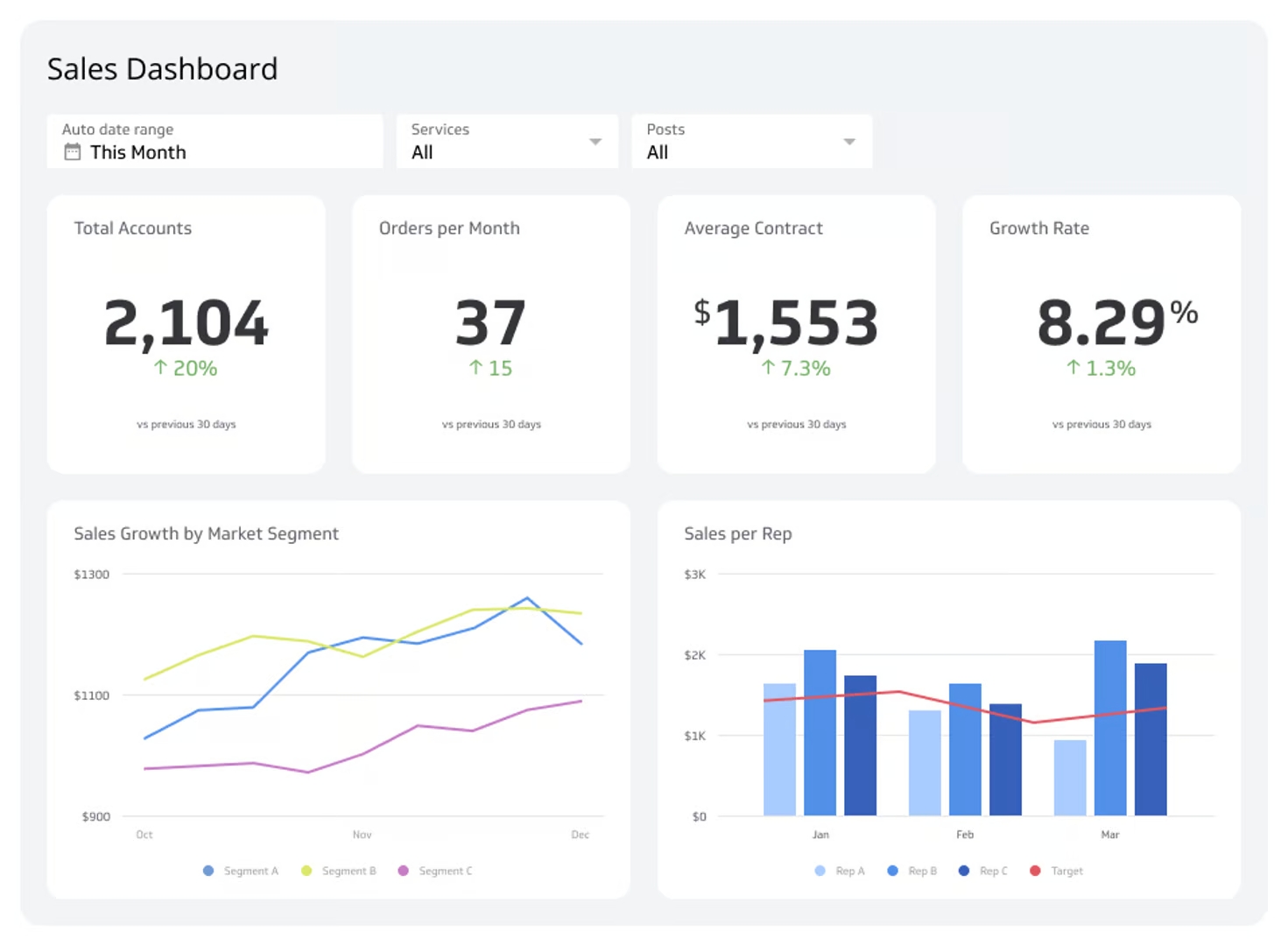
Active monitoring keeps performance visible throughout the week and month, not just at quarter-end. When individual reps can see how their activity connects to the team target, they stay engaged and accountable. When leaders can see the same picture, they can coach in the moment rather than react after the fact.
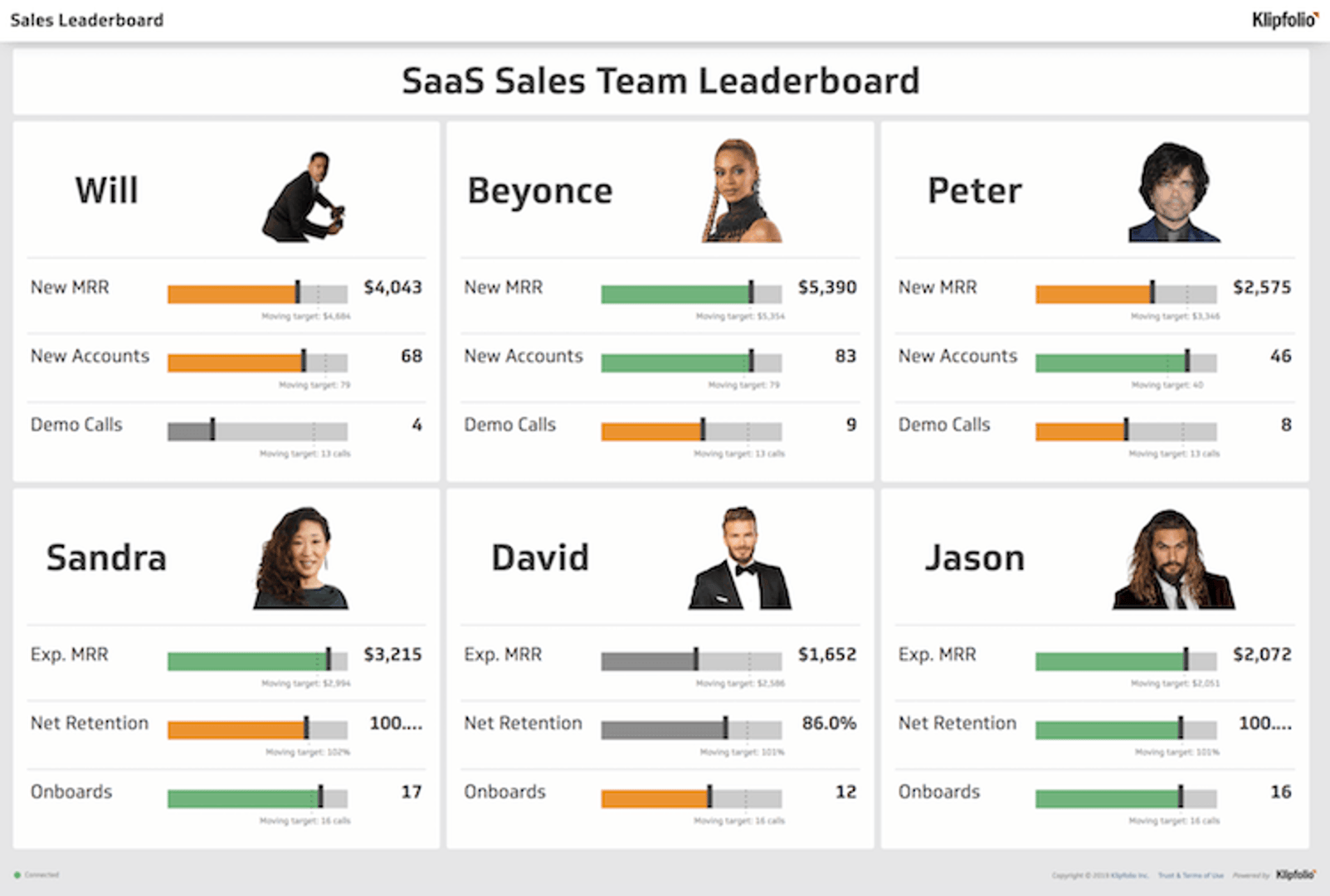
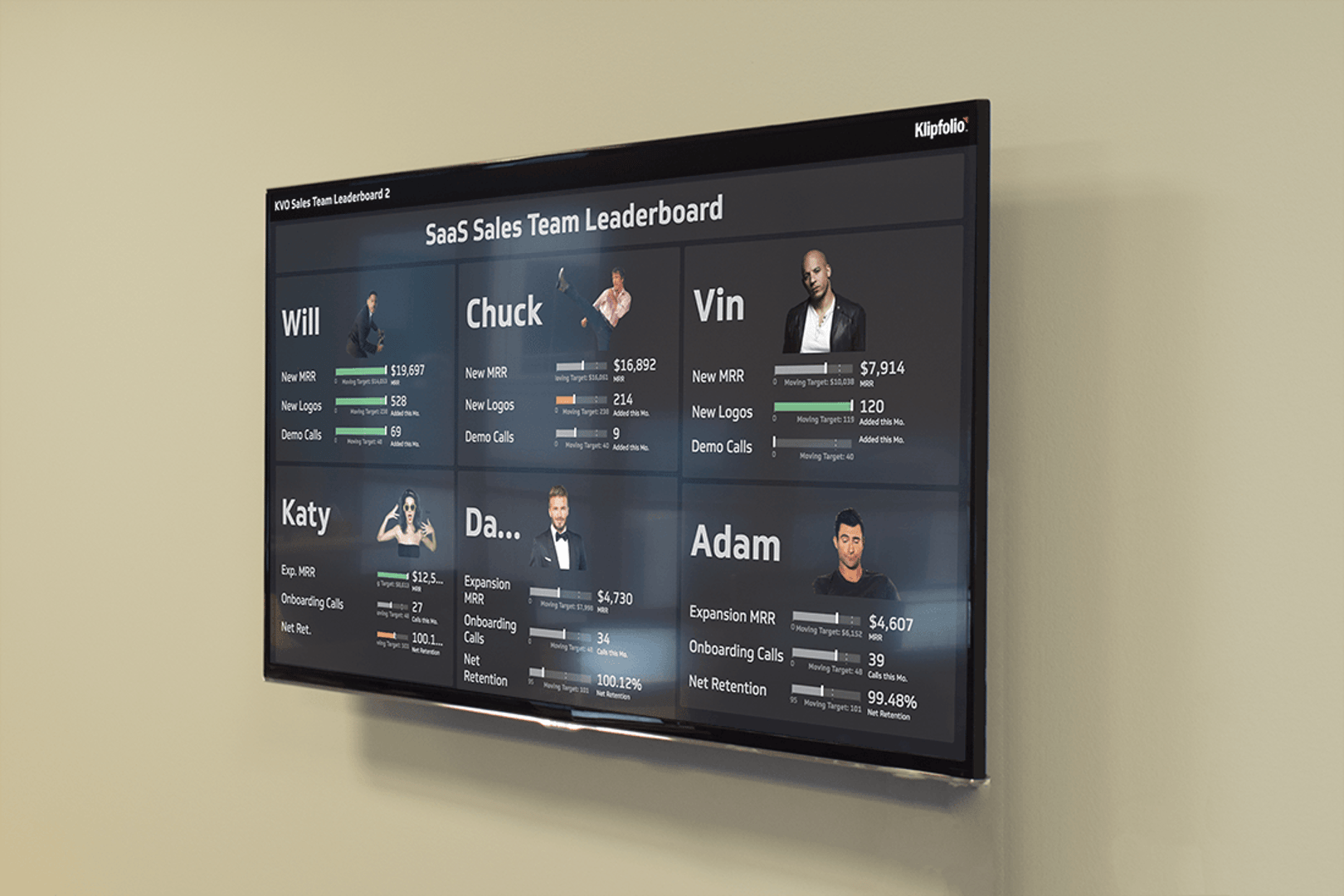
One of the most effective ways to create that visibility is a Sales Leaderboard displayed on a shared screen or television. It surfaces individual and team performance in real time, without anyone having to pull a report or paste numbers into a spreadsheet to figure out where things stand. Consider pairing it with a Salesforce dashboard to keep your CRM data in the same view.
Create custom dashboards for you and your team.
Get started with KlipsWhy build a sales leaderboard?
Track individual performance in real time so every rep knows where they stand without asking.
Track team performance in real time so leaders see the full picture at a glance.
Compare performance across multiple metrics or KPIs to spot patterns, not just totals.
Fuel motivation through friendly competition without manufacturing pressure artificially.
Create a transparent, data-driven environment where the numbers speak for themselves.
Make faster decisions instead of waiting for end-of-quarter reports to tell you what already happened.