

How to get started with data-driven decision making in marketing
Data-driven decision making (DDDM) means basing marketing choices on verified data rather than gut feel. This article explains what DDDM is, why it matters for marketing leaders, and how to build the habit in four steps: start with your strategy, identify your data, collect and analyze it, and let it guide your decisions. It also covers practical examples including pricing, campaign ROI, customer engagement, and cross-channel trend application.

Data drives better marketing decisions. Here's how to build that habit in your team, without drowning in spreadsheets or pasting numbers into a chatbot and hoping for the best.
Companies are storing more data than ever. A report by McKinsey Global Institute found that organizations now hold over 200 terabytes of data. The challenge isn't access. It's knowing which numbers actually matter and what to do with them.
What is data-driven decision making?
Data-driven decision making (DDDM) is the practice of basing business decisions on verified data rather than gut feel or observation.
For marketing leaders, that means knowing what's working, why it's working, and what to do next, without waiting for someone to pull a report or relying on marketing advice that doesn't fit your situation.
Most industries have already made this shift. Whether in marketing, manufacturing, medicine, or science, using data-driven decision making consistently leads to better outcomes. The reason comes down to a few specific advantages.
What are the benefits of data-driven decision making?
Data-driven decision making has multiple benefits. Here are the most significant.
Transparency and accountability
When decisions trace back to data, your team can see the reasoning. That matters when the decision is unpopular. Numbers don't feel personal the way a judgment call does.
It also helps your team master prioritization. When people understand that decisions follow the data, they pay closer attention to the metrics they own. They can explain why a result happened and how to repeat it.
Consistency
A data-driven team applies the same standard to every decision: what does the data say? That consistency means people know how choices get made in your organization. Decisions become faster and more predictable.
Maksym Babych, CEO of SpdLoad, puts it well: "Consistency is critical. But it's crucial to avoid vanity metrics at all costs. Sometimes teams choose data points that look good on paper but do not lead the company to success."
Clearer path to improvement
Tracking your key metrics makes it easier to spot where something is leaking, stalling, or underperforming. Data shows you the bottleneck. It removes the guesswork about why something didn't work and gives you a concrete starting point for fixing it.
For example, your data might show which email marketing ROI drivers are performing and which aren't, or help you leverage social proof more effectively by revealing which testimonial formats convert.
Vincent Bucciachio, Founder of SociallyInfused Media, adds: "When you begin to gather and analyze data, you'll discover that it's much easier to tackle almost any business obstacle, whether you're electing to discontinue a service, fine-tune your sales funnel, or optimize pricing. Data is sound and factual in a way that an impulse or intuition isn't. Ultimately, you'll make more confident and informed decisions."
How to establish data-driven decision making in your marketing team
1. Start with your strategy
Before you collect anything, get clear on the decision you're trying to make. Are you trying to improve conversion rates? Understand which campaigns are worth scaling? Reach a new audience segment?
Your goal shapes which metrics matter. Once you know the question, you can identify the numbers that will answer it. You can do this manually or with the help of sales intelligence software. Either way, decide upfront which data points you'll need by the end of the strategy so you're tracking the right things from the start.
Create custom dashboards for you and your team.
Get started with Klips2. Identify your data
Look at what you already have. Which sources give you reliable, actionable information? Which metrics do you wish you'd been tracking?
Some marketing metrics worth considering:
- Brand awareness KPI: how recognizable your brand is in your target market
- Marketing spend per customer: what it costs to acquire each customer through your marketing efforts
- Customer acquisition cost: total cost to bring in a new customer across all channels
- Conversion rates: the percentage of prospects who take a desired action
Drawing from multiple sources reduces the risk of misleading results. One channel's data rarely tells the full story.
3. Collect and analyze your data
Decide who owns the data. For most marketing decisions, that's the person leading the strategy or running the channel. For more specialized data needs, you may want someone with deeper analytical experience.
The key point: data is only useful if someone can interpret it. The person tracking the numbers needs to understand what they represent and what a shift in those numbers actually means for the business.
4. Let the data guide your decisions
Collecting data is the easy part. The harder part is presenting it in a way that leads to a clear decision, especially for stakeholders who haven't been living in the numbers.
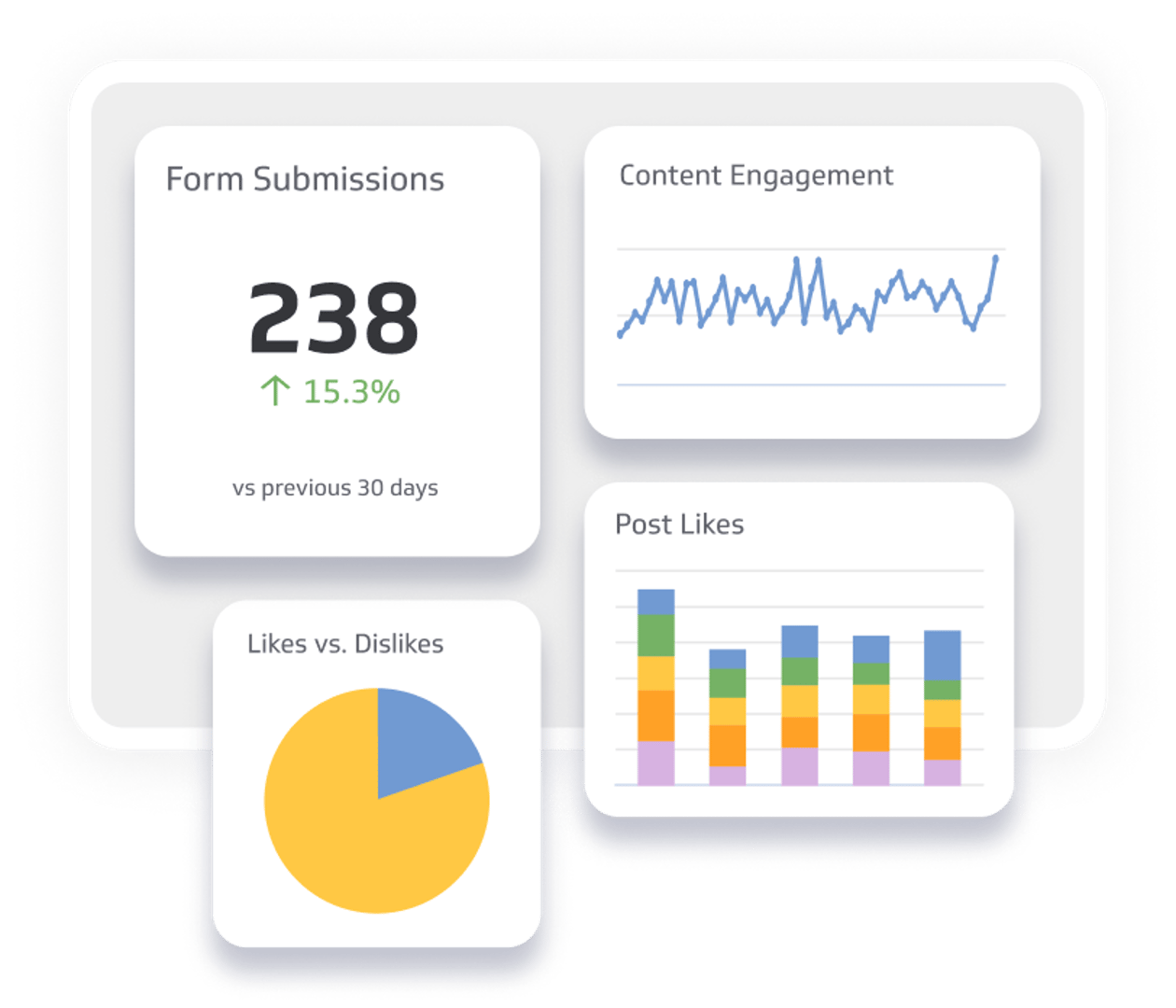
That's where Klips helps. Klips pulls data from 130+ sources, lets you interact with it, and presents it visually so anyone in the room can understand what's happening and what to do next. You can share dashboards to Slack, display them on your conference room TV, or send scheduled PDF reports to your team. Try Klips free for 14 days right here.
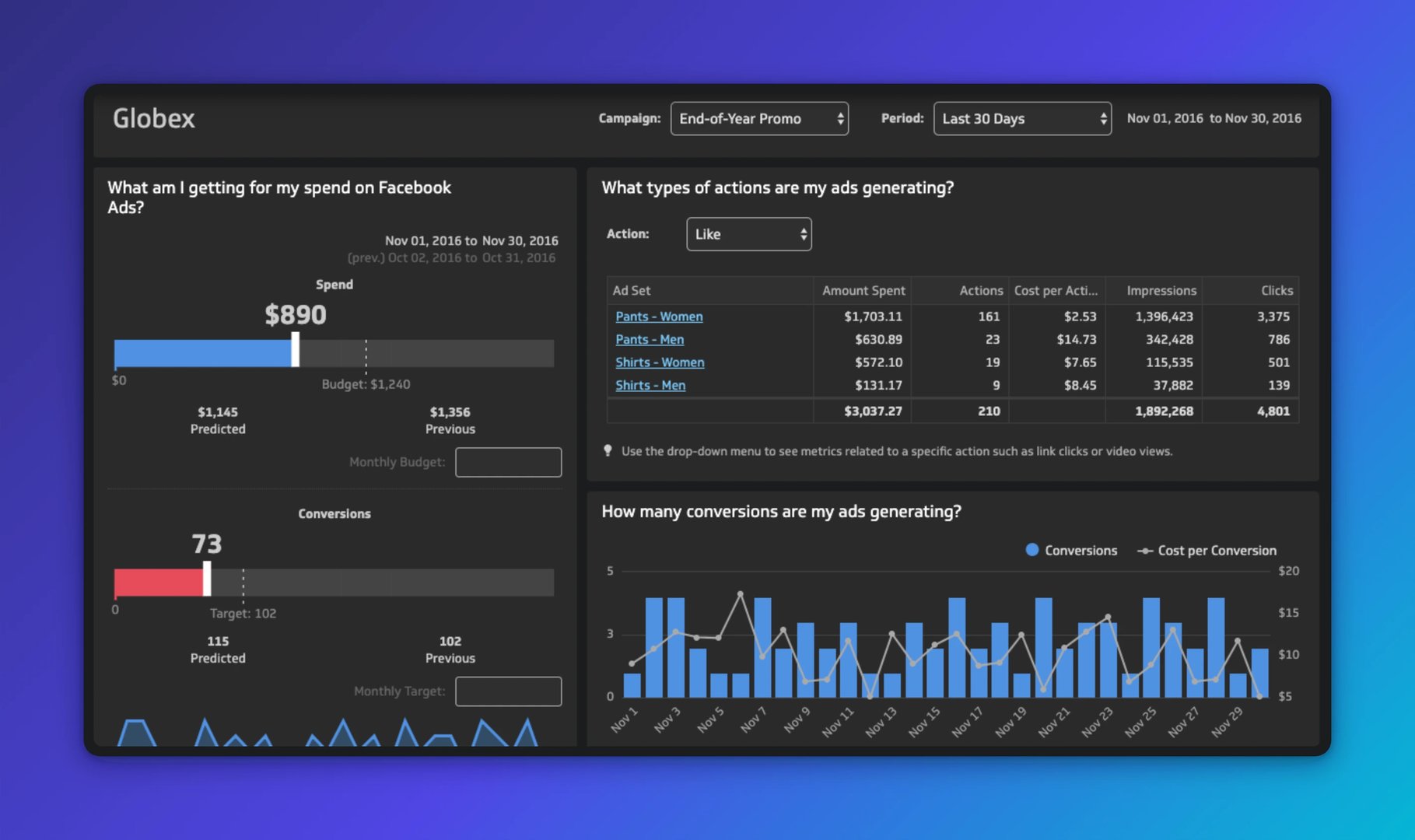
Good data presentation isn't just about clean charts. It's about showing how the numbers connect, where the trends are, and what the data predicts about your next move. That's what turns a report into a decision.
Where to use data-driven decision making: examples
There are several areas where data-driven decision making can strengthen your marketing efforts.
Optimize your pricing
The right data tells you how a price increase will affect demand, where you have room to move, and which cost areas you can tighten to stay competitive. You're not guessing. You're running the numbers before you commit.
Increase ROI on your campaigns
With data, you can run tests, refine your user persona, and compare results before scaling spend. Once a campaign is live, you can track its ROI in real time and adjust. After it ends, the data tells you what to carry forward.
That's a fundamentally different approach than pasting campaign results into a generic AI tool and asking it what to do next. Your data, in context, gives you answers that actually fit your business.
Increase customer engagement
Data shows you which emails get opened, which content drives responses, and which segments are most active. You can use that to sharpen your communication strategy and improve your follow-up process.
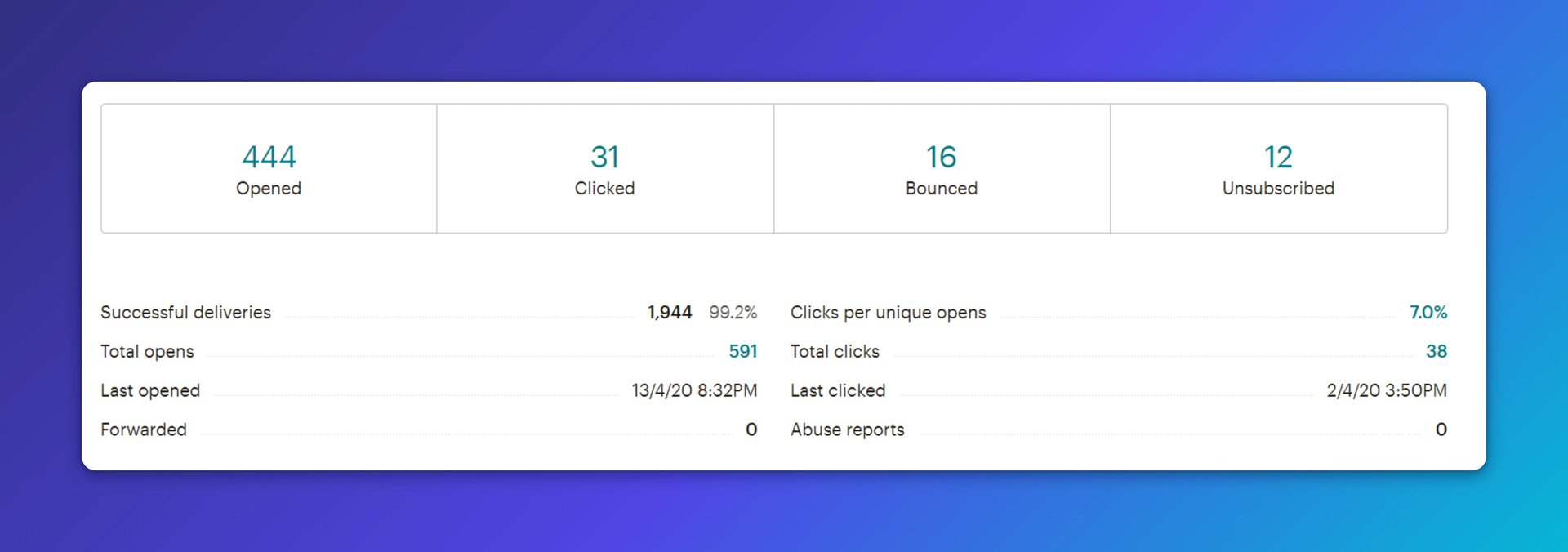
Email data in Mailchimp
Segmenting your audience based on behaviour also improves email deliverability. When you send the right content to the right people, you get fewer complaints and fewer unsubscribes.
Apply trends across channels
Marketing involves a lot of testing, and testing costs money. Data lets you take what's working in one channel and adapt it to another, so you're not starting from scratch every time.
What's performing in your content marketing strategy that could translate to paid ads? What are your marketing dashboards showing about email subscribers that could inform new user acquisition? Follow the data, and you can move faster with more confidence.
Create custom dashboards for you and your team.
Get started with KlipsMake decisions you can stand behind
Data-driven marketing gives you a repeatable process, consistent decisions, and a clear record of why you made the call you made. That matters when you're accountable for results.
The goal isn't to become a data analyst. It's to know your numbers well enough that you're never waiting for someone to pull a report, never explaining your business from scratch to a tool that doesn't know it, and never making a call you can't back up.
Start with one question, find the metric that answers it, and build from there.
Published 2026-08-21
More in Best Practices
6 dashboards I use daily to run my SaaS company
Business Metrics vs. KPIs: What’s the Difference?

The 5 most important SEO KPIs for digital marketing success

What are the best inbound marketing KPIs?
Why every digital marketer needs to learn how to deploy marketing technology

Top 10 Marketing Dashboard Ideas for Tech Companies
Most recent
- AUG 11Beyond simple sign-ups: how True Trials and Activation predict growth
- JUL 7Why business leaders miss important trends in their dashboards
- JUN 19The best chart for the job: Visualizing data for non-technical users
- JUN 95 tips to understand (and organize) your restaurant data
- MAY 26Think in Horizons, Not Seconds
- MAY 2010 Cloud BI Dashboard Tools for Small Businesses in 2026