

Cycle time in software development: why it matters most
Cycle time measures how long it takes to move a task from the start of work to production. It stands apart from other software development metrics because it reflects the health of your entire process, including code review, automated testing, and deployment, and pinpoints exactly where slowdowns occur. This article explains what cycle time is, why it matters more than most other metrics, and how to use step-level cycle time data to run a tighter, more confident development process.

Cycle time is the time it takes to move a task from the moment work starts to the moment it ships. Shorter cycle times mean faster delivery and less waste. Longer ones mean something in your process is slowing you down, and your customers feel it before you do.
There are many standard metrics that software development teams track. Cycle time stands apart because it tells you not just what happened, but where things broke down, and what to fix.
What is cycle time?
Cycle time is the elapsed time between the start and completion of a task or process. Borrowed from lean thinking and manufacturing disciplines, the concept applies directly to software: how long does it take to go from writing the first line of code to shipping a working change to production?
Within any end-to-end process, individual steps each carry their own cycle time. The diagram below shows how these nest together.
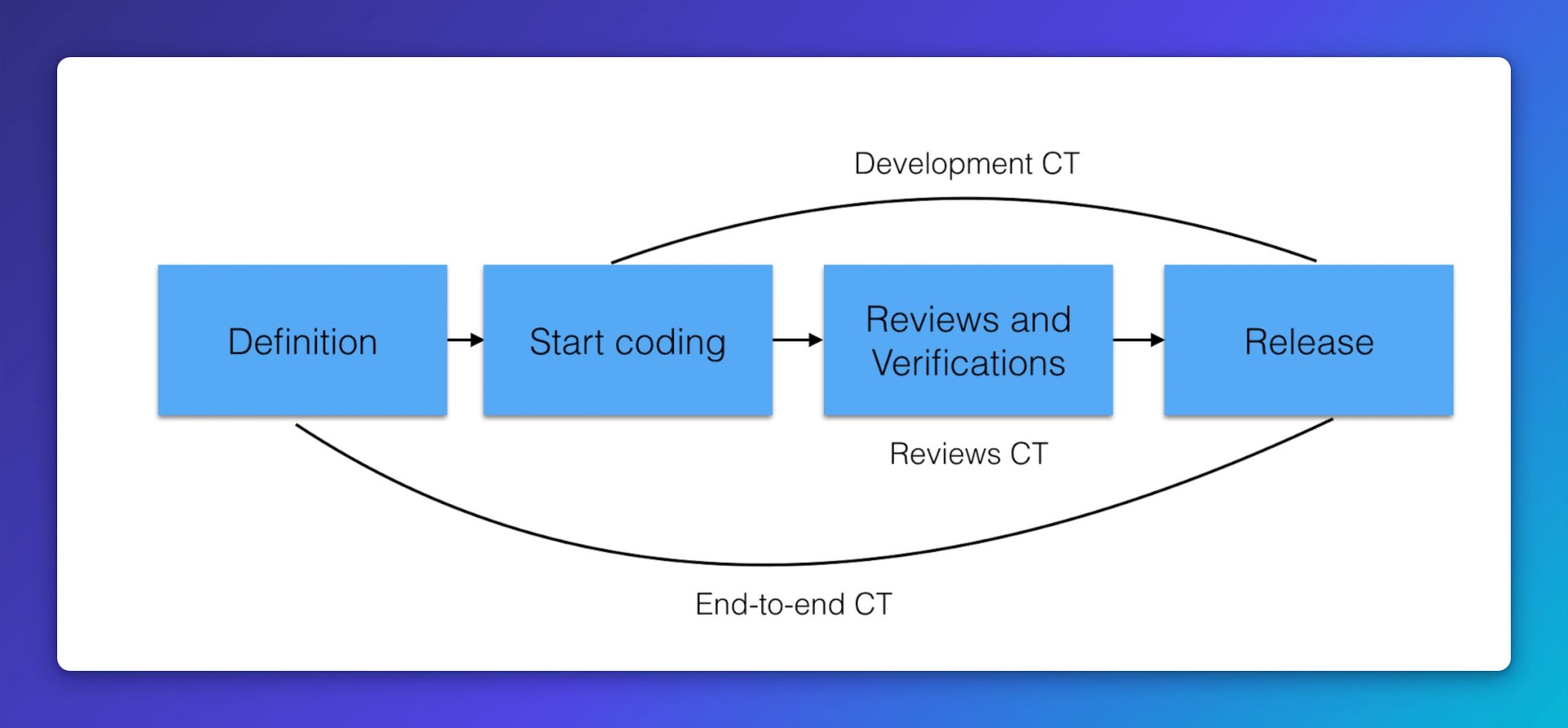
The cycle time for software development, from coding start to release, sits inside the larger end-to-end cycle time, and outside the smaller cycle times for individual steps like code review or QA. You can measure any slice that matters to your team.
At Klipfolio, we started by measuring development cycle time: the time from when we begin coding an issue (story, bug, or otherwise) to when that change reaches production and customers can use it.
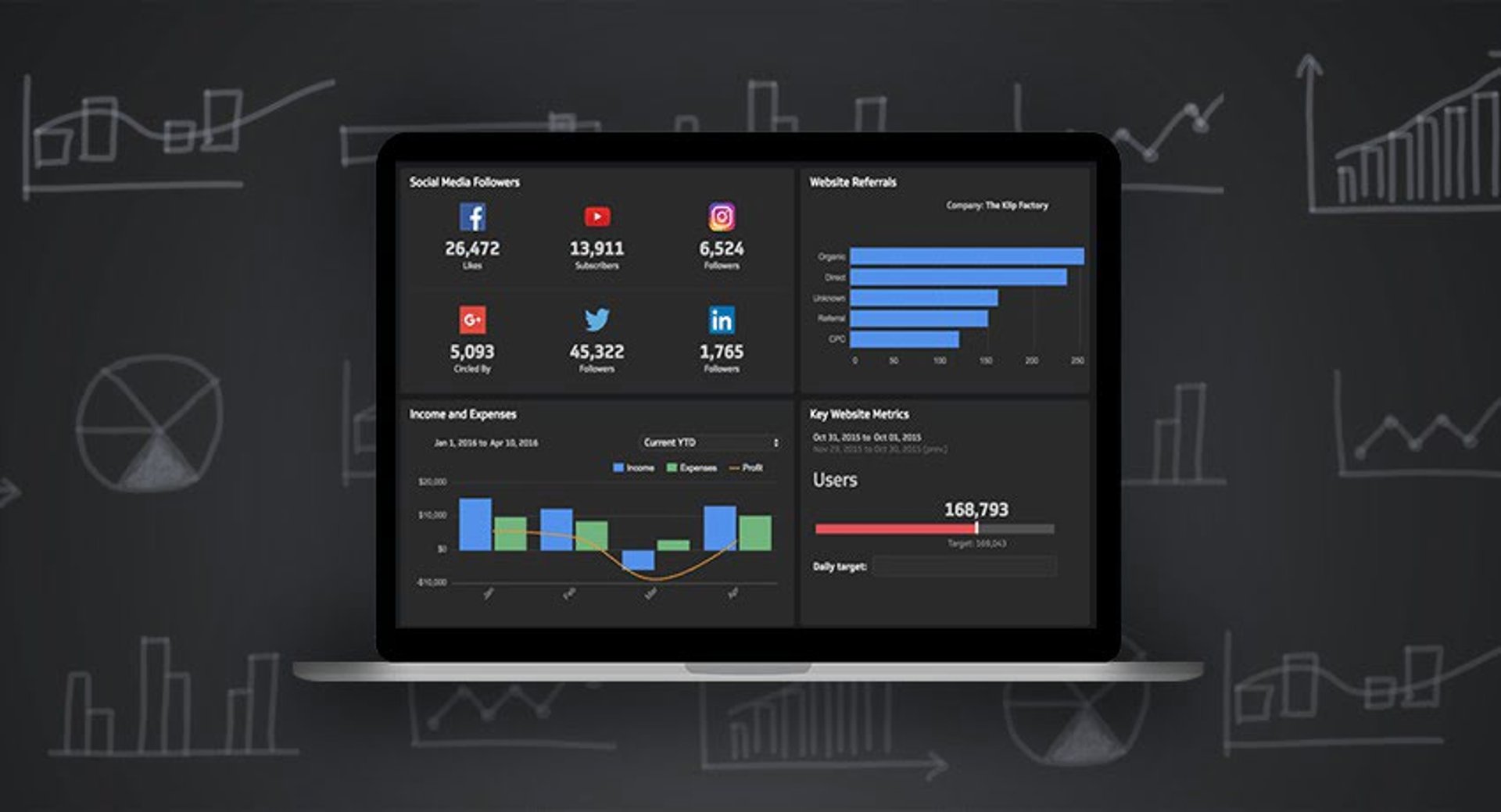
The dashboard below shows cycle time for our team, built using our own software.
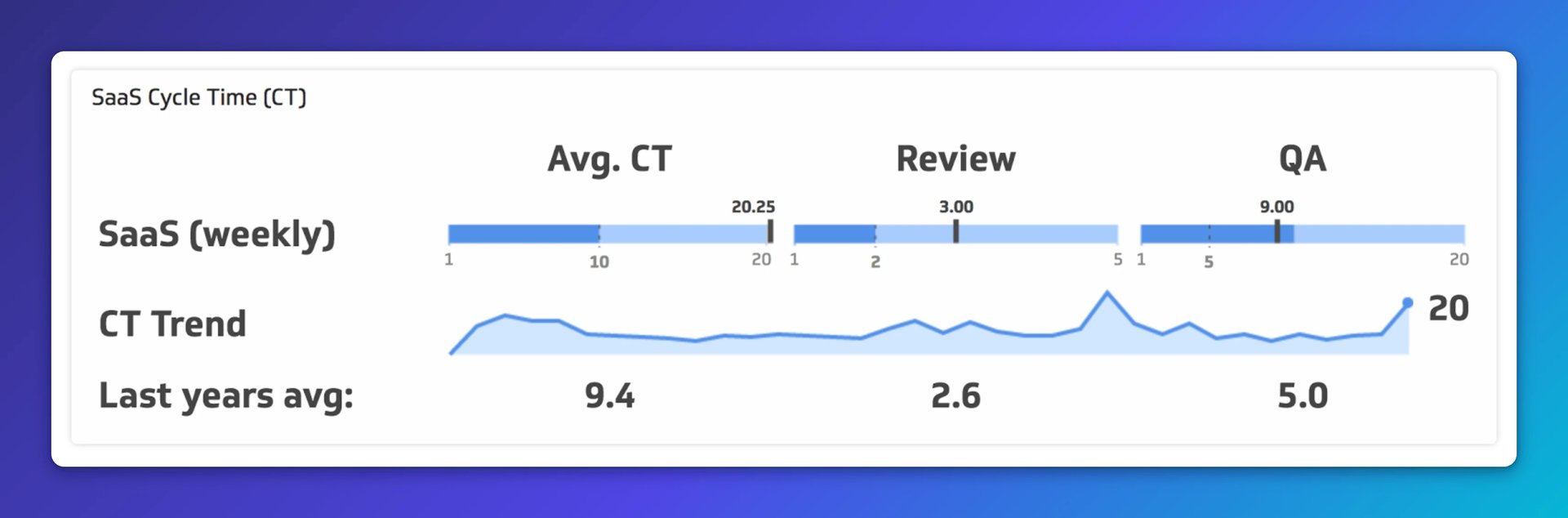
Measuring cycle time is straightforward if you have the right tools and the discipline to apply them consistently. The hard part is automating the measurement. Software teams work through large volumes of issues, and without automation you will not have enough data to trust the signal.
Why cycle time matters more than other metrics
Average cycle time reflects the health of your entire development process, including your code review practices, automated testing, deployment tooling, and team habits. It is a single number that carries a lot of information about how your team actually works.
Most teams track defect counts, work-in-progress limits, burn rate, story points, and investment distribution. These are all useful. None of them give you the same breadth of diagnostic signal that cycle time does. When something goes wrong, cycle time tells you that something changed. The step-level breakdown tells you where.
The chart below shows a typical software development workflow and the points where cycle time accumulates.
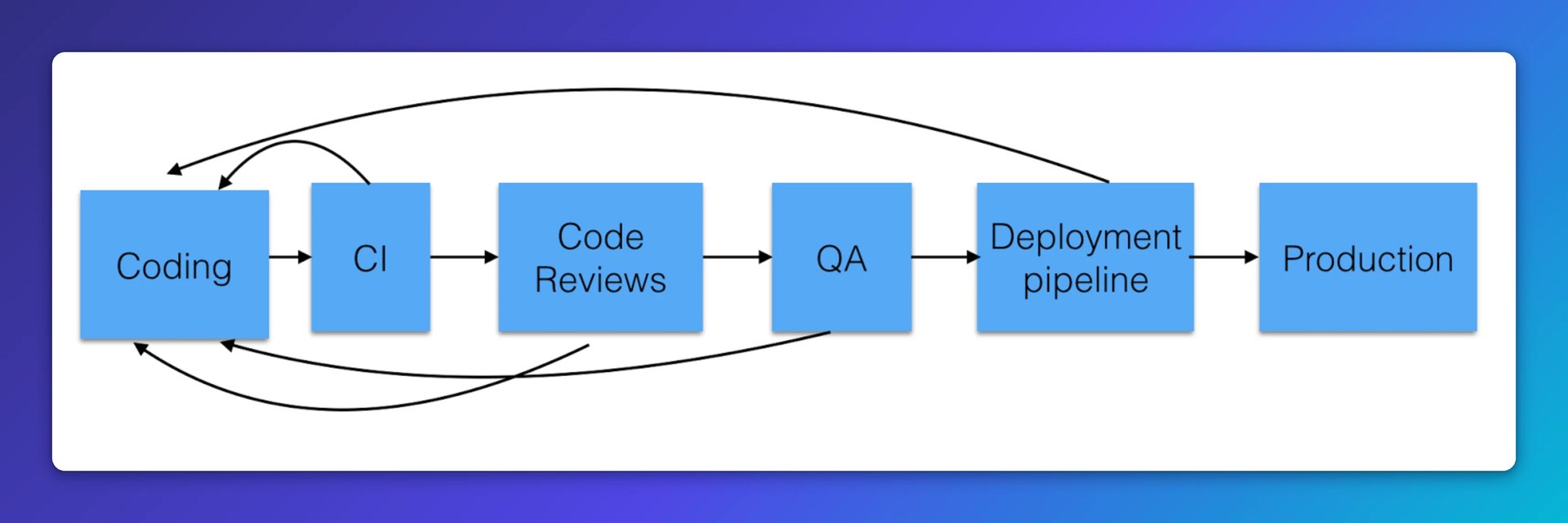
Knowing your average cycle time means you know your baseline. From there, any meaningful deviation is a signal worth investigating. If your average bug fix takes two days and it suddenly climbs to eight, you do not need to guess that something is wrong. You know it, and you can go find it.
The problem could be anywhere: a flaky automated test blocking your deployment pipeline, a code review sitting unclaimed for two days, an environment provisioning delay, or a QA bottleneck. Without step-level cycle time data, you are looking for the problem in the dark. With it, you go straight to the right place.
How to use cycle time to run a tighter process
Start tracking as early as possible. Establish a baseline. Then watch for variation.
Cycle time data, collected at the step level, lets your team answer questions that most other metrics cannot:
- Story sizing: Are issues broken into small enough increments? Large cycle times often trace back to tasks that are too big to move through the pipeline cleanly.
- Code review wait time: Are reviews picked up quickly, or do they sit for hours before anyone looks?
- Pipeline reliability: Is there a recurring failure in your deployment tooling that creates a bottleneck?
- Environment provisioning: Are new production servers available when they are needed, or is the operations team a constraint?
- QA throughput: How long does quality assurance take, and is there a consistent bottleneck at that stage?
Each of these questions has a direct answer when you have the right data. Without cycle time tracking, you are relying on instinct. With it, you are making decisions from a reliable, consistent picture of how your team works.
That confidence matters. A team lead who knows their average cycle time, watches it daily, and gets an alert when it spikes is not waiting for someone to pull a report or pasting numbers into a spreadsheet to figure out what changed. The signal is already there.
Learn how to define your organization's KPIs to build the measurement foundation that makes cycle time tracking meaningful.
Create custom dashboards for you and your team.
Get started with KlipsCycle time is a decision tool, not just a dashboard metric
The real value of cycle time is not the number itself. It is what the number lets you do: spot problems early, investigate the right place, and ship with more confidence.
Teams that track cycle time at the step level stop guessing about where time goes. They know which part of the process is healthy and which part needs attention. That clarity is worth more than any single metric on its own.
If your team is not tracking cycle time yet, start with the development cycle, from coding to production. Automate the measurement. Build a baseline. The data will tell you what to look at next. For a broader view of software development metrics your team should monitor, explore what other engineering teams are measuring to stay on track.
Published 2026-08-21



Most recent
- AUG 11Beyond simple sign-ups: how True Trials and Activation predict growth
- JUL 7Why business leaders miss important trends in their dashboards
- JUN 19The best chart for the job: Visualizing data for non-technical users
- JUN 95 tips to understand (and organize) your restaurant data
- MAY 26Think in Horizons, Not Seconds
- MAY 2010 Cloud BI Dashboard Tools for Small Businesses in 2026