

A starter guide to a CX metrics program
Most companies say customer experience drives their competitive advantage. Their customers rarely agree. This guide covers the three CX metrics to start with, how to build a listening system aligned to the customer lifecycle, and how to make results visible and actionable across your team.

Most leaders say customer experience drives their competitive advantage. Their customers rarely agree. A structured CX metrics program closes that gap.
Why CX metrics matter
Customer experience has been a stated priority for years. The numbers tell a different story. Research from Forbes found that 89% of companies said they competed primarily on customer experience, yet only 8% of customers recognized those experiences as superior.
That gap exists because most organizations track operational and financial metrics well, but struggle to capture how customers actually feel. Perception data, the kind that brings emotion into the picture alongside revenue and volume, is often missing entirely.
The companies that earn and keep customer loyalty are the ones making decisions informed by what customers experience, not just what the business produces.
The three CX metrics to start with
If you're building a Customer Experience Metrics Program, start with these three. They complement each other, cover different moments in the customer relationship, and give you a complete early picture.
CES - Customer Effort Score - a transactional metric focused on ease. Typically used for support interactions, where friction is the fastest path to losing a customer.
CSAT - Customer Satisfaction - a flexible measure applied at the product or interaction level. Reveals specific weaknesses and directs improvement actions.
NPS - Net Promoter Score - a relationship measure, not a transactional one. Captures overall loyalty and likelihood to recommend. Widely recognized at the executive level.
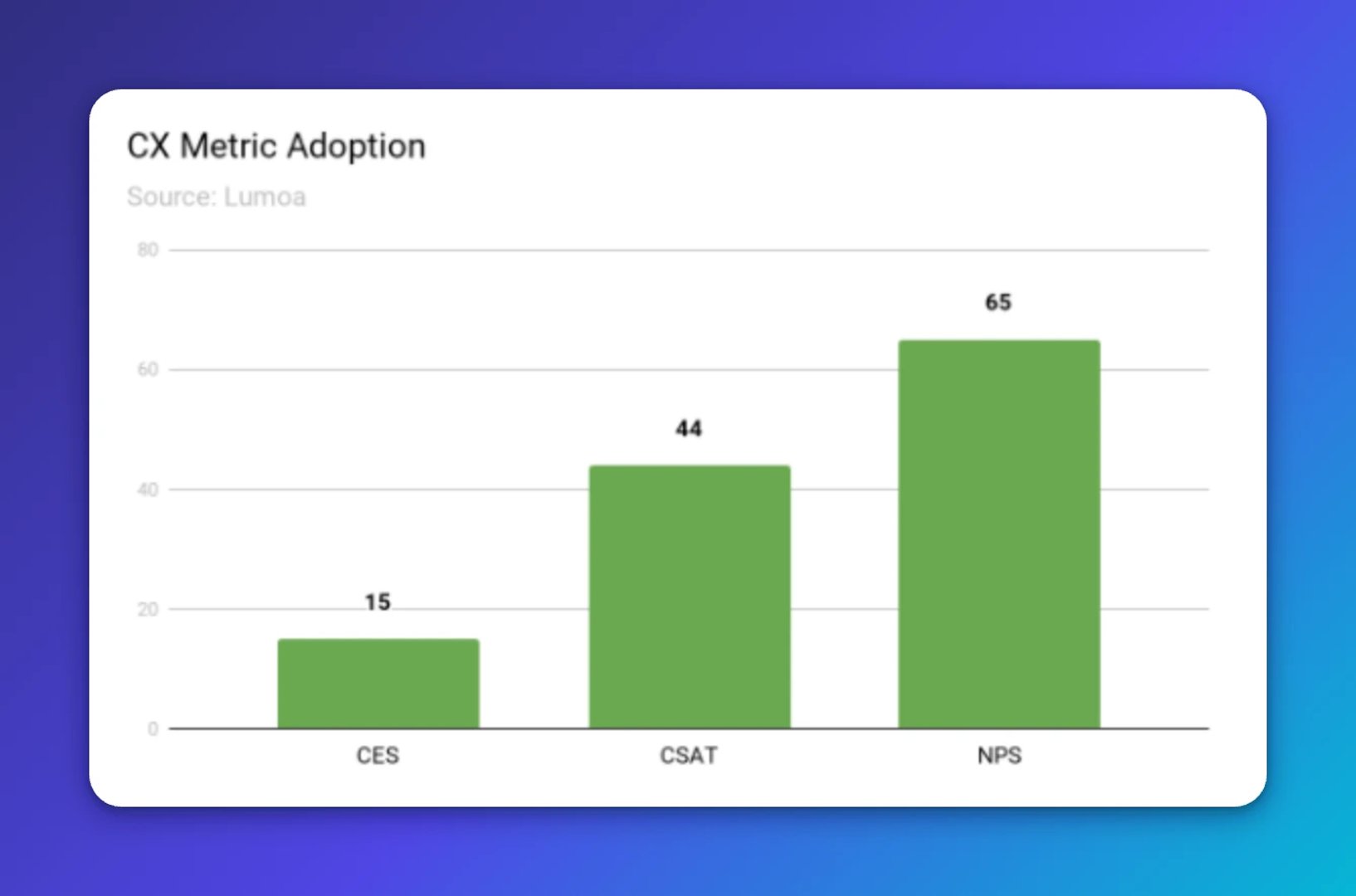
NPS is the most commonly deployed CX metric, followed by variants of CSAT. CES is newer and gaining ground as more organizations recognize the link between ease and retention. Learn about the value of making it easy in this report from Walker Information, and about ease as a leading indicator of growth in this article by Lynn Hunsaker.
Building your listening system
A listening system works best when it's built in stages. Rolling it out gradually gives your team time to absorb new information and keeps customers from feeling bombarded with requests that don't match where they are in their journey.
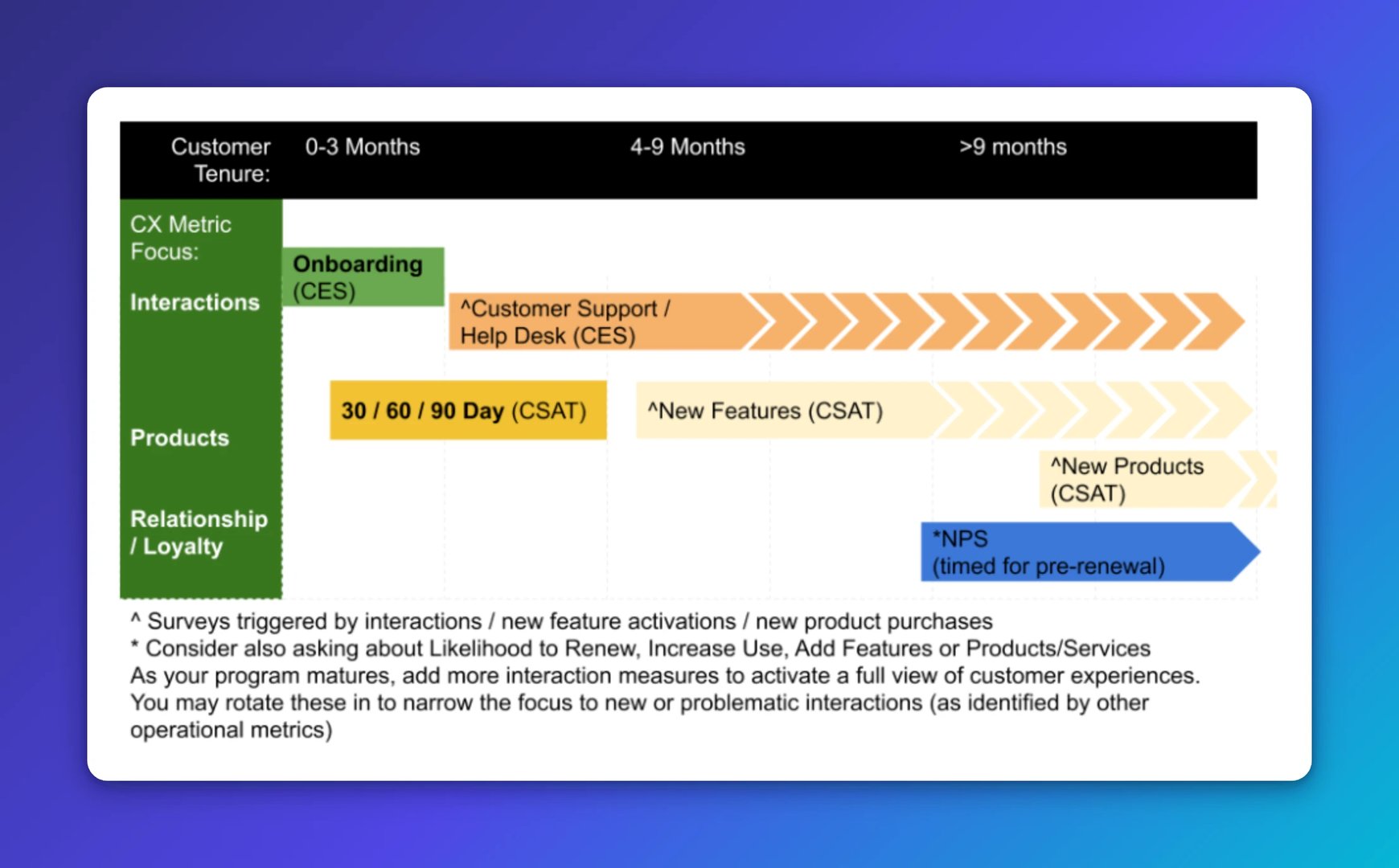
Align your feedback timing to the customer lifecycle:
- Ask about onboarding soon after it happens. You'll get the most accurate feedback and can intervene quickly if something went wrong.
- Trigger support feedback based on actual interactions. If a customer contacts you frequently, don't ask for feedback every time. Over-surveying creates fatigue and resentment.
- Gather product feedback in quick succession early on. Intervals of 30, 60, and 90 days tell you whether the customer is using the product and flag early warning signs. After that, ask when new features are activated or new services are enabled.
- Launch your relationship measure close to the one-year mark. Time it far enough ahead of renewal dates to address any concerns and incorporate the feedback into renewal and upsell conversations.
Getting started with a CX metrics program
Making results visible and actionable
Collecting feedback is only the beginning. The real value comes from getting the right numbers in front of the right people, consistently and without anyone having to go looking for them.
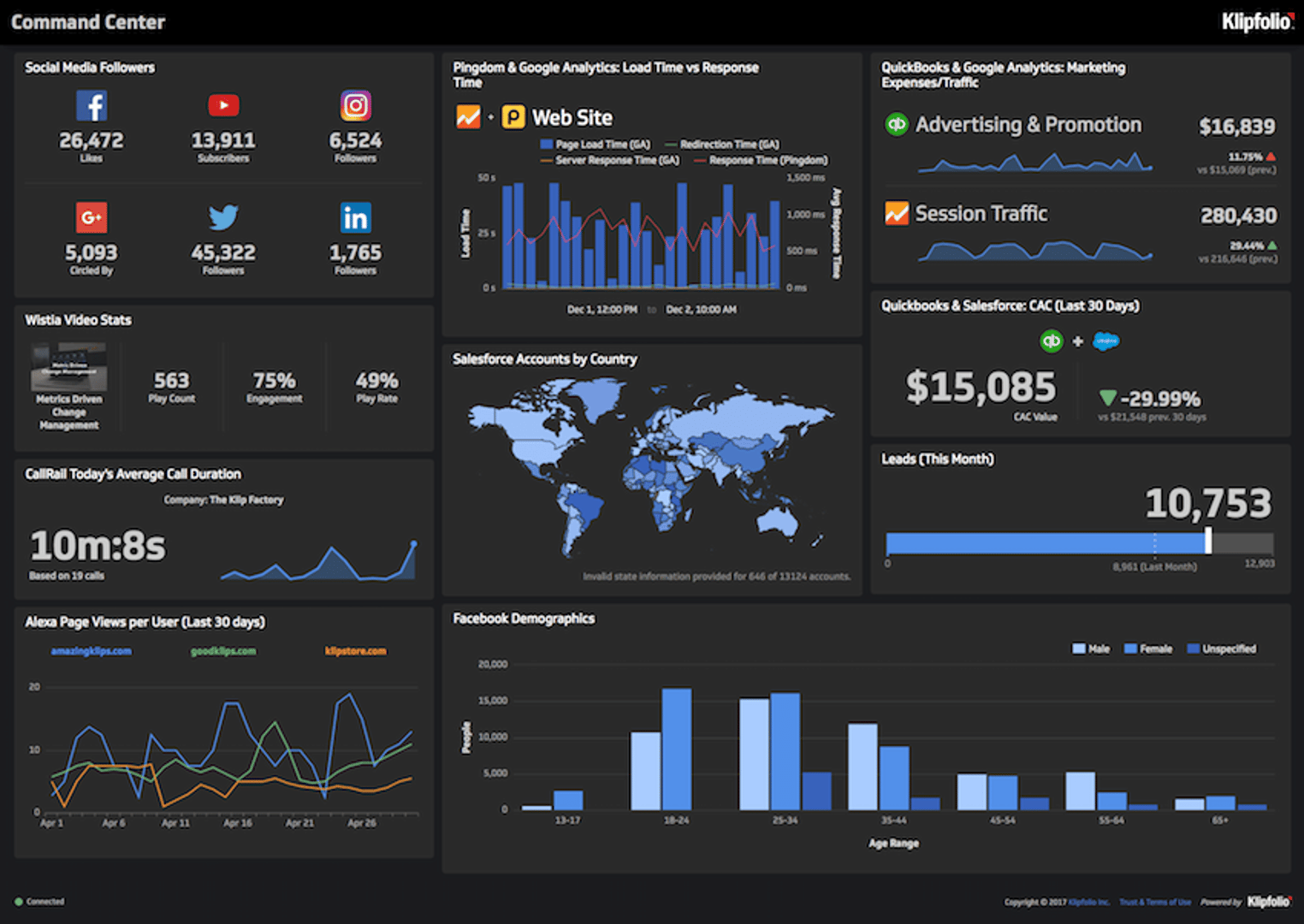
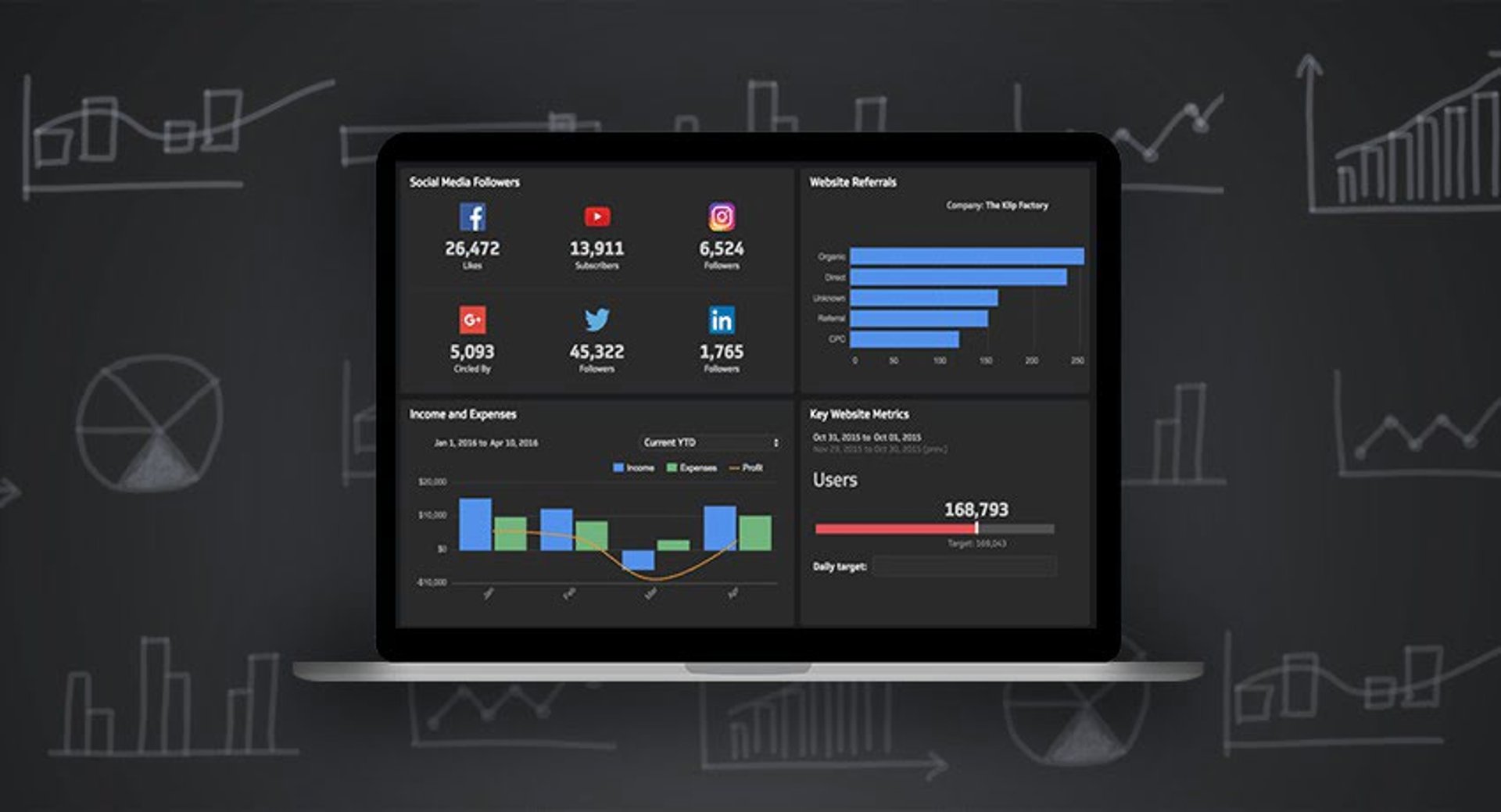
A shared dashboard visible to all employees is a strong starting point. From there, more targeted views give leaders and teams the granular, segmented picture they need to act. Don't assume the metrics will speak for themselves. Spend time helping teams understand what each metric means, how it's gathered, and, most importantly, what action it should drive.
Done well, this kind of visibility lowers churn, increases upsells, and reduces support volume. The teams closest to the customer know what to fix. Leadership knows what's working. Everyone is working from the same numbers.
What you need to know about each metric
Customer Effort Score (CES)
Application: Transactional measure of effort
Audience: Executive team, Customer Service and Support leaders and teams
Strengths:
- Addresses ease directly. Ease is increasingly tied to customer retention, and CES is built to measure it.
- A stronger loyalty indicator than CSAT in transactional contexts, with a clearer link to business growth.
Weaknesses:
- Fewer benchmarks exist. CES is not yet as widely adopted as NPS or CSAT, which makes external comparisons harder.
- Scope is limited. CES doesn't apply well to relational or people-focused aspects of customer experience.
Customer Satisfaction (CSAT)
Application: Transactional measure of product or service attributes
Audience: Product managers and teams, functional leaders and teams
Strengths:
- Highly flexible. CSAT can be applied to any experience, product, interaction, or team.
- Adaptable scale. The rating format can be adjusted to fit the context, including image-based formats.
Weaknesses:
- Satisfaction is a low bar. Satisfied customers switch products and providers all the time.
- Doesn't predict behaviour. CSAT scores don't reliably translate to repeat purchases, referrals, or other loyalty indicators.
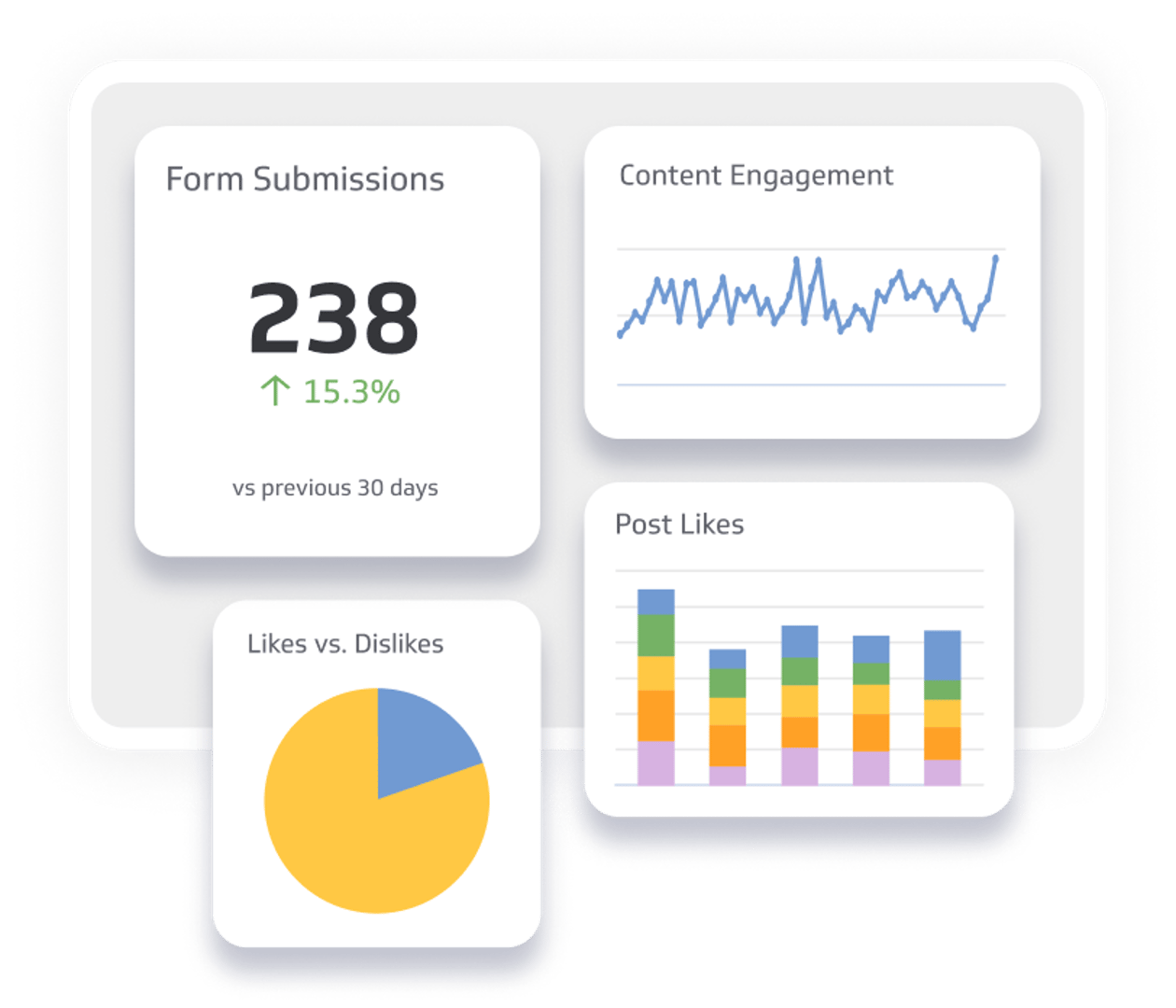
Create custom dashboards for you and your team.
Get started with KlipsNet Promoter Score (NPS)
Application: Relationship measure
Audience: Executive team, investors, communications, all employees
Strengths:
- Executive-level recognition. NPS is understood and tracked at the leadership level across most industries.
- Widely benchmarked. Comparisons across industries and competitors are readily available.
Weaknesses:
- Oversimplifies the picture. One metric can't diagnose root causes or tell you where to focus improvement efforts.
- Doesn't always translate to referrals. In B2B especially, a high NPS score doesn't guarantee actual recommendations or introductions.
One last point: if your organization isn't ready to act on a metric, don't collect it yet. Asking for feedback you can't use does more harm than good. You can always add metrics as your program matures.
Published 2026-08-22



Most recent
- AUG 11Beyond simple sign-ups: how True Trials and Activation predict growth
- JUL 7Why business leaders miss important trends in their dashboards
- JUN 19The best chart for the job: Visualizing data for non-technical users
- JUN 95 tips to understand (and organize) your restaurant data
- MAY 26Think in Horizons, Not Seconds
- MAY 2010 Cloud BI Dashboard Tools for Small Businesses in 2026